

Maddy summaryThis bill prohibits U.S. individuals and entities from buying or selling stocks or investment vehicles tied to Chinese companies operating in defense, surveillance technology, or supporting China's military-industrial complex. The Treasury Department would designate covered companies, expanding an existing sanctions list (NS-CMIC List) to include subsidiaries, successors, and financial service providers for these entities. It also requires consistent application of sanctions across all relevant laws, with the President needing to notify Congress 20 days before waiving sanctions for national security reasons. The law directly affects U.S. investors, financial institutions, and companies holding or trading securities in targeted Chinese firms.
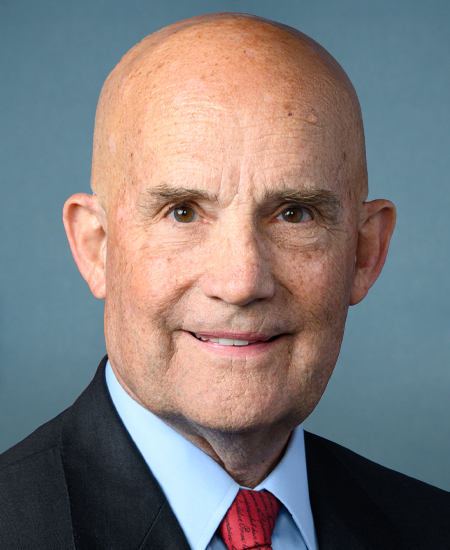
Rep. Keith Self
Sponsored bills
This resolution expresses the sense of the House of Representatives that research and promotion boards support efforts to develop new markets and strengthen existing markets via research, education, and promotion.
Maddy summaryThis bill restricts eligibility for federal electric vehicle tax credits by barring manufacturers majority-owned by foreign adversaries (as defined in federal regulations) or their related entities from claiming these credits. It amends the Internal Revenue Code to require EV manufacturers to certify they meet this ownership standard to qualify for Section 30D tax credits. The provision applies to vehicles placed in service after the bill's enactment date. This directly affects EV manufacturers with significant ties to designated foreign governments, altering which companies can access these tax incentives.
Saving Organs One Flight at a Time Act This bill requires the Transportation Security Administration (TSA) and the Federal Aviation Administration (FAA) to jointly issue regulations, as necessary, to enable air carriers to transport human organs for transplant above wing (i.e., in the cabin of an aircraft). Among other things, the regulations must include consideration of protocols for air control outages; a requirement that air carriers implement a protocol for a person to accompany organs to and from the aircraft and between connecting flights; and a standardized process for commercial air carriers to accept, handle, and manage organs in transit. The TSA and the FAA must also consult with the Organ Procurement and Transplantation Network to identify metrics for the handling of organs and organ-related tissue by air carriers.
Maddy summaryHR 4321 prohibits the U.S. government from providing any federal loans, grants, or financial assistance to state or local governments that enact reparations programs based on slavery, race, ethnicity, national origin, or related historical practices. This bill directly affects state and local governments that pass such reparations laws by blocking access to federal funds for those specific programs. The key provision bans all forms of federal financial aid - including from the Federal Reserve and independent agencies - to the jurisdiction enacting the reparations program, without applying to other government functions. The bill focuses solely on restricting federal funding for these programs, not on creating or funding reparations themselves.
Maddy summaryHJRES 44 is a congressional resolution seeking to block a 2021 rule by the Bureau of Alcohol, Tobacco, Firearms, and Explosives (ATF). The rule classified firearms with stabilizing braces as "short-barreled rifles," which would have required additional licensing and regulation. This resolution uses a specific legal process (under Title 5, U.S. Code) to formally disapprove the ATF rule, meaning the rule would no longer be in effect. It directly affects firearm owners, manufacturers, and dealers who would have been subject to the rule’s requirements.
Maddy summaryHJRES 45 is a congressional disapproval resolution targeting a specific Department of Education rule about federal student loans. It seeks to block the rule implementing "One-Time Federal Student Loan Debt Relief" (including modifications to Perkins, FFEL, and Direct Loan programs) by invoking the Congressional Review Act. If passed, this resolution would nullify the rule, preventing the Department of Education from using it to modify or waive student loan obligations. The bill directly affects borrowers who might have qualified for debt relief under the targeted rule.
Maddy summaryThis bill increases criminal penalties for non-citizens who reenter the U.S. after being deported or excluded. It specifically targets individuals with prior convictions for drug offenses, violent crimes, or multiple prior removals, imposing stricter fines and longer prison terms. For example, those convicted of an aggravated felony or two prior illegal reentries face mandatory minimum sentences of 5 years in prison, up to 20 years. The law also expands penalties for those who reenter without Homeland Security's permission after being removed under certain provisions.
Maddy summaryHR 277 would require Congress to approve major federal regulations before they take effect. Major rules are defined as those with significant economic impact ($100 million+ annually), major cost increases for consumers or industries, or significant adverse effects on competition, employment, or innovation. Agencies must submit detailed information about these rules to Congress, including cost-benefit analyses, before they can take effect. Congress would have 70 session days to approve the rule with a joint resolution; if they don't act within that timeframe, the rule would not take effect. This would increase congressional oversight of federal regulations and require more detailed information about proposed rules before they become law.
Maddy summaryHJRES 69 is a resolution seeking to disapprove an Environmental Protection Agency (EPA) rule published on June 5, 2023, which established a "Federal Good Neighbor Plan" for the 2015 ozone air quality standards. The rule aimed to address ozone pollution crossing state lines, particularly affecting southeastern states and industries subject to the 2015 ozone standards. This resolution would block the rule from taking effect by invoking the Congressional Review Act, preventing it from being enforced. If enacted, it would directly stop the EPA from implementing this specific plan, impacting states and businesses that would have had to comply with the rule.