

Maddy summaryThe End the Vaccine Carveout Act changes the National Vaccine Injury Compensation Program (NVICP) to allow individuals to sue vaccine manufacturers or administrators directly in court for vaccine-related injuries or deaths, without first needing to file a claim under the NVICP. It removes time limits for filing NVICP claims and repeals rules that previously let people choose between the program and a lawsuit for the same injury. The bill also specifically excludes COVID-19 vaccines from the definition of "covered countermeasure," meaning they are no longer protected by the same emergency liability shield that applied to other pandemic vaccines. This affects vaccine manufacturers, providers, and individuals who experience vaccine-related harm, shifting liability from the NVICP to the court system for most cases.
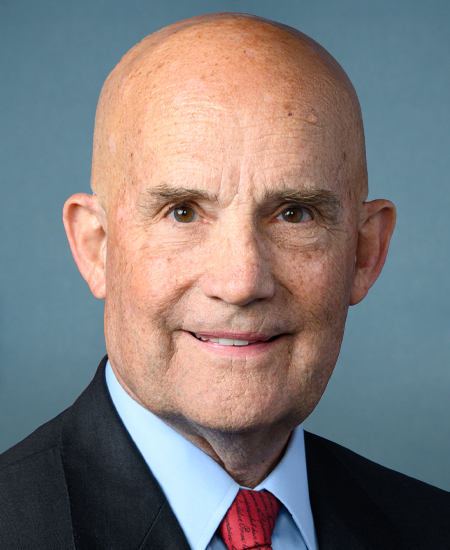
Rep. Keith Self
Sponsored bills
Maddy summaryThis bill directs the Smithsonian Institution and National Park Service to revise historical presentations at federal sites. It requires removing exhibits it claims divide Americans by race or gender (such as those on systemic racism or gender identity), and mandates reinstating pre-2020 monuments. Specific provisions ban displays celebrating male athletes in women's sports at the American Women's History Museum and direct funding for Independence Hall infrastructure by 2026. The bill applies to all federally managed historical properties, including museums and national parks.
Maddy summaryHR 4727 codifies Executive Order 14235 into law, making its provisions about restoring public service loan forgiveness (PSLF) permanent. This bill directly affects federal student loan borrowers working in qualifying public service jobs who were previously excluded from PSLF under the order. The key mechanism converts the executive order's policy changes - allowing more borrowers to qualify for loan forgiveness after public service work - into binding law, ensuring the policy remains in effect regardless of future administration changes.
Maddy summaryHR 4729 would make Executive Order 14292 legally binding by codifying it into law. This order, issued by the President, establishes existing safety and security protocols for biological research facilities. The bill directly affects research institutions handling potentially hazardous biological materials by requiring them to follow these specific safety and security standards. It does not create new requirements but ensures the existing executive order has the force of law, preventing future administrations from easily reversing it.
Maddy summaryThis bill (HR 4677) renames a U.S. Postal Service facility in Amarillo, Texas (located at 505 East 9th Avenue) as the "Mayor Jerry H. Hodge Post Office Building" to honor the late mayor. It updates all official U.S. government references to the building to reflect this new name. The bill has no policy impact beyond this ceremonial designation and affects no specific legislation or funding.
Maddy summaryHR 4620 amends federal law to include rioting as a form of racketeering activity under Title 18, United States Code. This change would allow prosecutors to charge individuals who organize or participate in riots as part of a larger criminal enterprise under federal racketeering laws. The bill specifically targets coordinated riot activities linked to organized crime, not isolated or spontaneous protests.
Maddy summaryHR 3095 requires the U.S. Postal Service to assign a single, unique ZIP Code to 74 specific communities across 16 states (including Canyon Lake, CA; Castle Pines, CO; and Estero, FL) within 270 days of the bill's enactment. This addresses current issues where these communities share ZIP Codes with neighboring areas, causing mail delivery confusion. The bill directly affects residents and businesses in these designated locations by simplifying mail routing. It creates a concrete administrative change without altering broader postal policies or funding.
Maddy summaryHouse Resolution HRES 596 supports designating July 20, 2025, as "National Moon Landing Day" to commemorate the Apollo 11 moon landing on July 20, 1969. The resolution encourages Americans to celebrate by honoring space pioneers, educating about space exploration’s societal benefits, and inspiring STEM careers. It has no legal effect or direct impact on people, policies, or funding. This symbolic resolution follows the UN’s existing "International Moon Day" designation and aligns with NASA’s Artemis missions. No new regulations or financial commitments are involved.
Maddy summaryHR 4530, the STOP Shells Act, requires U.S. export licensing for subsidiaries owned 50% or more by companies listed on Commerce Department "Entity Lists" or "Military End User Lists" due to national security concerns. It mandates that the Commerce Secretary assess whether applying export controls to these subsidiaries would advance U.S. national security interests before adding entities to the lists. The bill also requires the Commerce Secretary to notify Congress within two days of both adding entities to the lists and granting any exemptions for subsidiaries. These provisions aim to prevent entities on restricted lists from circumventing export controls through subsidiary companies.
Maddy summaryHR 4448, the Restoring Equal Opportunity Act, prohibits lawsuits alleging discrimination based on "disparate impact" in employment and housing. It amends the Civil Rights Act of 1964 and Fair Housing Act to ban claims where a neutral policy (like a test or screening rule) unintentionally disadvantages protected groups (such as race or gender), even if there was no discriminatory intent. The bill also nullifies specific federal regulations implementing civil rights laws, removing legal grounds for such claims under current enforcement rules. This directly affects employers, housing providers, and federal agencies that enforce civil rights laws, changing how discrimination claims can be brought in court.