

Maddy summaryThis bill authorizes a single Congressional Gold Medal to honor all U.S. Army Dustoff crews who served during the Vietnam War (1962-1973). It recognizes their critical role in evacuating nearly 900,000 wounded personnel, including U.S., South Vietnamese, and allied forces, under extreme combat conditions. The medal, designed with input from the Secretary of Defense, will be presented to the U.S. Army Medical Department Museum for permanent display. Duplicate bronze medals may be sold to cover costs, but the primary action is the commemorative recognition of these crews' service.
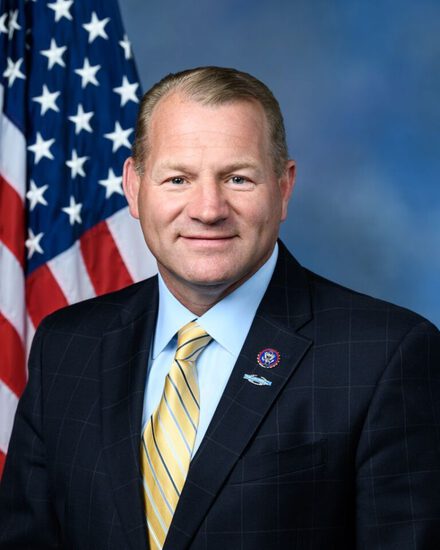
Rep. Troy E. Nehls
Sponsored bills
Maddy summaryHR 985, the "Productivity Over Pronouns Act," prohibits federal agencies from using appropriated funds to develop or implement gender-neutral or inclusive communication principles. Specifically, it blocks funding for resources, training, or suggestions aimed at avoiding gender stereotypes, using preferred terms for identity groups, applying an equity lens to communications, or addressing people inclusively through language. This directly affects all federal agencies (as defined by law) when carrying out any program, project, or activity funded by the government. The bill restricts how agencies can communicate with the public or structure their materials, banning the use of federal money for these inclusive communication approaches.
Maddy summaryHR 932 repeals two key congressional authorizations for military force in Iraq: the 1991 resolution (Public Law 102-1) and the 2002 resolution (Public Law 107-243). This bill removes the legal foundation that has permitted U.S. military operations in Iraq for over two decades. It directly affects the executive branch’s authority to conduct military actions under these specific resolutions, requiring future operations to seek new congressional approval. The repeal is a procedural change that would end the statutory basis for ongoing military engagement in Iraq without altering other laws or policies.
Maddy summaryHR 878 creates a new position for the FAA: an Associate Administrator for Aviation Safety Technology. This role, appointed by the FAA Administrator (with specific qualifications and non-political appointment rules), directly affects FAA operations and companies developing aviation safety technologies like auto-land systems or drone communication tools. Key mechanisms include requiring the position to streamline certification timelines, establish a public online portal for applicants to track progress, develop workforce plans for engineers, and create an interagency group to advance regulations for drone and automated flight systems. The bill mandates specific actions within 12 months, such as implementing the online portal and reporting on FAA certification processes.
Exposing Lewd Outlays for social Networking companies Act or the ELON Act This bill requires a report on Department of Justice (DOJ) payments to certain companies (i.e., Twitter, Meta, Google, Microsoft, and Apple) and imposes a one-year moratorium on payments to these companies. Specifically, the bill requires the Government Accountability Office to submit a report to specified congressional committees on all payments made by DOJ to these companies since January 1, 2015. Additionally, the bill imposes a one-year moratorium on DOJ that temporarily prohibits the use of federal funds to make payments to these companies, unless such funds are lawfully owed to any such company.
Border Security Investment Act This bill imposes a fee on remittances sent to certain countries and provides funding for border security activities from the collected amounts. Specifically, the fee shall apply to remittances sent to one of the five countries that had the most citizens or nationals unlawfully enter the United States in the previous fiscal year, as determined by U.S. Customs and Border Protection. The fee must be 37% of the amount sent. Half of the money collected by the fee must be placed in a trust fund for reimbursing border states for expenses incurred for border security enforcement measures. The other half must be placed in another trust fund for (1) deploying technology and installing physical barriers along the U.S.-Mexico border, and (2) paying the wages and salaries of U.S. Border Patrol agents. If the amount in the trust funds exceeds a certain threshold, the excess money must be used only for deficit reduction.
Maddy summaryHCONRES 9 is a symbolic resolution passed by the U.S. House of Representatives that formally denounces socialism as incompatible with American values, citing historical examples of socialist regimes causing widespread suffering and authoritarian rule. It states Congress opposes the implementation of socialist policies in the United States. This resolution has no legal effect, does not change any laws, and serves solely as a non-binding statement of congressional opinion. It directly affects no individuals or policies, as it is purely a declarative position.
This resolution condemns Iranian state-sponsored terrorist attacks against U.S. citizens and officials and Iranian dissidents. The resolution also expresses support for the people of Iran who are legitimately defending their rights for freedom against repression and condemns the killing of Iranian protesters by the Iranian regime.
Maddy summaryThis bill directs the U.S. Postal Service to assign new, unique ZIP Codes to seven specific communities within 270 days of enactment. The affected communities include Miami Lakes and Hollywood (Florida), three Wisconsin villages (Somers, Mount Pleasant, Caledonia), Eastvale (California), and Castle Pines (Colorado). The new ZIP Codes will establish dedicated postal routing for these areas, improving mail delivery efficiency without altering existing postal infrastructure. This is a procedural change focused solely on administrative postal operations.
Maddy summaryHCONRES 13 is a concurrent resolution expressing Congress's support for maintaining the current policy that prohibits imposing new fees on local radio stations for playing music. It states that Congress should not impose any performance fee, tax, royalty, or charge on local radio stations for broadcasting sound recordings over the air, or on businesses like bars and restaurants that play music publicly. The resolution argues that such fees would harm local radio stations - critical sources for emergency information and community programming - and jeopardize the economic model that has supported both radio and the music industry for decades. This resolution does not create new law but formally opposes potential legislative changes to the existing fee structure.