

Maddy summaryHR 1818, the Aviation Workforce Development Act, expands tax-advantaged savings plans (529 plans) to cover costs for specific aviation training programs. It allows funds from these plans to pay for tuition, fees, and required materials at FAA-certified aviation maintenance technician schools (Part 147) or commercial pilot training programs (Part 61 or 141). This directly affects students pursuing careers as aircraft maintenance technicians or commercial pilots by making these training costs more affordable through existing tax-advantaged savings. The bill amends the tax code to include these programs under "qualified higher education expenses" for 529 plan distributions.
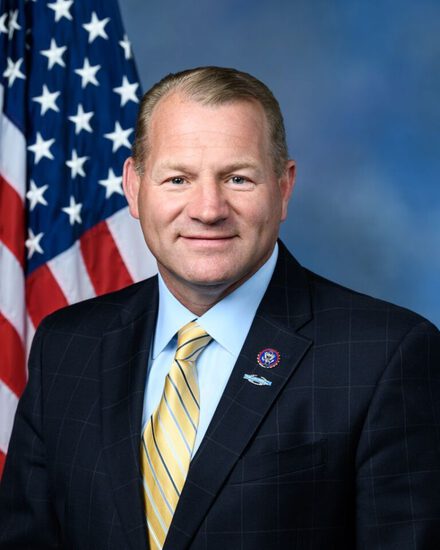
Rep. Troy E. Nehls
Sponsored bills
Maddy summaryHR 5, the Parents Bill of Rights Act, would require public schools receiving federal funding to provide parents with greater access to educational information. The bill mandates that schools post curricula online or widely distribute it to parents, include school budgets in report cards, and provide specific information about school activities including violent incidents and plans to eliminate gifted programs. It also guarantees parents the right to meet with teachers twice a year, review library materials, and address school boards. These requirements would apply to all local educational agencies and schools covered by the Elementary and Secondary Education Act. The bill amends existing education laws to strengthen parental transparency and involvement in their children's education.
Maddy summaryThis non-binding resolution states that Congress believes nuclear power is essential as a reliable, clean energy source to support a stable electric grid alongside variable sources like solar and wind. It emphasizes nuclear power's role in achieving clean energy goals, reducing carbon emissions, and advancing U.S. energy independence. The resolution does not create new laws or regulations but formally expresses congressional support for nuclear energy as a necessary component of a "green" grid. It was introduced in March 2023 by multiple lawmakers across party lines.
Let Experienced Pilots Fly Act of 2023 This bill raises the mandatory retirement age for pilots engaged in commercial aviation operations from 65 to 67 years of age, unless the operation takes place in (1) the territorial airspace of a foreign county where such operations are prohibited by the foreign country, or (2) international airspace where such operations are not in compliance with the Annexes to the Convention on International Civil Aviation. The Federal Aviation Administration must also submit a report to Congress on further increasing the age limitation for pilots engaged in commercial aviation operations.
No Partisan Radio and Partisan Broadcasting Services Act or the NPR and PBS Act This bill prohibits federal funding of National Public Radio (NPR) and the Public Broadcasting Service (PBS), including by prohibiting the use of federal funds received by a public broadcast station to pay dues to or purchase programming from NPR or PBS.
Maddy summaryH.J. Res. 30 seeks to block a Department of Labor rule that would have required retirement plan managers (like those handling 401(k)s) to follow strict "prudence and loyalty" standards when selecting investments and voting on company matters. The rule, published in December 2022, aimed to protect retirement savings by ensuring fiduciaries prioritize participants' interests. This resolution, if passed, would prevent the rule from taking effect, avoiding new compliance requirements for retirement plan managers and sponsors. It directly affects retirement plan administrators and the millions of participants in these plans.
Maddy summaryHR 1067, the American Energy Act, aims to expedite oil and gas drilling by limiting court interventions in permit and lease processes. It requires federal agencies to process drilling permit applications even if environmental lawsuits are pending, and prevents courts from vacating lease sales or delaying development unless imminent environmental harm is proven with no other legal remedy. Permits would now be valid for four years or until the underlying lease expires, whichever comes first. This primarily affects oil and gas companies seeking drilling rights, federal agencies managing leases (like the Department of the Interior), and environmental groups challenging projects in court.
Maddy summaryThis bill updates airport security technology standards and creates new pilot programs to improve airport efficiency. It expands the definition of eligible security sensors to include LiDAR and other detection systems (replacing "cameras"), and increases the number of airports eligible for a surveillance pilot program from 5 to 10, prioritizing low-light sensor projects. A new "Smart Airports" pilot program authorizes up to $5 million annually (2024-2029) to fund competitive grants for airports installing internet-connected technologies - like sensors and software - to shorten security lines, improve Wi-Fi/GPS, and streamline passenger flow, while explicitly prohibiting grants that collect facial or biometric data from non-threat passengers. The bill directly affects airports seeking FAA grants for these specific tech upgrades, with all pilot programs set to expire by 2029.
Maddy summaryHR 1484, the Pipeline Sabotage and Accident Prevention Act, adds criminal penalties for intentionally damaging or disrupting pipeline infrastructure. It makes it a federal offense to knowingly cause defects in pipes, pumps, or valves (or disrupt operations) in pipelines regulated under existing law, punishable by fines, up to 10 years in prison, or both. The bill specifically protects First Amendment rights, stating its provisions don’t limit lawful protests or free speech. It directly affects individuals who intentionally target pipeline infrastructure, such as vandals or terrorists, by creating clear criminal consequences for such acts. The law focuses on preventing physical harm to critical energy infrastructure through deterrence.
USA Batteries Act This bill removes lead oxide, antimony, and sulfuric acid from the list of taxable chemicals subject to the environmental excise tax.