

Maddy summaryThis concurrent resolution expresses Congress's appreciation for the Federal Protective Service and its law enforcement officers. It formally recognizes the dedication of these officers who protect over 8,500 federal facilities and honors those who have died in the line of duty. The resolution encourages continued collaboration between the service and the communities it serves to strengthen public safety and trust.
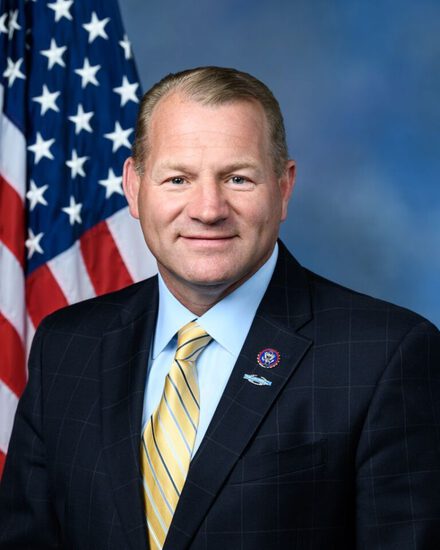
Rep. Troy E. Nehls
Sponsored bills
Maddy summaryHR 5213, the "Keep Violent Criminals Off Our Streets Act," prohibits federal grants to states or local governments that have policies substantially limiting cash bail for individuals charged with specific violent or public disorder offenses. It directly affects state and local governments with bail policies allowing pretrial release for crimes like murder, rape, robbery, looting, or rioting. The bill amends federal law to block grant awards (under the Omnibus Crime Control Act) for any jurisdiction maintaining such bail policies for these covered offenses, starting in the fiscal year after enactment. This is a funding restriction, not a change to bail laws themselves.
Maddy summaryThe PEAT Act of 2026 amends federal regulations to clarify how certain biologic drugs are classified for approval purposes. Specifically, it prevents the Food and Drug Administration from denying approval to a biologic product simply because it contains a protein that does not have a clinical effect. This change ensures that the presence of inactive proteins does not automatically disqualify a drug from being treated as a biological product. The legislation directly impacts pharmaceutical companies developing complex biologics and the regulatory review process for these medicines. By removing this specific barrier, the bill aims to streamline the path to market for drugs that include non-active protein components.
Maddy summaryThis bill requires the Federal Aviation Administration to equip specific contract air traffic control towers with advanced situational awareness tools within one year of enactment. It mandates the installation of Airborne Position Reference Tools at towers lacking these systems and ensures that towers without Standard Terminal Automation Replacement Systems receive necessary equipment and maintenance support. The legislation also updates funding rules to cover the costs of acquiring and operating these new tools and establishes training programs to help controllers effectively use the technology. Additionally, the bill provides financial reimbursement to airports that have already purchased similar systems before the federal government installs them.
Maddy summaryThis bill fundamentally restructures the U.S. immigration system by replacing the current employment-based visa categories with a new points-based program that prioritizes applicants with high salaries, advanced degrees, English proficiency, and U.S. military service. Under this new system, employers must attest that they have attempted to hire qualified American workers first and guarantee that hiring an immigrant will not result in layoffs of existing U.S. employees. Additionally, the bill eliminates the Diversity Lottery program, restricts certain family sponsorship categories for citizens, and imposes conditional permanent resident status on new immigrants who must prove they are not receiving public benefits and remain employed within two years. The legislation also mandates that undocumented students pay out-of-state tuition rates at colleges and requires immigrants to sign statements affirming their loyalty to U.S. constitutional principles and opposition to specific forms of persecution.
Maddy summaryThis bill, titled the Territorial Protection and Sovereignty Act, ends the Temporary Protected Status program for individuals currently holding that status in the United States. It requires that any existing status grants terminate immediately upon the law's enactment. Affected individuals must depart the country within 60 days of the bill becoming effective to avoid being classified as unlawfully present. The legislation removes the specific legal protections previously established under Section 244 of the Immigration and Nationality Act.
Maddy summaryThe Safe Tracks Act requires the Secretary of Transportation to update federal regulations within 30 days of enactment to apply specific safety standards to centralized computer-aided train-dispatching systems and centralized traffic control boards. This change directly affects existing and future deployments of these automated train control technologies used by railroads. The bill mandates that these systems comply with the safety requirements outlined in subpart H of part 236 of the Code of Federal Regulations, which covers critical safety protocols for train operations. By updating the regulatory framework, the legislation aims to ensure consistent safety oversight across all centralized train dispatching infrastructure.
Maddy summaryThe Railroad Retirement Fairness Act amends the Railroad Retirement Act of 1974 to remove a specific provision that allowed deductions from railroad retirement annuities. This change directly affects current and future railroad workers who receive retirement benefits through the Railroad Retirement system. By striking subdivision (6) of Section 2(f), the bill eliminates a particular type of deduction that previously reduced the amount of money some retirees received. The legislation does not alter the overall structure of railroad retirement benefits but specifically targets one existing deduction mechanism.
Equal Representation Act This bill requires that the statement sent by the President to Congress after the decennial census indicating the number of persons in each state exclude noncitizens. (This statement is the basis for reapportionment of U.S. Representatives.) The bill also requires any questionnaire used in the decennial census to include a checkbox or other similar option for respondents to indicate whether the respondent and each household member is (1) a U.S. citizen, (2) a U.S. national but not a citizen, (3) a non-U.S. national ( alien under federal law) lawfully residing in the United States, or (4) a non-U.S. national unlawfully residing in the United States. The Department of Commerce must make public the number of persons in each state, disaggregated by each of these four categories.
Maddy summaryThe Equal Treatment for Farmers Act removes references to 'socially disadvantaged farmers and ranchers' from multiple federal agricultural laws and programs. This bill amends various statutes including the Federal Crop Insurance Act, Consolidated Farm and Rural Development Act, and other agricultural legislation to eliminate special preferences or categories based on social disadvantage status. The legislation also prohibits the USDA from providing any preference, priority consideration, or enhanced benefits based on race or gender in its programs. These changes affect how federal agricultural assistance, loans, and benefits are categorized and distributed to farmers and ranchers.