

Maddy summaryThe MORE Act (HR 5068) would remove cannabis from the federal list of controlled substances, effectively decriminalizing it at the federal level while establishing a new tax on cannabis products. The bill creates an Opportunity Trust Fund that would distribute tax revenues to support communities disproportionately impacted by cannabis prohibition, including funding for expungement programs, job training, and equitable licensing initiatives for minority business owners. It also includes provisions to prevent discrimination based on cannabis use in federal programs, immigration proceedings, and workplace policies. The bill would require federal courts to expunge non-violent cannabis convictions and establish a process for resentencing individuals currently serving time for such offenses. These provisions aim to address racial disparities in cannabis enforcement and create more equitable opportunities in the legal cannabis industry.
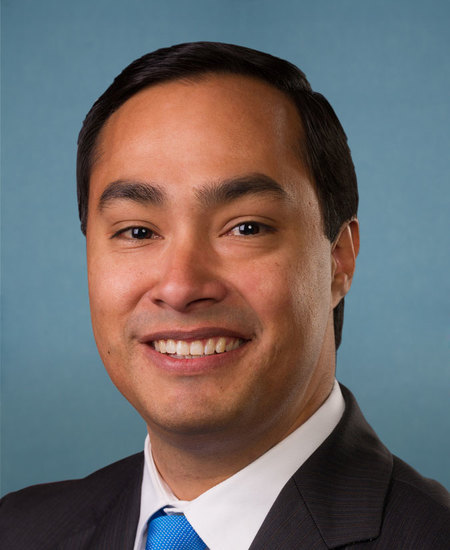
Rep. Joaquin Castro
Sponsored bills
Maddy summaryHR 7016, the "No Funds for NATO Invasion Act," blocks federal funding for any U.S. military invasion of a North Atlantic Treaty Organization (NATO) member country or territory covered by NATO's Article 5 mutual defense clause. The bill prohibits using any federal funds for such invasions and bans U.S. officials from executing these actions. It directly affects U.S. military operations and funding decisions involving NATO members. The law applies to all federal spending, preventing the use of existing budgets for this specific purpose.
Maddy summaryThis concurrent resolution (HCONRES 69) commemorates the 15th anniversary of the January 8, 2011, Tucson shooting that killed six people and injured 13, including former Congresswoman Gabby Giffords. It honors the victims, survivors, and Giffords - now a prominent advocate for gun violence prevention - and recognizes her leadership in promoting civility and reducing gun violence. The resolution also commends Tucson residents and first responders for their resilience and reaffirms Congress’s commitment to respectful dialogue and opposing political violence. As a ceremonial resolution, it does not create new laws or policies.
Maddy summaryHR 6980, the NOVA Act of 2026, prohibits the use of federal funds to support U.S. possession, control, or sovereignty over Venezuela's territory or resources, including military deployments there. It allows limited exceptions: the President may acquire Venezuelan property for diplomatic use (with local government approval) or use existing U.S. properties in Venezuela for embassies. The bill does not apply to properties owned by the U.S. before January 1, 2026, and explicitly states it won't affect funding for emergency humanitarian aid. This bill directly affects U.S. government agencies and programs seeking to fund activities related to Venezuela's governance or military presence.
Maddy summaryThis resolution (HRES 969) expresses support for designating the week beginning September 8, 2025, as "National Hispanic-Serving Institutions Week." It recognizes colleges and universities with at least 25% Hispanic undergraduate enrollment (known as Hispanic-Serving Institutions or HSIs) and their role in serving diverse, low-income students. The resolution does not create new policies or funding but encourages public observance through ceremonies and activities to honor HSIs’ contributions to higher education access and economic mobility. It applies symbolically to all 615+ HSIs across the U.S. and Puerto Rico.
Maddy summaryThis bill creates a new "Chief Development Officer" position within the U.S. International Development Corporation (USIDC), replacing the previous "Chief Development Officer" role described in law. The position will advise USIDC leadership, represent the Corporation in meetings with other federal agencies, and lead coordination on international development projects. Key duties include identifying U.S. development projects, managing employee teams focused on development impact, and aligning USIDC activities with federal development policy and national security goals. The bill directly affects USIDC staff, federal agencies collaborating on development work, and the Corporation's strategic implementation of international development initiatives.
Maddy summaryHR 4611 (EACH Act of 2025) requires all federally funded health programs - including Medicaid, Medicare, military health plans, and the Indian Health Service - to cover abortion services without restrictions, repealing the Hyde Amendment's long-standing ban on federal funding for most abortions. This directly affects millions of people enrolled in these programs, particularly low-income women, women of color (including 25% of Black women and 22% of Hispanic women on Medicaid), and young people. The bill mandates coverage in all federally administered health plans and prohibits state or private insurers from restricting abortion coverage in health insurance. It aims to eliminate current federal and state barriers that deny abortion access to people who rely on government health programs.
Maddy summaryThis bill renames the Dallas, Texas Department of Veterans Affairs medical center at 4500 South Lancaster Road as the "Eddie Bernice Johnson VA Medical Center." It directly affects the facility and all official references to it in federal documents, laws, and records. The key provision (Section 2(a)) officially changes the facility's name upon enactment, and Section 2(b) requires all future references to use the new name. The bill is procedural, honoring Congresswoman Johnson's service to veterans.
Maddy summaryHR 6878, the El Salvador Accountability Act of 2025, imposes sanctions on specific Salvadoran government officials and entities linked to gross human rights violations or corruption. The bill blocks U.S. assets of targeted individuals, bans their visas, prohibits U.S. financial loans to them, and restricts foreign exchange transactions involving them. It requires the President to report annually on sanctions, U.S. aid to El Salvador, and a detailed investigation into whether the Salvadoran government uses cryptocurrency for corruption or sanctions evasion. Sanctions terminate if the President certifies El Salvador complies with human rights standards and ceases corruption schemes, but remain in place for at least four years after enactment.
Maddy summaryThe RESTRICT Act (HR 6879) requires U.S. companies to obtain a license before exporting advanced computer chips to countries listed in a specific export control group (as of January 2025) and to regions like Hong Kong and Macau. It also blocks licenses for exports to entities primarily located in countries of concern (including those same nations plus Hong Kong and Macau). U.S. companies may avoid the license requirement if they meet strict conditions, such as limiting foreign ownership to 10% and implementing security measures to prevent misuse. The law expires five years after enactment.