

Maddy summaryThis bill creates a new state option to provide medical assistance through Medicaid-like programs for uninsured adults with serious mental illness or substance use disorders who earn under 100% of the federal poverty level. It defines "specified individuals" as those meeting income limits and having a qualifying condition (serious mental illness, emotional disturbance, opioid use disorder, or stimulant use disorder) diagnosed by approved providers. States offering this option must provide coverage for 1 year initially (with possible annual renewals after redetermination), ensure a care plan within 60 days, and report specific quality measures. The bill modifies existing Medicaid rules to expand access to behavioral health services without creating new federal funding.
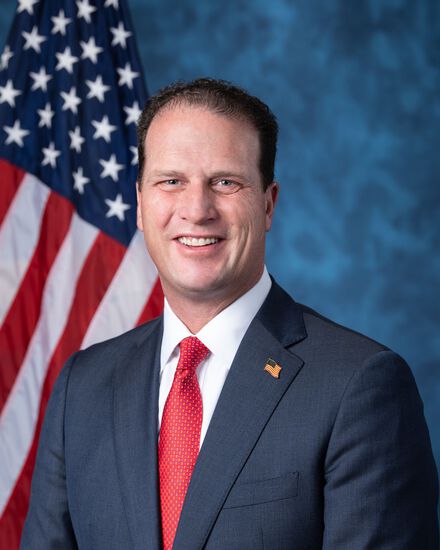
Rep. August Pfluger
Sponsored bills
Maddy summaryThis bill establishes a new interagency Task Force to dismantle foreign scam operations targeting Americans, particularly through "pig butchering" scams in Southeast Asia. The Task Force, chaired by the Secretary of State, will coordinate efforts across multiple agencies to shut down scam centers, impose sanctions on perpetrators, and support victims of trafficking. It requires a detailed strategy within 180 days and annual reports to Congress on progress, including sanctions imposed and funds recovered. The bill authorizes $30 million for these efforts in fiscal years 2026-2027, focusing on countries like Cambodia, Laos, and Burma where scam centers operate with forced labor.
Maddy summaryThis bill suspends payment limits for agricultural subsidies for the 2025 crop year, removing caps on payments to farmers. It also establishes a new option for farmers to receive 50% of their expected 2025 crop payments as an advance by December 1, 2025, if they opt in. The remaining balance is paid later after the marketing year ends, with farmers required to repay any overpayment if the final amount exceeds the advance. The bill directly affects farmers growing covered commodities (like corn, soybeans) who choose to participate in the advance payment program.
Maddy summaryHR 5633, the Agriculture Infrastructure Stability Act of 2025, requires the Federal Crop Insurance Corporation to develop and make available a new revenue protection policy for farmers. Specifically, it mandates the Corporation conduct research on "harvest incentive policies" covering revenue loss from harvest issues and make this policy available within two years of the law's enactment, if certain requirements are met. The bill also requires the Corporation to submit a report to congressional committees within one year detailing the research results and the policy details. This directly affects farmers participating in federal crop insurance programs by potentially providing new coverage for revenue losses tied to harvest conditions.
Maddy summaryHR 3806, the New World Screwworm Preparedness Act of 2025, requires the U.S. Department of Agriculture to conduct a study on the nation's readiness to prevent and respond to New World screwworm (NWS) infestations. The study must assess current threats, sterile insect production capabilities, surveillance systems, emergency response plans, research needs, and international cooperation, with input from livestock producers, wildlife agencies, and scientists. The Secretary of Agriculture must submit a report to Congress within six months detailing findings and recommendations for improving preparedness. This bill directly affects agricultural stakeholders and wildlife management by mandating a review of existing capabilities, not by changing current policy.
Give Kids a Chance Act of 2025 This bill expands the Food and Drug Administration’s (FDA’s) authority with respect to research on rare pediatric diseases, including by permitting the FDA to take enforcement action against drug sponsors that fail to satisfy pediatric study requirements and by reauthorizing programs that support pediatric research. Specifically, the bill modifies requirements relating to molecularly targeted pediatric cancer investigations to permit research on new drugs in combination with active ingredients that have already been approved, provided certain conditions are met; permits the FDA to take enforcement action against drug sponsors that fail to comply with pediatric study requirements, if such sponsors demonstrated a lack of due diligence in satisfying the requirement; renews the FDA’s authority to award priority review vouchers to sponsors of new products intended to treat rare pediatric diseases through September 30, 2029; and reauthorizes through FY2027 certain funding for the National Institutes of Health to support priority pediatric research. The bill also provides statutory authority for the FDA’s interpretation of the orphan drug exclusivity period. The bill specifies, consistent with FDA regulations, that the seven-year market exclusivity period for drugs for rare diseases or conditions (i.e., orphan drugs) prohibits the approval of the same drug for the same approved use or indication with respect to the disease or condition. (In Catalyst Pharmaceuticals, Inc. v. Becerra , a court rejected the FDA’s interpretation and held that orphan drug exclusivity extends to all uses or indications for the disease or condition.)
Maddy summaryThe Cyber Deterrence and Response Act of 2025 establishes a process for designating foreign entities as "critical cyber threat actors" when they engage in state-sponsored cyber activities that threaten U.S. national security, economic stability, or critical infrastructure. It requires the creation of a National Attribution Framework to standardize how the government determines responsibility for cyber attacks, with specific evidence standards and coordination mechanisms for attribution. The bill authorizes a range of sanctions against designated entities, including travel bans, financial restrictions, and export controls on goods and technology. It includes exemptions for U.S. intelligence activities and provisions for case-by-case waivers of sanctions. The law aims to deter foreign cyber threats through a structured, evidence-based approach to attribution and sanctions.
Maddy summaryThis bill prohibits federal funds from being used to cover any abortion-related expenses for individuals classified as "illegal aliens" under immigration law. It specifically blocks taxpayer money from paying for travel, lodging, meals, childcare, translation, doula care, or patient education services connected to abortion access. The law directly affects non-citizens who are inadmissible or deportable under specific immigration statutes (as defined in the Immigration and Nationality Act). It applies to all federal programs and funds, restricting assistance for abortion services beyond the procedure itself.
Maddy summaryHR 4070, the Tren de Aragua Border Security Threat Assessment Act, requires the Secretary of Homeland Security to conduct a detailed assessment of the criminal threats posed by the Venezuelan gang Tren de Aragua to U.S. borders within 180 days of the bill's enactment. The assessment must cover the group's origins, methods, funding, and specific threats to the southwest, northern, and maritime borders, followed by a strategic plan within one year outlining how federal, state, and local agencies will counter these threats through information sharing, interdiction, and preventing the group's expansion in the U.S. The bill directly affects DHS, intelligence agencies, and border law enforcement partners by mandating these reports and planning processes.
Maddy summaryHR 2259 requires the Secretary of Homeland Security to develop a national strategy for securing K-12 schools against terrorism within one year of enactment. This strategy must coordinate existing federal programs, identify security vulnerabilities in schools, and outline actions to address them, while avoiding duplication with current efforts. The Secretary must annually update the strategy through 2033 and report to relevant congressional committees, including certification if no updates are made. The bill directly affects federal agencies (Homeland Security, Education, and others) responsible for school security coordination, but does not create new funding or alter school operations.