Help Independent Tracks Succeed Act or the HITS Act This bill permits taxpayers to treat as currently deductible expenses the cost of qualified sound recording productions not exceeding $150,000 in a taxable year. The bill defines qualified sound recording production as certain sound recordings produced and recorded in the United States.
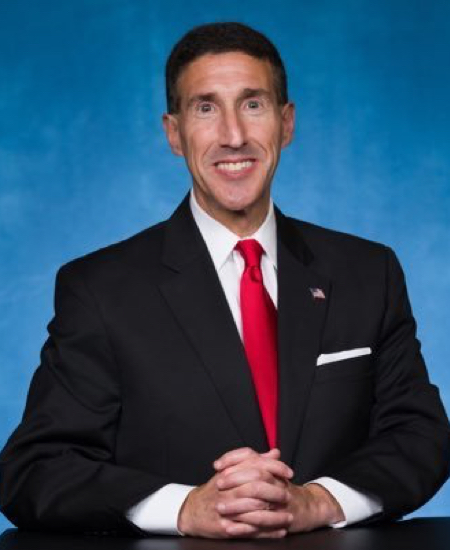
Rep. David Kustoff
Sponsored bills
Developing Responsible Individuals for a Vibrant Economy Act or the DRIVE-SAFE Act This bill directs the Department of Transportation to promulgate regulations to implement an apprenticeship program for licensed commercial motor vehicle drivers under the age of 21. Under the program, an apprentice must complete two probationary periods that total 400 hours of on-duty time, of which at least 240 hours must be driving time in a commercial motor vehicle. Additionally, the apprentice must be accompanied in the cab of the commercial motor vehicle by an experienced driver. Further, the bill requires all commercial motor vehicles used in the program for training to be equipped with safety technology such as active braking collision mitigation systems and video event capturing systems. An employer shall not knowingly allow, require, permit, or authorize a driver under the age of 21 to operate a commercial motor vehicle unless the driver is participating in, or has completed, an apprenticeship program that meets the requirements set forth in this bill.
Speeding Therapy Access Today Act of 2021 This bill requires and authorizes various actions to accelerate the development of therapies for rare diseases. The Food and Drug Administration (FDA) shall establish the Intercenter Institute on Rare Diseases and Conditions. The institute shall (1) coordinate engagement with relevant stakeholders, (2) build the FDA's expertise in the review of medical products to treat rare diseases, (3) coordinate regulatory science initiatives related to rare diseases, (4) establish and implement a program to make recommendations to address challenges associated with developing medical products to treat rare diseases in an individual or in very small populations, (5) convene a stakeholder meeting to consider potential amendments to labels for medical products to treat rare diseases, and (6) establish and carry out a program to facilitate voluntary communication between the sponsors of such medical products and third-party payers (e.g., insurance companies). The bill also authorizes the FDA to make grants to assist in developing practices related to the development and production of individualized therapies or therapies to treat very small populations. The bill also establishes an advisory committee to advise the FDA on issues related to the development of therapies to treat rare diseases.

This resolution supports the designation of a National FFA Week. It also (1) recognizes the important role of the National FFA Organization (Future Farmers of America) in developing the next generation of leaders who will change the world, and (2) celebrates 50 years of National FFA alumni and supporters.
Death Tax Repeal Act This bill repeals the estate and generation-skipping transfer taxes. It also makes conforming amendments related to the gift tax.
Repeatedly Flooded Communities Preparation Act This bill requires a community that participates in the National Flood Insurance Program and has been repeatedly flooded, as specified by the bill, to (1) assess the continuing risks to community areas repeatedly damaged by floods; and (2) develop and implement a publicly available, community-specific plan for mitigating continuing flood risks to such areas. The Federal Emergency Management Agency (FEMA) must, upon request, provide a community with appropriate data to assist in preparation of the required plan. In making decisions with respect to awarding flood risk mitigation grants, FEMA may consider the extent to which a community has complied with these requirements and is working to remedy problems with repeatedly flooded areas. A community that does not comply with these requirements may be subject to appropriate sanctions.
This joint resolution proposes an amendment to the Constitution to require that the Supreme Court consist of nine Justices.
This resolution honors Officers Brian Sicknick and Howard Liebengood of the U.S. Capitol Police, and it commends the bravery and service demonstrated by officers of the U.S. Capitol Police, the Metropolitan Police Department of the District of Columbia, and the other law enforcement agencies and protective entities that assisted in responding to the January 6, 2021, attack on the U.S. Capitol.
Protecting the Right to Keep and Bear Arms Act of 2021 This bill prohibits (1) the President or the Department of Health and Human Services from declaring emergencies or disasters for the purpose of imposing gun control; and (2) a federal officer or employee, or person operating under color of federal law, from banning the manufacture, sale, or transfer of firearms or ammunition while acting in support of relief from a major disaster or emergency.
Qualified Immunity Act of 2021 This bill codifies the defense of qualified immunity for law enforcement officers in any case under provisions regarding civil actions for deprivation of rights under color of law. Specifically, a law enforcement officer subject to such an action in his or her individual capacity shall not be found liable if the officer establishes that the right, privilege, or immunity secured by the Constitution or federal law was not clearly established at the time of the deprivation, or that at this time, the state of the law was not sufficiently clear that every reasonable law enforcement officer would have understood that the conduct alleged constituted a violation of the Constitution or federal law; or a court of competent jurisdiction had issued a final decision on the merits holding, without reversal, vacatur, or preemption, that the specific conduct alleged to be unlawful was consistent with the Constitution and federal laws. A law enforcement agency or unit of local government that employed a law enforcement officer subject to such an action shall not be liable if the officer is found not liable and to have been acting within the scope of his or her employment.