

Hong Kong Safe Harbor Act This bill designates certain Hong Kong residents with priority status for refugee consideration and contains other related provisions. An individual and certain family members shall have such priority status if the individual (1) is a Hong Kong resident who suffered persecution or has a well-founded fear of persecution as a result of peaceful political activity; or (2) has been formally charged, detained, or convicted for certain peaceful actions. An individual receiving refugee status under this bill shall not be counted against various numerical limitations. When determining whether an individual shall be admitted as a refugee under this bill, an individual whose citizenship, nationality, or residency was revoked for submitting a nonfrivolous application for a U.S. immigration benefit shall be considered to have suffered persecution on account of political opinion. The general presumption that an alien is seeking immigrant status shall not apply to certain Hong Kong residents seeking asylum into the United States. (Typically, an alien seeking admission as a nonimmigrant must establish that the alien does not intend to immigrate to the United States.) This exception to the presumption shall apply to certain individuals involved in the 2019 and 2020 protests against China's encroachment into Hong Kong's autonomy (Hong Kong is a part of China but has a separate legal and economic system). An individual from Hong Kong may not be denied admission into the United States if the primary reason for the denial is a politically motivated government action against the individual's involvement in protests.
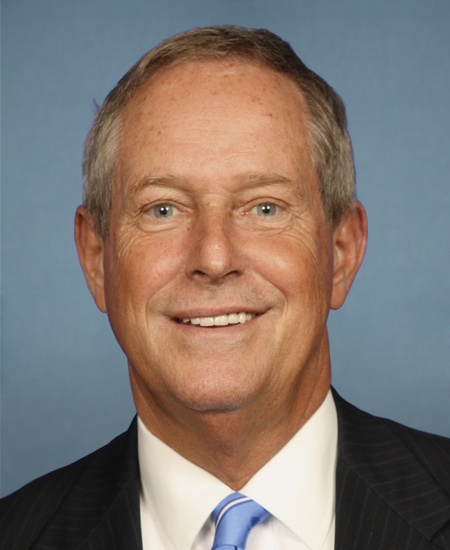
Rep. Joe Wilson
Sponsored bills
This joint resolution proposes a constitutional amendment prohibiting total outlays for a fiscal year from exceeding total receipts for that fiscal year unless Congress authorizes the excess by a three-fifths roll call vote of each chamber. The prohibition excludes outlays for repayment of debt principal and receipts derived from borrowing. The amendment requires roll call votes of (1) three-fifths of each chamber of Congress to increase the public debt limit, and (2) a majority of each chamber for legislation increasing revenue. It also requires the President to submit a balanced budget to Congress annually. Congress is authorized to waive these requirements when a declaration of war is in effect or if the United States is engaged in a military conflict which causes an imminent and serious military threat to national security.
This joint resolution proposes an amendment to the Constitution to require that the Supreme Court consist of nine Justices.
No Social Media Accounts for Terrorists or State Sponsors of Terrorism Act of 2021 This bill bars access to certain social media platforms by individuals designated as terrorists or senior officials of a government that is a state sponsor of terrorism. Specifically, the bill requires the President to prohibit providers of social media platforms (i.e., platforms that allow users to generate and share content and that have over 100,000 active users) from making such platforms available to barred individuals or officials. The bill does, however, allow officials to use these platforms solely for legitimate emergency alert purposes. Violations of this prohibition are subject to civil and criminal penalties. In addition, the President may waive the prohibition in the interests of U.S. national security. The Department of the Treasury must report to Congress on (1) the status and impact of the prohibitions of this bill, and (2) efforts to facilitate the free flow of information and access to communications technologies by civil society and democratic activists in Iran, Syria, North Korea, Cuba, and other countries controlled by authoritarian regimes.
Adoption Information Act This bill requires federally funded family planning programs to provide each person who inquires about their services with specified information about adoption centers in their state. The Department of Health and Human Services must provide the programs with pamphlets containing the required information.
Iran Nuclear Deal Advice and Consent Act of 2021 This bill prohibits the use of federal funds to rejoin the Joint Comprehensive Plan of Action—commonly known as the Iran nuclear deal—unless the President commits to submit any successor agreement to the Senate for advice and consent as a treaty.
Hearing Protection Act This bill removes silencers from the definition of firearms for purposes of the National Firearms Act. It also treats persons acquiring or possessing a firearm silencer as meeting any registration and licensing requirements of such Act. The Department of Justice must destroy certain records relating to the registration, transfer, or making of a silencer. The bill also revises the definitions of firearm silencer and firearm muffler under the federal criminal code and includes such items in the 10% excise tax category.
Concealed Carry Reciprocity Act This bill establishes a federal statutory framework to regulate the carry or possession of concealed firearms across state lines. Specifically, an individual who is eligible to carry a concealed firearm in one state may carry or possess a concealed handgun (other than a machine gun or destructive device) in another state that allows its residents to carry concealed firearms. It sets forth requirements for the lawful concealed carry across state lines. The bill preempts most state and local laws related to concealed carry and establishes a private right of action for a person adversely affected by interference with a concealed-carry right established by this bill.
Telehealth Modernization Act This bill modifies requirements relating to coverage of telehealth services under Medicare. Specifically, the bill extends certain flexibilities that were initially authorized during the public health emergency relating to COVID-19 (i.e., coronavirus disease 2019). Among other things, the bill allows (1) rural health clinics and federally qualified health centers to serve as the distant site (i.e., the location of the health care practitioner); (2) the home of a beneficiary to serve as the originating site (i.e., the location of the beneficiary) for all services (rather than for only certain services); and (3) all types of practitioners to furnish telehealth services, as determined by the Centers for Medicare & Medicaid Services.
This resolution reaffirms the United States' commitment to supporting democracy and human rights both domestically and internationally. The resolution also calls on the U.S. government to uphold all relevant international human rights agreements ratified by the United States.