

Maddy summaryThis bill redesignates the existing National Parks and Public Land Legacy Restoration Fund as the America's Legacy Restoration Fund to address deferred maintenance on federal lands. It directs revenue from recreation fees and a portion of energy development income into the fund, which must be used primarily for repairing critical infrastructure like roads, trails, and buildings managed by agencies such as the National Park Service and the Forest Service. The legislation establishes strict rules requiring that most funds go toward non-transportation projects, mandates transparency through public dashboards tracking project status, and sets aside a small percentage for matching private donations. Additionally, the bill increases entrance fees for foreign visitors to ensure they contribute to the fund, while prohibiting the use of these specific funds for land acquisition or employee bonuses.
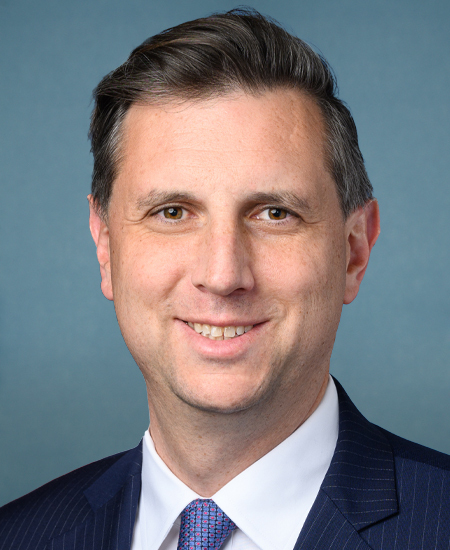
Rep. Seth Magaziner
Sponsored bills
Maddy summaryHR 7436 requires the Department of Homeland Security (DHS) to create standardized training for all new employees in the Office of Intelligence and Analysis (OIA). This includes mandatory civil rights and privacy training (citing the Privacy Act of 1974), specialized training for analysts on intelligence standards, and open-source intelligence collection protocols. The bill also mandates tracking training completion, quarterly public lists of available advanced training from other agencies, and annual reports to Congress on implementation progress. It further requires a Comptroller General review comparing DHS training to other intelligence agencies within two years. The law directly affects OIA staff, including new hires and those in specific roles like open-source intelligence collection.
Maddy summaryHR 7443, the I&A Mission Reorientation Act of 2026, requires the DHS Office of Intelligence and Analysis (I&A) to prioritize supporting state, local, tribal, and territorial governments and private sector entities with timely intelligence. The bill mandates two-way information sharing (receiving from and sharing with these entities), maintains engagement with fusion centers, and ensures DHS leadership support doesn’t undermine this mission. It directs the I&A office to identify emerging threats through forward-deployed capabilities and report to Congress within 180 days on implementation progress and metrics for evaluating effectiveness. This bill directly affects DHS’s intelligence operations and the entities receiving their support, focusing on operational realignment rather than new funding or penalties.
Maddy summaryThe Pell Grant Preservation and Expansion Act of 2026 aims to increase financial aid for college students by raising the maximum Pell Grant amount to $15,000 by the 2031-2032 award year and ensuring the program is fully funded through mandatory spending rather than annual appropriations. The bill also expands eligibility for students who receive means-tested government benefits by automatically assigning them a lower financial need score, while simultaneously allowing Dreamer students - undocumented immigrants who meet specific criteria such as graduating high school or serving in the military - to qualify for federal aid. Additional provisions restore the total number of semesters a student can receive Pell Grants from 12 to 18 and adjust the rules for satisfactory academic progress to reduce penalties for students who struggle to meet grade requirements. Finally, the legislation restores Pell Grant eligibility for some students who previously received outside scholarships and sets the law's effective date for July 1, 2026.
Maddy summaryThis bill strengthens child labor protections by expanding the definition of hazardous work for minors, particularly in dangerous industries like mining and explosives, and requires the government to update these regulations every five years. It imposes strict rules on companies with federal contracts, prohibiting them from using child labor in their supply chains and holding them jointly liable if their subcontractors violate these rules. The legislation also increases penalties for violations, including higher fines for serious injuries or deaths, allows for stop-work orders, and enables victims to seek significant compensatory and punitive damages. Additionally, the bill mandates training programs to help identify and prevent child labor abuses and requires the Department of Labor to report annually on work-related injuries and deaths.
Maddy summaryThis resolution honors the victims and survivors of a mass shooting that occurred at Brown University in Providence, Rhode Island, on December 13, 2025. It specifically acknowledges the two students who lost their lives and the nine others who were injured during the incident. The text also expresses condolences to the families of the deceased, commends the various first responders who assisted, and offers solidarity to the university community and the state. Finally, the resolution condemns the act of violence and recognizes that ending gun violence requires action from Congress.
Maddy summaryHR 5408, the Faster Labor Contracts Act, requires employers to begin negotiating a first contract with a newly certified union within 10 days of written request. If no agreement is reached within 90 days, the parties must seek mediation, and if unresolved after 30 days of mediation, the dispute moves to binding arbitration by a three-member panel. The arbitration decision, based on factors like employer finances, industry standards, and cost of living, becomes binding for two years. This bill directly affects newly certified unions and their employers during initial contract negotiations, aiming to reduce delays that currently average 465 days.
Maddy summaryThis bill directs the Federal Aviation Administration to conduct a study within 180 days to determine if smaller aircraft, designed for 10 to 19 passengers, can be safely used for scheduled commercial flights. The investigation must examine how allowing these planes in commercial service would affect the economics for airlines serving small communities, review regulations in other countries, and gather input from manufacturers, rural communities, and safety experts. Once the study is finished, the FAA Administrator will submit a report detailing the findings to both the House and Senate committees.
Maddy summaryThis resolution expresses support for designating June 5, 2026, as National Gun Violence Awareness Day and June 2026 as National Gun Violence Awareness Month. The bill calls on the public to wear orange on the designated day to honor victims and promote awareness of gun safety. It highlights statistics on gun-related deaths and injuries to underscore the need for community discussions on making neighborhoods safer.
Maddy summaryThe Worker Rights and Support Act amends the Fair Labor Standards Act to require employers to provide specific break times for employees, directly affecting workers covered under federal wage and hour laws. Under the new rules, employees must receive at least a 30-minute meal break for every six hours worked, along with a 10-minute break or time to use a restroom for every four hours, and up to 20-minute breaks for medical needs. While meal breaks can be unpaid if the employee is fully relieved of work, any break where the employee remains on duty or cannot leave the site must be paid at a rate of at least one and a half times their regular wage. The bill also allows employees to voluntarily waive meal breaks but prohibits employers from forcing them to do so, and it ensures that existing collective bargaining agreements or state laws offering better protections remain in effect.