

Maddy summaryHR 4460, the SAFE Guidance Act, requires specific financial agencies to include a clear disclaimer on all new guidance documents. The bill mandates that this "guidance clarity statement" (stating the guidance has no legal force and doesn’t create rights or obligations) appear prominently on the first page of any guidance issued after enactment. It directly affects nine federal financial agencies, including the CFPB, Treasury, FDIC, and SEC, which issue guidance interpreting laws or regulations. The key provision ensures regulated entities (like banks and lenders) understand that noncompliance with such guidance doesn’t automatically mean breaking the law.
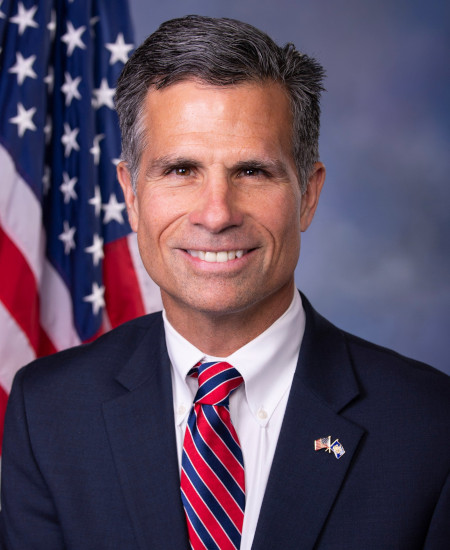
Rep. Daniel Meuser
Sponsored bills
Maddy summaryThis bill changes how the FDIC Board is appointed and governed. It requires two new directors to have specific banking experience (one with oversight of small banks and one with experience at institutions under $10 billion in assets) and limits total board service to 12 years. The Director of the Bureau of Consumer Financial Protection will serve as a non-voting observer on the board, replacing previous references to the Consumer Financial Protection Bureau. These changes directly affect FDIC Board members and the CFPB Director's role in board proceedings.
Maddy summaryHR 2808, the Homebuyers Privacy Protection Act, restricts how consumer reporting agencies share credit reports during mortgage applications. It prevents agencies from sending these reports to third parties unless the request is tied to a firm credit offer and the recipient has either the homebuyer’s explicit written consent or is directly involved in the mortgage (like the lender, loan servicer, or the homebuyer’s bank holding an active account). This directly affects homebuyers applying for residential mortgages by limiting unsolicited sharing of their credit information. The law amends the Fair Credit Reporting Act to strengthen privacy protections around mortgage-related credit data.
Maddy summaryThis bill requires the Bureau of Land Management (BLM) to complete pending coal lease applications under the Mineral Leasing Act. It mandates the BLM to finalize environmental reviews, set fair market value, and approve qualified applications within a "reasonable timeframe," directly affecting coal companies with existing applications awaiting approval. The bill also overrides a 2016 Department of the Interior policy that paused coal leasing, ensuring current leasing processes proceed without further delay. Key provisions include streamlining administrative steps for existing applications and removing barriers to mining activity approvals. The law does not change environmental standards but accelerates the leasing process for applications already in review.
Maddy summaryHR 1569, the CATCH Fentanyl Act, establishes a 5-year pilot program to test nonintrusive inspection technologies at U.S. border ports of entry. The bill requires U.S. Customs and Border Protection (CBP) to evaluate at least five technology enhancements - including AI, machine learning, and quantum sensing - to improve detection of contraband, drugs, weapons, and threats while reducing inspection wait times. Pilot projects must prioritize cost-effective solutions that integrate with existing systems, adhere to privacy protections, and report findings on performance metrics like detection rates and throughput. The program mandates detailed reports to Congress on effectiveness, implementation plans, and privacy impacts, using existing funding without new appropriations.
Maddy summaryThe TRAPS Act establishes a federal Task Force on Payment Scams, chaired by the Treasury Secretary, to coordinate efforts across agencies like the FTC, Federal Reserve, and consumer groups. The Task Force will study current scam tactics (such as fake text messages or fraudulent payment platforms), evaluate prevention strategies, and develop recommendations to help consumers avoid and report scams. It must submit an initial report within one year and annual updates, focusing on improving federal-state coordination and education programs. This bill directly affects government agencies and stakeholders participating in the Task Force, with the goal of protecting consumers from evolving payment scams.
Maddy summaryHR 940 (FAIR Exams Act) requires federal banking regulators to deliver final examination reports to financial institutions within 60 days after an exit interview or when additional information is provided. It creates an Office of Independent Examination Review led by a presidentially appointed Director to handle appeals of material supervisory determinations, including investigating complaints and reviewing exam procedures. Financial institutions gain the right to request an independent review of exam findings within 60 days, with the Director making final recommendations to regulators within 60 days, and prohibits retaliation for using these appeal rights. The bill directly affects all federally regulated banks, credit unions, and their representatives subject to federal examinations.
Maddy summaryThis bill adds "spotted lanternfly control" as a priority research area under federal agricultural funding, authorizing grants to develop and share tools for combating the invasive spotted lanternfly pest (Lycorma delicatula). It directly affects farmers, agricultural communities, and state departments of agriculture in states like Pennsylvania where the pest causes significant crop damage. The key provision amends existing law to allow research grants focused on creating effective treatments and management strategies for the pest. The bill also extends the funding period for all high-priority research initiatives through 2030.
Resident Physician Shortage Reduction Act of 2025 This bill increases the number of residency positions eligible for graduate medical education payments under Medicare for qualifying hospitals, including hospitals in rural areas and health professional shortage areas. The bill provides for an additional increase of 2,000 positions per fiscal year from FY2026-FY2032; during this period, each hospital may receive up to 75 additional positions in total under the bill and current law. Additionally, one-third of the positions that are made available under the bill must be allocated to hospitals that are already operating above applicable resident limits. The bill also requires the Government Accountability Office to report on strategies to increase the diversity of the health professional workforce, including with respect to representation from rural, low-income, and minority communities.
Maddy summaryHR 4735, the Business of Insurance Regulatory Reform Act of 2025, clarifies that the Consumer Financial Protection Bureau (CFPB) cannot enforce federal consumer financial laws over companies already regulated by state insurance departments for their insurance activities. The bill amends Section 1027(f) of the Consumer Financial Protection Act to explicitly state that the CFPB lacks authority to regulate insurance products or services when a company is subject to state insurance regulation. It also requires the CFPB to broadly interpret its authority in favor of state insurance regulators for such entities. This directly affects insurance companies operating under state oversight, preventing overlapping federal enforcement. The change focuses on defining regulatory boundaries, not altering insurance product rules.