

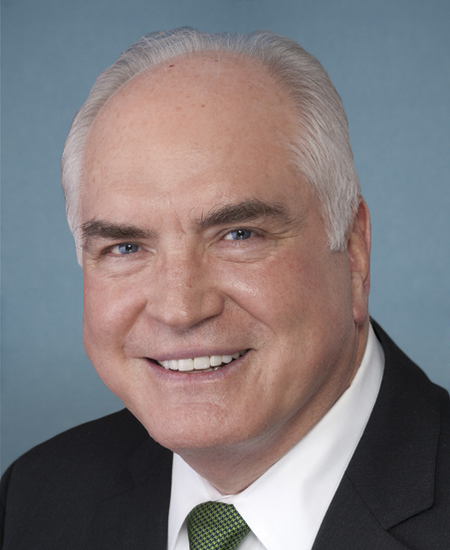
This resolution expresses support for police officers and other law enforcement personnel. The resolution further recognizes law enforcement officers across the United States in the pursuit of preserving safe and secure communities; the need to ensure that such officers have the equipment, training, and resources necessary to protect their health and safety while they are protecting the public; and the law enforcement community for acts of sacrifice and heroism. The resolution expresses condolences and appreciation to the loved ones of each law enforcement officer who has made the ultimate sacrifice in the line of duty.
Rep. Mike Kelly
Sponsored bills
Maddy summaryHRES 64 is a non-binding House resolution affirming the U.S.-South Korea alliance. It highlights historical ties (dating to 1882), economic partnerships (including 2023 trade data), and security cooperation (like the 1953 Mutual Defense Treaty), while celebrating Korean American contributions to U.S. society. The resolution formally supports strengthening security, economic, and cultural ties between the two nations and notes the 2025 anniversary of Korean liberation. It does not create new laws or funding, but serves as a symbolic statement of congressional support for the alliance.
Maddy summaryHR 8603, the Dismemberment Abortion Ban Act of 2026, prohibits physicians from performing abortions that involve dismembering an unborn child and extracting it piece by piece or crushed from the uterus. The law allows exceptions only when the procedure is necessary to save the mother's life, while explicitly permitting other abortion methods for reasons such as rape or incest. It imposes criminal penalties of up to two years in prison or fines on physicians who violate the ban and creates a civil lawsuit system where women or parents of minors can seek monetary damages and attorney fees against providers. The bill also defines an 'unborn child' as a human organism from fertilization until birth and clarifies that the woman undergoing the procedure cannot be prosecuted or held financially liable.
Maddy summaryThe Local Law Enforcement Support Act of 2026 expands funding opportunities for local police departments through the Byrne JAG and COPS programs. These funds can be used to recruit and train officers, purchase protective gear, and acquire specific tools like digital forensics equipment, drone technology, and ballistics analysis systems. The bill also allows for investments in software for cyber investigations and victim services. By adding these categories to the list of eligible expenses, the legislation provides law enforcement agencies with more options for addressing modern crime challenges.
Maddy summaryThis bill, the IRS Whistleblower Program Improvement Act, aims to strengthen protections and incentives for individuals who report tax violations to the Internal Revenue Service. It directly affects whistleblowers who submit information about tax evasion or avoidance schemes and the IRS officials who evaluate those reports. Key changes include requiring Tax Court reviews of whistleblower awards to be conducted de novo based on the original administrative record, granting whistleblowers anonymity before the Tax Court unless a societal interest outweighs potential harm, and adding interest to award amounts if the IRS delays providing preliminary recommendations. The legislation also modifies IRS annual reports to include descriptions of top tax avoidance schemes disclosed by whistleblowers and corrects a provision regarding attorney fee deductions for whistleblowers.
Clergy Act This bill establishes a two-year window for certain members of the clergy and Christian Science practitioners to revoke their exemption from Social Security and Medicare taxes on ministerial earnings. Under current law, such individuals who object to participation in public insurance programs on religious or conscientious grounds may apply to the Internal Revenue Service (IRS) for an irrevocable exemption and will not receive Social Security or Medicare benefits in retirement unless they have qualifying credits from other employment. The IRS must develop a plan to inform members of the clergy and Christian Science practitioners of their eligibility to revoke prior exemptions, pursuant to the bill's changes.
Maddy summaryThe Supporting Energy and Economic Development (SEED) Act extends tax credits for biodiesel and renewable diesel production through 2029. It prevents taxpayers from receiving both the production credit and the fuel use credit for the same fuel, ensuring only one benefit is claimed. These changes apply to fuel sold or used after the bill becomes law.
Maddy summaryThe Concurrent Care for Comfort Act modifies Medicare rules to allow individuals with end-stage renal disease who elect hospice care to continue receiving palliative dialysis services. Under this bill, these patients can receive up to ten sessions of dialysis focused on comfort rather than treatment or maintenance, with payments made separately from the standard hospice care bundle. The legislation establishes a new payment methodology for these services starting in 2026 and grants the Secretary of Health and Human Services the authority to adjust the session limit based on future data and stakeholder feedback. Additionally, the act clarifies that patients must still meet standard Medicare cost-sharing requirements, such as deductibles and coinsurance, for these specific palliative dialysis sessions.
Maddy summaryThis resolution expresses support for the Working Families Tax Cuts, a law already enacted in July 2025 that provides various tax benefits to American taxpayers. The bill directly affects individuals and families by recognizing specific provisions that reduce tax liability, including expanded child tax credits, increased standard deductions, and tax relief for tipped workers and overtime pay. Key provisions include making a four-person household earning under $73,000 generally face zero federal income tax, increasing the child tax credit to $2,200 per child, and allowing 529 accounts to cover K-12 and trade school expenses. The resolution also acknowledges tax relief for seniors, auto loan interest deductions for American-made vehicles, and expanded health savings account access. This is a procedural measure that formally acknowledges existing tax policies rather than creating new legislation.
Maddy summaryThis bill, titled the Trump Accounts for All Generations Act, makes a specific program related to "Trump accounts" permanent and adjusts its contribution limits. It directly affects individuals who contribute to these accounts by altering their long-term availability and value. The legislation permanently extends the "Trump accounts" contribution program by removing its scheduled expiration date of January 1, 2029. Furthermore, it introduces an annual inflation adjustment for the program's $1,000 contribution amount, beginning in taxable years after 2028. The bill also removes the word "pilot" from the program's title and related sections of the tax code, formally establishing it as an ongoing program.