

Maddy summaryThe Postsecondary Student Success Act of 2026 creates a competitive grant program to help colleges improve graduation rates for high-need students, including those from low-income backgrounds, first-generation families, and military-connected individuals. To receive funding between 2027 and 2032, eligible institutions must submit plans detailing how they will use evidence-based strategies, such as better advising, accelerated learning options, and improved transfer pathways, to support student retention and completion. The law requires that at least 20 percent of the available funds go to projects using the most rigorously tested methods and mandates that 2 percent be reserved specifically for Tribal Colleges and Universities. Additionally, the Department of Education must evaluate the effectiveness of these programs and report the results to Congress within 18 months of the bill's enactment.
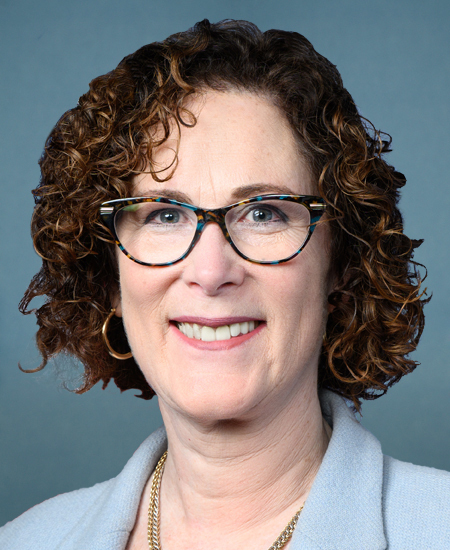
Rep. Val T. Hoyle
Sponsored bills
Maddy summaryThe Keep Public Funds in Public Schools Act of 2026 eliminates a federal tax credit that allowed parents to deduct contributions to scholarship granting organizations from their income. By removing these specific tax breaks, the bill prevents the use of public tax dollars to support private school vouchers and scholarship programs. This change directly affects families who currently rely on these tax incentives to fund education outside the public school system. The provisions take effect for taxable years beginning after December 31, 2026.
Maddy summaryThe DASH Act aims to expand affordable housing options for low-income individuals, homeless persons, and first-time homebuyers by creating new federal programs and modifying existing tax laws. A primary component is the creation of 250,000 new rental vouchers in 2026 for people experiencing homelessness or at risk of homelessness, which includes funding for supportive services like healthcare and job training, as well as requirements for public housing agencies to prioritize youth and families. The bill also establishes a modular construction pilot program to lower building costs, a grant system to reward local governments that adopt zoning rules allowing denser housing like duplexes and accessory dwelling units, and a new tax credit to help low-income families purchase starter homes in distressed communities. Additionally, the legislation introduces a new refundable tax credit for first-time homebuyers, expands tax incentives for middle-income housing, and makes several adjustments to how homeowners can deduct losses or handle debt discharges related to their principal residences.
Maddy summaryThis bill, titled the Dignity and Due Process for Children Act of 2026, restricts how unaccompanied children under 18 are handled by immigration authorities in the United States. It requires immigration judges to issue an arrest warrant before detaining these children pending removal decisions and prohibits the use of military personnel or Department of Defense vehicles to transport them for deportation, except during declared natural disasters. Additionally, the law forbids government agencies from pressuring children to sign legal documents that affect their status without first ensuring they have confidential access to a lawyer, mandating legal referrals within five business days if a child does not already have one.
Maddy summaryThe Fair Day in Court for Kids Act of 2026 aims to improve the immigration court process for unaccompanied children by guaranteeing them government-funded legal representation. Under this bill, the Department of Health and Human Services would appoint lawyers for these children as soon as they enter federal custody, ensuring they have an attorney for every stage of their case, even if they turn 18 or are reunited with family while proceedings are pending. The law also requires that children receive copies of their immigration files at least seven days before a hearing and allows them to have a lawyer present during interviews and detention facility visits. Additionally, the bill mandates annual reports on how many children received counsel and establishes rules for pro bono legal services to support these efforts.
Maddy summaryThe Puerto Rico Democratic Self-Determination Act establishes a mandatory, two-round plebiscite in 2027 to allow eligible voters in Puerto Rico to choose among four political status options: independence, current Commonwealth status, statehood, or sovereignty in free association with the United States. If a majority vote is not achieved in the initial election, a runoff will be held to select between the two most popular choices, with the results triggering specific transition procedures for each outcome. Under the independence and free association paths, the bill outlines steps for drafting a new constitution, electing officers, and a presidential proclamation that would transfer sovereignty and end U.S. territorial control. For the statehood option, the President would issue a proclamation admitting Puerto Rico as the 51st state, while the Commonwealth option would create a joint commission to negotiate reforms to the current relationship. The legislation also details how federal laws, including tax codes and immigration rules, would change depending on the chosen status and ensures that existing economic benefits and social security rights are protected during any transition.
Maddy summaryHR 5408, the Faster Labor Contracts Act, requires employers to begin negotiating a first contract with a newly certified union within 10 days of written request. If no agreement is reached within 90 days, the parties must seek mediation, and if unresolved after 30 days of mediation, the dispute moves to binding arbitration by a three-member panel. The arbitration decision, based on factors like employer finances, industry standards, and cost of living, becomes binding for two years. This bill directly affects newly certified unions and their employers during initial contract negotiations, aiming to reduce delays that currently average 465 days.
Maddy summaryThis concurrent resolution directs the President to withdraw all United States Armed Forces from Lebanon within seven days of the bill's adoption. It operates under section 5(c) of the War Powers Resolution, which allows Congress to mandate the removal of troops from foreign locations. The measure directly affects the executive branch by requiring immediate compliance with the specified timeline for troop withdrawal.
Maddy summaryThis bill authorizes the U.S. Mint to produce commemorative $5 gold and $1 silver coins marking the 25th anniversary of the September 11, 2001, terrorist attacks. The coins must feature designs honoring victims and first responders (including the inscription "Never Forget") and will be sold only during 2027-2028. All surcharges ($35 per gold coin, $10 per silver coin) collected from sales will fund the National September 11 Memorial and Museum at the World Trade Center, with no net cost to the federal government. The coins are legal tender but primarily intended for collectors, not circulation.
Maddy summaryThe Smithsonian American Women’s History Museum Act authorizes the creation of a new Smithsonian museum dedicated to women’s history, to be located within the National Mall Reserve in Washington, D.C. If the site is managed by another federal agency, the bill requires that agency to transfer the land after notifying Congress and relevant committees. The museum must ensure exhibits and programs accurately represent diverse women’s experiences by consulting a broad range of experts and community voices. The Smithsonian will submit biennial reports to Congress detailing how the museum meets these representation standards.