

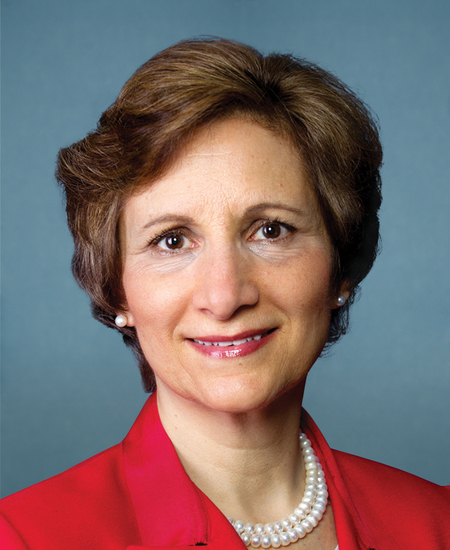
Photo of Suzanne Bonamici
D United States House · District 1 · Oregon On the 2026 ballot

Rep. Suzanne Bonamici

Compare
Total votes
2,818
all sessions
Attendance
97%
72 missed
Near the chamber average
With party
98%
of cast votes
Near the chamber average
Bipartisan score
1%
crosses aisle rarely
Near the chamber average
Sponsored
2,285
bills & resolutions
Higher than 93% of chamber peers
Committees
6
assignments
2,285 bills and resolutions

Sponsored bills

Total
2,285
Primary
178
Co-sponsor
2,107
This page
2,285
matching current filters
Co-sponsor HR 8940
In committee · Oregon House · Co-sponsor
Federal Death Penalty Prohibition Act

Maddy summaryThe Federal Death Penalty Prohibition Act bans the imposition of the death penalty for any federal crime committed after the law takes effect. It also requires that individuals currently sentenced to death under federal law be resentenced to a different punishment. This legislation directly affects the federal criminal justice system by eliminating capital punishment as a sentencing option.

In committee May 20, 2026 1 co-sponsor
Co-sponsor HR 8937
In committee · Oregon House · Co-sponsor
Early Childhood Workforce Advancement Act of 2026

Maddy summaryThe Early Childhood Workforce Advancement Act of 2026 creates a competitive grant program to help partnerships establish or expand training programs for early childhood education careers. These grants are awarded to groups that include colleges, child care providers, and community organizations, with a focus on areas that have shortages of childcare workers. The funding can be used to develop educational materials, support student recruitment and retention, improve teacher training, and offer financial assistance like scholarships or stipends to students. Priority is given to applicants serving rural and urban communities and those providing care for infants, toddlers, and children with disabilities. Recipients must submit annual reports and undergo independent evaluations to ensure the programs effectively improve education outcomes.

In committee May 20, 2026 1 co-sponsor
Primary HR 8916
In committee · Oregon House · Lead sponsor
CHIERS Act of 2026

Maddy summaryThe CHIERS Act of 2026 authorizes federal grants to help individuals with substance use disorders reach treatment and supportive services by covering transportation costs. Eligible recipients include nonprofit organizations, government agencies, and health centers that will use the funds to provide rides, purchase vehicles, or pay for taxi services for these individuals. The program specifically targets people experiencing homelessness or living in low-income areas where travel barriers limit access to care, while explicitly excluding involuntary treatment transport and law enforcement use. To ensure effectiveness, grant recipients must submit detailed plans and performance reports focused on reducing missed appointments, and the funding is designed to supplement rather than replace existing local resources.

In committee May 20, 2026 0 co-sponsors
Primary HR 7129
In committee · Oregon House · Lead sponsor
Water Power Research and Development Reauthorization Act

Maddy summaryThis bill reauthorizes federal funding for water power research and development (including hydropower and marine energy) through 2030, increasing annual funding to $300 million - $200 million for marine energy and $100 million for hydropower - up from prior levels. It adds new requirements such as advancing U.S. manufacturing of marine energy components through university-industry partnerships, improving hydropower licensing by compiling environmental data, and integrating cybersecurity into research. The bill also mandates workforce development programs to train future professionals and requires annual congressional briefings on program progress. These changes directly affect the Department of Energy, research institutions, and industries working on water power technologies.

In committee May 20, 2026 0 co-sponsors
Primary HR 6834
In committee · Oregon House · Lead sponsor
STORE Act of 2025

Maddy summaryHR 6834 (STORE Act of 2025) increases annual funding for the Emergency Food Assistance Program (EFAP) from $15 million to $25 million (2026-2030) and expands grant eligibility to include state agencies and tribal, low-income, and remote community organizations. It allows grants to support mobile/home food delivery, refrigerated truck purchases, and cold storage infrastructure for food banks and pantries. The bill also requires the USDA to produce a national report within two years assessing refrigeration storage shortages and costs for emergency food organizations. These changes directly affect state agencies administering EFAP and food distribution networks serving communities with food insecurity.

In committee May 20, 2026 0 co-sponsors
Co-sponsor HR 210
In committee · Oregon House · Co-sponsor
Dental Care for Veterans Act

Dental Care for Veterans Act This bill expands eligibility for veterans for dental care provided by the Department of Veterans Affairs (VA). Specifically, the bill makes all veterans who are enrolled in the VA health care system eligible for VA-provided dental services. Currently, only veterans who have a service-connected dental issue or meet other narrow criteria are eligible for certain dental services. The bill phases in eligibility over four years based upon existing eligibility, degree of service-connected disability or other disability, prisoner of war status, award of a Purple Heart, financial need, or VA health care eligibility.

In committee May 20, 2026 1 co-sponsor
Co-sponsor HR 8896
In committee · Oregon House · Co-sponsor
Loan Forgiveness for Educators Act of 2026

Maddy summaryThe Loan Forgiveness for Educators Act of 2026 expands existing federal student loan relief programs to offer full debt cancellation for teachers and early childhood educators who work in high-need schools or specific early childhood programs for five years. Under the bill, eligible educators can receive 100 percent forgiveness of their outstanding loans after completing five years of service, which may be consecutive or nonconsecutive, while also qualifying for monthly loan payments to be made by the government during their employment. The legislation defines "high need schools" as those with at least 30 percent of students from low-income families and includes various early childhood settings, while also extending benefits to parents who borrow PLUS loans for their qualifying children or who are educators themselves. To support implementation, the law requires the Department of Education to publish a list of eligible schools and programs, allows for self-certification in some early childhood roles, and ensures that educators who leave their positions early or are promoted within the same organization do not lose their eligibility for forgiveness.

In committee May 19, 2026 1 co-sponsor
Co-sponsor HR 8868
In committee · Oregon House · Co-sponsor
Restoring Overtime Pay Act of 2026

Maddy summaryThe Restoring Overtime Pay Act of 2026 raises the minimum salary required for certain employees to be exempt from federal overtime pay rules, starting at $45,000 per year and increasing annually until it reaches $75,000 by 2029. The bill also mandates that this threshold automatically updates each year to match the 55th percentile of weekly earnings for full-time salaried workers nationwide, with adjustments taking effect based on Bureau of Labor Statistics data. Additionally, the law modifies the duties test for exemption, requiring that at least 20 percent of an employee's time be spent on executive or administrative tasks rather than the current 40 percent standard. These changes directly affect employers and workers covered by the Fair Labor Standards Act by redefining eligibility for overtime exemptions and establishing a new mechanism for adjusting salary requirements over time.

In committee May 15, 2026 1 co-sponsor
Co-sponsor HR 8866
In committee · Oregon House · Co-sponsor
Build to Scale Reauthorization Act of 2026

Maddy summaryThe Build to Scale Reauthorization Act of 2026 extends funding and updates rules for the Regional Technology and Innovation Hub Program, which supports economic development in specific geographic areas. The bill defines eligible organizations as state or nonprofit groups that provide direct financing, commercialization services, and entrepreneurial support to local businesses. It mandates that the federal government cover up to 90 percent of project costs and requires outreach to rural communities and areas facing economic hardship. Additionally, the legislation authorizes $50 million annually from 2026 to 2030 and allows the use of previously unspent funds to continue the program.

In committee May 15, 2026 1 co-sponsor
Co-sponsor HRES 1291
In committee · Oregon House · Co-sponsor
Expressing support for the recognition of May 3 through May 9, 2026, as Wildfire Preparedness Week, the national event educating the public on fire safety and preparedness, and supporting the goals of a Wildfire Preparedness Week.

Maddy summaryH.Res. 1291 is a non-binding resolution that formally recognizes May 3 through May 9, 2026, as Wildfire Preparedness Week. The bill aims to raise public awareness about wildfire risks and promote educational initiatives regarding fire safety and evacuation planning. It highlights the dangers of smoke exposure for both the general public and firefighters while noting that human activity causes the majority of wildland fires. This measure does not change laws or allocate funding, but rather expresses the House of Representatives' support for these preparedness goals.

In committee May 14, 2026 1 co-sponsor
Showing 71 to 80 of 2,285 bills
Previous 1 7 8 9 229 Next