

Maddy summaryThis bill reauthorizes the existing program providing support and treatment services for law enforcement officers experiencing mental health crises. It extends the funding authorization period from 2020-2024 to 2025-2029 under the Omnibus Crime Control and Safe Streets Act of 1968. The bill directly affects law enforcement officers who access these crisis support services through participating state and local programs. It makes no new policy changes but ensures the current program continues operating without interruption for five additional years.
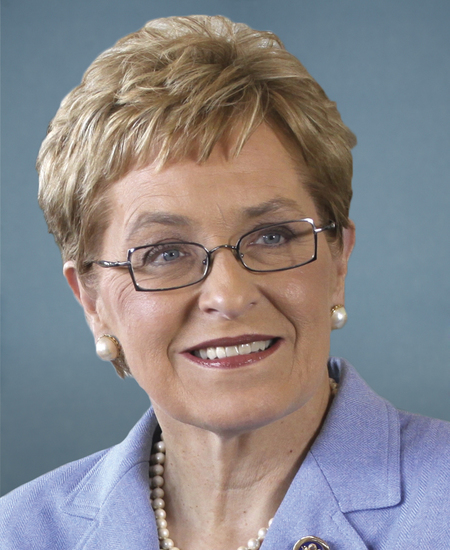
Rep. Marcy Kaptur
Sponsored bills
Maddy summaryHR 5220, the Congressional Power of the Purse Act, strengthens Congress's authority over federal spending by preventing the executive branch from withholding appropriated funds. The bill requires federal agencies to report on budget management, adds penalties for failing to comply with congressional oversight requirements, and establishes new procedures for congressional review of national emergencies. It directly affects federal agencies, the executive branch, and the balance of power between Congress and the President regarding budget authority. The law aims to increase transparency and accountability in how government funds are managed and spent.
Maddy summaryHR 5198, the Rural Health Clinic Location Modernization Act of 2025, changes Medicare eligibility rules for rural health clinics by updating the definition of "urban area" used to determine clinic qualification. It replaces the current "urbanized area" standard with a clearer definition: any urban area (per Census Bureau data) having a population of 50,000 or more. This adjustment directly affects clinics seeking Medicare certification, ensuring they meet consistent geographic criteria for rural designation. The change takes effect January 1, 2027, aiming to simplify qualification rules without altering Medicare coverage or benefits.
Maddy summaryHR 5145, the Bipartisan Premium Tax Credit Extension Act, extends enhanced federal subsidies for health insurance premiums through 2026. It directly affects individuals purchasing coverage through health insurance marketplaces who qualify for premium tax credits. The bill extends the period for increased credit amounts (through 2026 instead of 2025) and maintains the rule allowing tax credits for households earning above 400% of the federal poverty level. These changes apply to tax years beginning after December 31, 2025.
Maddy summaryHRES 657 is a non-binding House resolution affirming that the retirement age for Social Security and Medicare should not be raised, referencing President Trump’s 2024 pledge. It states the House’s position that current eligibility ages must be preserved, rejecting proposals to delay access to benefits for seniors. The resolution highlights that raising retirement ages would disproportionately impact workers in physically demanding jobs and lower-income communities who rely on these programs for income and healthcare. As a symbolic statement - not a law - it expresses support for maintaining existing benefits but does not change policy or create new obligations.
Maddy summaryThis resolution expresses the House of Representatives' opposition to any presidential pardon, commutation, or other clemency for Ghislaine Maxwell, who was convicted in 2021 for conspiring to traffic minors for sexual abuse alongside Jeffrey Epstein. It highlights her 20-year prison sentence for facilitating the grooming and abuse of children, emphasizing that clemency would deny justice to victims. The resolution is non-binding but formally states that her conviction and sentence were warranted, and that her ongoing imprisonment is the only available measure of justice for survivors.
Maddy summaryHR 4796, the Restoring Essential Healthcare Act, repeals a provision that blocked Medicaid payments to certain healthcare providers during a specific period. It directly affects Medicaid beneficiaries who received care from these providers between the enactment of the prior law (Public Law 119-21) and this bill's enactment. The key provision retroactively restores Medicaid payments for services already provided during that blocked period, treating the payment restriction as if it never existed. This change ensures eligible individuals and providers receive reimbursement for covered care delivered during the prohibited timeframe.
Maddy summaryThis bill authorizes the U.S. Secretary of State to establish an annual strategic dialogue with Belarus's democratic movement. It seeks to support free elections, assist Belarusians abroad with essential services, address regional security impacts from Belarus and Russia, impose sanctions on President Lukashenka's regime for human rights abuses and support for Russia's Ukraine invasion, and facilitate the release of political prisoners. The dialogue directly affects Belarus's democratic opposition, citizens inside and outside Belarus, and civil society groups working toward democratic reforms. Key provisions include funding cultural programs, restoring democratic institutions, and coordinating regional responses to political instability.
Maddy summaryHR 4734, the "Hands Off Our Social Security Act," prohibits federal actions that would alter Social Security benefits, data handling, workforce levels, office locations, or communication systems without explicit congressional approval. It directly protects Social Security beneficiaries and the Social Security Administration (SSA) by banning unauthorized changes to benefits, data mining, privatization, staff cuts, office closures, or reduced phone/in-person services. Key provisions require Congress to approve any modifications to benefits, workforce reductions, or office closures, and mandate the SSA to maintain existing communication channels. The bill also mandates annual GAO audits to ensure compliance with these restrictions. This legislation focuses on preserving current Social Security operations and access, not creating new benefits or altering eligibility.
Maddy summaryHR 1917, the Great Lakes Mass Marking Program Act of 2025, establishes a federal program within the U.S. Fish and Wildlife Service to mass-tag hatchery-reared fish in the Great Lakes. The program directly affects federal, state, and tribal fisheries agencies by providing data on hatchery fish versus wild fish populations through automated tagging. Key provisions authorize $5 million annually (2026-2030) to purchase tagging equipment, hire staff, and share collected data with partner agencies to inform management decisions about fish stocking, habitat restoration, and balancing predator-prey relationships. This data supports the economic stability of the Great Lakes fisheries sector, which contributes over $7 billion annually to the regional economy.