

Pain-Capable Unborn Child Protection Act This bill establishes a new criminal offense for performing or attempting to perform an abortion if the probable post-fertilization age of the fetus is 20 weeks or more. A violator is subject to criminal penalties—a fine, a prison term of up to five years, or both. The bill provides exceptions for an abortion (1) that is necessary to save the life of the pregnant woman, or (2) when the pregnancy is the result of rape or incest. A physician who performs or attempts to perform an abortion under an exception must comply with specified requirements. A woman who undergoes a prohibited abortion may not be prosecuted for violating or conspiring to violate the provisions of this bill.
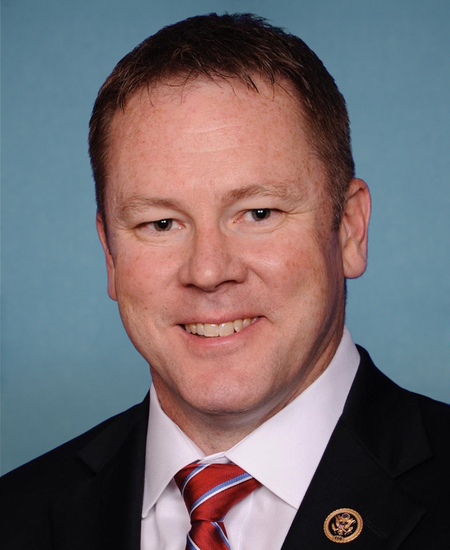
Rep. Warren Davidson
Sponsored bills
This joint resolution proposes a constitutional amendment requiring Representatives to be apportioned according to the number of U.S. citizens in each state, rather than the number of persons in each state.
Life at Conception Act This bill declares that the right to life guaranteed by the Constitution is vested in each human being at all stages of life, including the moment of fertilization, cloning, or other moment at which an individual comes into being. Nothing in this bill shall be construed to authorize the prosecution of any woman for the death of her unborn child.
Second Amendment Preservation Act This bill prohibits the use of FY2021 appropriations to enforce any measure, law, regulation, or guidance issued by the Bureau of Alcohol, Tobacco, Firearms and Explosives after November 1, 2020; or to enforce, implement, or advance any measure, law, regulation, or guidance relating to the lawful use, purchase, sale, possession, or transportation of firearms by any U.S. citizen.
No Taxpayer Funding for Abortion and Abortion Insurance Full Disclosure Act of 2021 This bill modifies provisions relating to federal funding for, and health insurance coverage of, abortions. Specifically, the bill prohibits the use of federal funds for abortions or for health coverage that includes abortions. Such restrictions extend to the use of funds in the budget of the District of Columbia. Additionally, abortions may not be provided in a federal health care facility or by a federal employee. Historically, language has been included in annual appropriations bills for the Department of Health and Human Services (HHS) that prohibits the use of federal funds for abortions—such language is commonly referred to as the Hyde Amendment. Similar language is also frequently included in appropriations bills for other federal agencies and the District of Columbia. The bill makes these restrictions permanent and extends the restrictions to all federal funds (rather than specific agencies). The bill's restrictions regarding the use of federal funds do not apply in cases of rape, incest, or where a physical disorder, injury, or illness endangers a woman's life unless an abortion is performed. The Hyde Amendment provides the same exceptions. The bill also prohibits qualified health plans from including coverage for abortions. Currently, qualified health plans may cover abortion, but the portion of the premium attributable to abortion coverage is not eligible for subsidies.
Eliminate Barriers to Innovation Act of 2021 This bill requires the Securities and Exchange Commission and the Commodity Futures Trading Commission to jointly establish a working group on digital assets. The working group must (1) report on the impact of the U.S. legal and regulatory framework on the digital asset market; and (2) provide recommendations regarding digital asset market fairness and integrity, cybersecurity standards, and the reduction of fraud and manipulation.
Fair Debt Collection Practices for Servicemembers Act This bill prohibits a debt collector from representing to service members that failure to cooperate with a debt collector will result in a reduction of rank, a revocation of security clearance, or military prosecution. The Government Accountability Office must report on the impact of this prohibition on the timely delivery of information to service members, military readiness, and national security.
Secure and Fair Enforcement Banking Act of 2021 or the SAFE Banking Act of 2021 This bill generally prohibits a federal banking regulator from penalizing a depository institution for providing banking services to a legitimate cannabis-related business. Prohibited penalties include terminating or limiting the deposit insurance or share insurance of a depository institution solely because the institution provides financial services to a legitimate cannabis-related business and prohibiting or otherwise discouraging a depository institution from offering financial services to such a business. Additionally, proceeds from a transaction involving activities of a legitimate cannabis-related business are not considered proceeds from unlawful activity. Proceeds from unlawful activity are subject to anti-money laundering laws. Furthermore, a depository institution is not, under federal law, liable or subject to asset forfeiture for providing a loan or other financial services to a legitimate cannabis-related business. The bill also provides that a federal banking agency may not request or order a depository institution to terminate a customer account unless (1) the agency has a valid reason for doing so, and (2) that reason is not based solely on reputation risk. Valid reasons for terminating an account include threats to national security and involvement in terrorist financing, including state sponsorship of terrorism. Finally, the bill decreases the cap on the surplus funds of the Federal Reserve banks. (Amounts exceeding this cap are deposited in the general fund of the Treasury.)
This resolution condemns the actions taken by the governments of China and Hong Kong to put in place national security legislation that violates the freedoms and rights guaranteed to the people of Hong Kong. (Hong Kong is a part of China but, by agreement, has operated a legal and economic system largely separate from China's.)
Global Trade Accountability Act of 2021 This bill requires congressional approval of certain unilateral trade actions (i.e., restrictions on the importation of an article). Such actions may take effect without congressional approval for one 90-day period if the President determines that it is necessary because of a national emergency, because of an imminent threat to health or safety, for the enforcement of criminal laws, or for national security; and submits written notice of the determination to Congress. The U.S. International Trade Commission must report on the effects on the U.S. economy of any unilateral trade action taken pursuant to this bill.