

Maddy summaryThis bill gives the Secretary of Housing and Urban Development (HUD) primary authority to set federal safety and construction standards for manufactured homes. Federal agencies seeking to establish new standards must first submit proposals to HUD for approval and cannot implement them without that approval. HUD may reject proposed standards if they would significantly raise production costs, conflict with existing HUD standards, or for other reasons deemed appropriate. The bill directly affects manufactured home manufacturers (due to potential cost impacts) and federal agencies (requiring pre-approval for new standards).
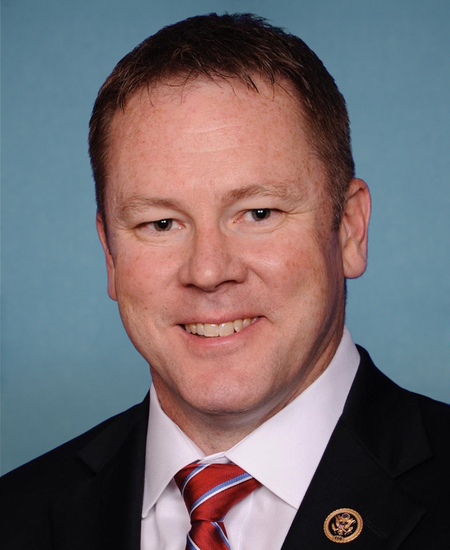
Rep. Warren Davidson
Sponsored bills
Maddy summaryThis bill amends the definition of "unauthorized alien" in immigration law by removing the phrase "or by the Attorney General" from Section 274A(h)(3) of the Immigration and Nationality Act. It is a procedural change to an existing legal definition with no new policy requirements or direct impact on specific groups. The bill does not alter enforcement mechanisms or create new obligations for employers or immigrants. This is a technical revision to statutory language, not a substantive policy change.
Maddy summaryHR 2808, the Homebuyers Privacy Protection Act, restricts how consumer reporting agencies share credit reports during mortgage applications. It prevents agencies from sending these reports to third parties unless the request is tied to a firm credit offer and the recipient has either the homebuyer’s explicit written consent or is directly involved in the mortgage (like the lender, loan servicer, or the homebuyer’s bank holding an active account). This directly affects homebuyers applying for residential mortgages by limiting unsolicited sharing of their credit information. The law amends the Fair Credit Reporting Act to strengthen privacy protections around mortgage-related credit data.
Maddy summaryThe Dollar Dominance Act of 2025 establishes a new Office of Strategic Currency Diplomacy within the State Department's Bureau for Commercial Diplomacy. This office will coordinate federal efforts to protect the U.S. dollar's role as the global reserve currency by countering foreign efforts to reduce its use, working with allies on financial systems, and monitoring Central Bank Digital Currencies. It requires the office to develop strategic plans (included in the State Department's Biannual Economic Security Report) to increase central bank holdings of dollars and dollar-denominated international transactions. The bill directly affects U.S. foreign policy agencies like the Treasury, Commerce, and intelligence departments, requiring them to align their international programs with this goal.
Maddy summaryThis bill repeals the Gun-Free School Zones Act of 1990 and makes technical amendments to Title 18 of the U.S. Code, specifically removing references to school zones in firearm offense provisions. It revises sections governing firearm restrictions (Section 922), definitions (Section 921), and penalties (Section 924) by renumbering and deleting specific paragraphs related to the repealed law. The bill directly affects federal firearm law enforcement and legal interpretations concerning school zones, but does not create new restrictions or protections. As a procedural repeal, it removes outdated language without altering current firearm regulations.
Maddy summaryHR 4989, the Streamlining Rural Housing Act of 2025, requires the Departments of Housing and Urban Development (HUD) and Agriculture (USDA) to simplify coordination for rural housing projects funded by both agencies. Within 180 days, they must create a memorandum of understanding to evaluate environmental review processes, designate a lead agency for efficiency, and maintain existing environmental standards. The bill establishes an advisory group with housing stakeholders - including nonprofits, developers, and residents - to guide implementation. It mandates a report within one year with recommendations to improve project efficiency without reducing resident safety, shifting long-term costs, or undermining environmental standards. This bill directly affects rural housing projects funded by HUD or USDA by targeting bureaucratic delays in approvals.
Maddy summaryHRES 631 is a symbolic House resolution (not a law) declaring that the U.S. national debt - citing $36.2 trillion in public debt as of January 2025 - is a threat to national security. It references debt-to-GDP ratios, interest expenses, and warnings from former defense officials like James Mattis and Dan Coats to support this stance. The resolution calls for restoring budget process reforms and addressing fiscal challenges but contains no binding policy changes or new spending rules. It affects no specific groups, as it is a formal congressional declaration without legislative effect.
Maddy summaryThe FAIR Act removes a specific provision (paragraph (12)) from Section 19(b) of the Federal Reserve Act, which previously governed how the Federal Reserve handles interest earnings on bank reserve balances. This change directly affects the Federal Reserve and the banks that hold reserves at the Federal Reserve. The amendment will take effect 180 days after the bill is enacted. The bill eliminates an existing rule without establishing new requirements or procedures.
Maddy summaryHR 4788 would amend a 1932 District of Columbia law to allow Members of Congress (Senators and Representatives) to carry concealed firearms in Washington, D.C., if they hold a valid concealed carry license from a state where they are permitted to carry, or are otherwise legally allowed to carry concealed in their home state. The bill requires these members to not be federally prohibited from possessing firearms, to carry a valid state-issued license or proof of residency rights, and to present photo identification. This exception applies only to Members of Congress and does not alter D.C.'s general concealed carry laws for other individuals. The provision would take effect upon the bill's enactment.
Maddy summaryHR 4810, the BUILD Housing Act, streamlines environmental reviews for HUD-funded housing projects by allowing the Secretary to designate such assistance as "special project" funds under the National Environmental Policy Act (NEPA). This change directly affects HUD housing programs, local governments, and federally recognized tribes by simplifying the review process for projects like affordable housing developments. The bill specifically adds "Indian Tribe" to the list of entities that can assume environmental review responsibilities, aligning with existing tribal housing laws. It does not create new funding or housing but modifies procedural requirements for existing programs.