

Maddy summaryThe ACCURATE Act establishes a new Commission on Hazard Risk Assessment Tools to improve the quality and consistency of natural hazard risk models used by federal agencies. This commission will include representatives from government agencies, state and local emergency organizations, insurance and banking industries, and various professional sectors to develop standards for hazard maps, flood assessments, and risk scores. The bill requires federal departments to adopt these new standards when purchasing hazard assessment tools from private companies, with specific documentation requirements to ensure the tools meet established quality criteria. The commission will submit regular reports to Congress on its findings and recommendations, and the entire commission will dissolve five years after the law takes effect.
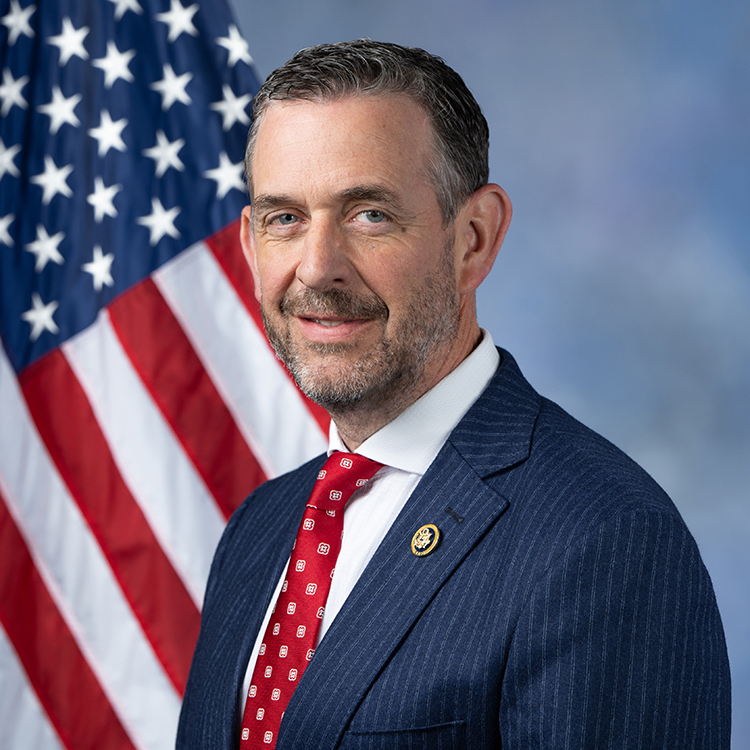
Rep. Michael A. Rulli
Sponsored bills
Maddy summaryThis House Resolution recognizes the efforts and public safety contributions of linemen and the important role they play in maintaining the nation's energy infrastructure. It expresses support for designating April 18, 2026, as "National Lineman Appreciation Day" and acknowledges linemen as first responders.
Maddy summaryThe ESA Amendments Act of 2025 makes significant changes to the Endangered Species Act of 1973 to streamline conservation efforts and reduce regulatory burdens. It establishes a national listing work plan with priority classifications for species to better allocate resources, and creates "Candidate Conservation Agreements with Assurances" that provide private landowners with regulatory certainty in exchange for conservation actions. The bill also requires the government to publish the basis for listings online, streamlines permitting processes for projects that comply with conservation measures, and modifies critical habitat designation to better accommodate existing conservation plans on private lands. These changes aim to improve conservation outcomes while reducing delays for landowners, developers, and federal agencies working with listed species.
Maddy summaryThe ICU Bed Act of 2026 mandates that hospitals, critical access hospitals, and rural emergency hospitals participating in Medicare report their intensive care unit (ICU) bed availability in real time. To achieve this, these facilities must participate in shared regional data systems and develop shared strategies for efficiently transferring patients when any hospital approaches ICU capacity. The Secretary of Health and Human Services will establish these regions based on factors like geography, population, and travel time between facilities. Additionally, the bill amends the Public Health Service Act to include efficient patient transfer activities in state and regional hospital preparedness efforts, extending funding for these activities through fiscal year 2031.
Maddy summaryHR 7725, the Stop Child Care Fraud Act, requires states administering federal child care assistance programs to detail specific fraud prevention measures in their plans. It directly affects states receiving Child Care and Development Block Grant funds by mandating they describe internal controls, fraud investigation processes, sanctions for providers or clients, and eligibility verification procedures. Key provisions include requiring states to outline how they use data from other agencies to verify provider eligibility and investigate fraudulent payments. The bill focuses on strengthening oversight mechanisms within existing federal child care programs to prevent misuse of funds. This is a policy change affecting state administrative processes, not individual families or providers.
This resolution recognizes the importance of fully funding the Department of Homeland Security (DHS). The resolution also (1) cautions that Americans are at greater risk each day DHS is subject to a lapse in appropriations, and (2) expresses gratitude to DHS employees for their commitment to protect the United States.
Maddy summaryThis resolution formally recognizes the 100th anniversary of the Sporting Arms and Ammunition Manufacturers' Institute (SAAMI), a trade organization founded in 1926. The bill commends SAAMI for developing industry standards that ensure firearms and ammunition are safe, reliable, and interchangeable. It acknowledges the organization's work in coordinating with government bodies, international standards groups, and industry stakeholders to maintain consistent safety practices. This measure is a ceremonial resolution that does not change any laws or regulations but serves to honor SAAMI's century of leadership in the firearms industry.
Maddy summaryThis resolution formally recognizes and honors six members of the Ohio Air National Guard who died in a KC-135 Stratotanker crash over Iraq on March 12, 2026. The bill specifically names the deceased service members and acknowledges their sacrifice during a refueling mission supporting Operation Epic Fury. It expresses the House's condolences to the families of the fallen and pledges that their service will not be forgotten.
Bill to Outlaw Wounding of Official Working Animals Act or the BOWOW Act This bill establishes that a non-U.S. national ( alien under federal law) convicted of, or who admits to having committed, an offense related to harming animals used in law enforcement is inadmissible and deportable.
Deporting Fraudsters Act of 2026 This bill makes certain acts related to public benefits fraud grounds for (1) barring a non-U.S. national ( alien under federal law) from admission into the United States, or (2) deporting the individual. The bill also makes such an individual ineligible for immigration enforcement relief, including relief for an individual in danger of subjection to torture. Specifically, this bill applies to individuals who have been convicted of, admit to having committed, or admit to acts which constitute certain offenses. Offenses covered by this bill include (1) fraud involving Supplemental Nutrition Assistance Program (SNAP) benefits, (2) fraud involving Social Security benefits, (3) fraud involving programs that receive federal funds, and (4) the production of fraudulent identification documents.