

Maddy summaryHR 361, the "Make Greenland Great Again Act," authorizes the President to begin negotiations with Denmark for the U.S. acquisition of Greenland starting January 20, 2025. It requires the President to submit any resulting agreement to specific congressional committees (Foreign Affairs and Foreign Relations) within five days, followed by a 60-day congressional review period. If Congress takes no action during that period, the agreement would automatically take effect. The bill does not change Greenland’s current status as part of Denmark’s Kingdom but proposes a diplomatic process for potential transfer. Note: This appears to be a symbolic or satirical proposal, as Greenland is an autonomous territory within Denmark’s Kingdom and not subject to unilateral acquisition.
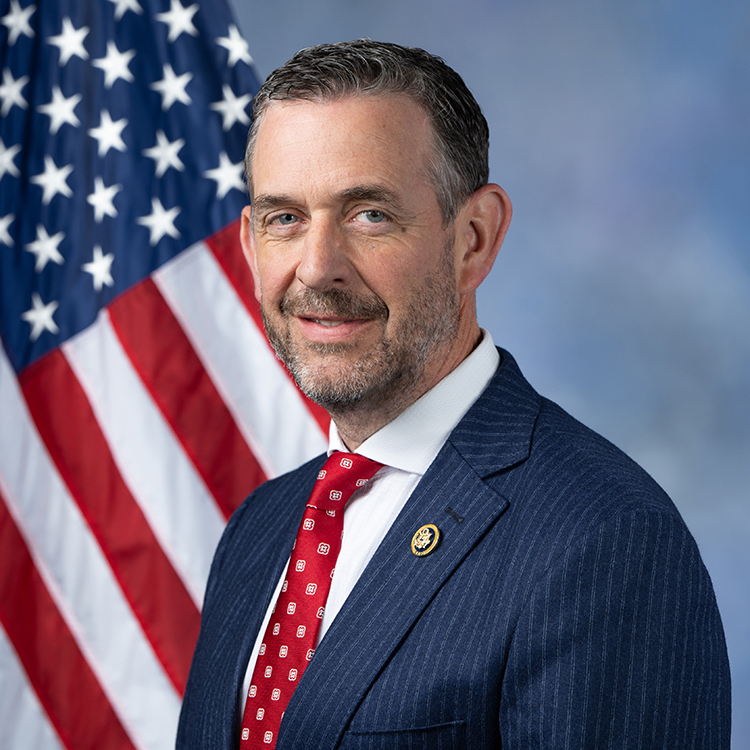
Rep. Michael A. Rulli
Sponsored bills
Maddy summaryThis bill reauthorizes the Great Lakes Restoration Initiative (GLRI) through fiscal year 2031, providing $500 million annually for Great Lakes cleanup and restoration projects. It directly affects federal agencies (like the EPA), state governments, tribes, and environmental groups working on Great Lakes water quality, habitat restoration, and pollution prevention. The key provision extends existing funding levels for five additional years (2027-2031), ensuring continued support for projects addressing invasive species, toxic pollutants, and coastal wetlands restoration across the Great Lakes region. This is a funding authorization bill, not a policy change to the program's scope.
Maddy summaryHR 283 authorizes the President, with coordination from the Secretary of State, to negotiate with Panama to reacquire the Panama Canal. The bill requires the President to submit a report to Congress within 180 days of enactment, detailing negotiation progress, challenges, and expected outcomes. This procedural bill focuses solely on initiating talks and reporting requirements, without specifying repurchase terms or funding. It directly affects U.S. executive branch actions and congressional oversight, not the canal’s current operations or Panama’s government.
Maddy summaryThis bill directs the Department of Homeland Security to implement the Migrant Protection Protocols (MPP) as outlined in a 2019 policy memo. It requires migrants seeking asylum at the U.S. border to remain in Mexico while their cases are processed, rather than being allowed to stay in the U.S. pending a hearing. The bill does not create new rules but mandates the reinstatement of a policy that was previously in effect from 2019 to 2021. This would directly affect asylum seekers arriving at the U.S.-Mexico border. The policy change would apply to all migrants covered by the existing MPP framework.
Maddy summaryHR 313, the Natural Gas Tax Repeal Act, repeals Section 136 of the Clean Air Act, which established a methane emissions reduction program for natural gas systems. The bill also rescinds unobligated funds previously allocated for this program. This directly affects the natural gas industry by removing a requirement to reduce methane emissions from their operations. The legislation makes no new policy changes but eliminates an existing regulatory program and its associated funding.
Maddy summaryThis proposed constitutional amendment would limit Members of Congress to serving a maximum of three terms in the House of Representatives or two terms in the Senate. It directly affects current and future members by preventing those who have already served the maximum terms from seeking re-election. Key provisions include counting vacancies filled for more than a year (House) or three years (Senate) as a full term toward the limit, while excluding terms served before ratification from the count. As a constitutional amendment proposal, it requires approval by three-fourths of state legislatures to become law.
Maddy summaryHR 82, the Social Security Fairness Act of 2023, repeals two provisions that reduce Social Security benefits for certain government workers. It eliminates the Government Pension Offset (GPO), which cuts spousal or survivor benefits for people with pensions from jobs not covered by Social Security (like federal or state government roles), and the Windfall Elimination Provision (WEP), which lowers retirement benefits for those with similar pensions. The law takes effect for benefits paid after December 2023, requiring the Social Security Administration to adjust benefit calculations to remove these reductions. This change directly affects public-sector employees who previously had their Social Security benefits reduced due to their government pensions.
Maddy summaryThis bill (HR 9322) is a naming resolution that officially renames a U.S. Postal Service facility at 675 Wolf Ledges Parkway in Akron, Ohio, as the "Judge James R. Williams Post Office Building." It does not change any policies, services, or funding - it only updates the building's official name in all federal records, maps, and documents. The bill directly affects USPS administrative records and public references to the Akron facility. It was passed by Congress in December 2024 and signed into law on January 4, 2025.
Maddy summaryHR 24, the Federal Reserve Transparency Act of 2025, mandates a comprehensive audit of the Federal Reserve Board and Federal Reserve banks by the Government Accountability Office (GAO) within 12 months of enactment. The bill requires the GAO to submit a detailed report to Congress within 90 days of completing the audit, including findings, conclusions, and recommendations for legislative or administrative action. This audit replaces current limitations on reviewing Federal Reserve operations, particularly regarding entities like special purpose vehicles not previously subject to standard audits. The bill directly affects the Federal Reserve System by increasing congressional oversight of its financial activities and reporting mechanisms.
Maddy summaryHR 137, the TCJA Permanency Act, makes permanent many tax provisions from the 2017 Tax Cuts and Jobs Act. It permanently increases the standard deduction for individual taxpayers, modifies income tax brackets, and makes permanent the child tax credit increase. The bill also permanently limits deductions for state and local taxes, mortgage interest, and miscellaneous itemized deductions. These changes affect most individual taxpayers who file federal income tax returns.