

The COVID-19 Hospital and Health Provider Loan Conversion Act of 2021 This bill establishes and otherwise modifies requirements for the Medicare Accelerated and Advance Payment Program during the public health emergency relating to COVID-19 (i.e., coronavirus disease 2019). The program provides Medicare payments in advance to eligible providers experiencing claims or cash flow disruptions, such as during national emergencies; the program was specifically expanded in response to COVID-19 to encompass more types of providers, subject to certain recoupment and repayment provisions. The bill requires the Centers for Medicare & Medicaid Services to waive recoupment and repayment for providers who meet specified requirements. Among other criteria, providers must not have engaged in surprise billing practices with respect to COVID-19 patients. Providers must still repay any amounts not used for COVID-19 expenses; the bill caps the interest rate on such repayments at 2% upon a demonstration of hardship. The bill also requires private health insurers to treat out-of-network COVID-19 services as in-network for purposes of payment and cost-sharing.
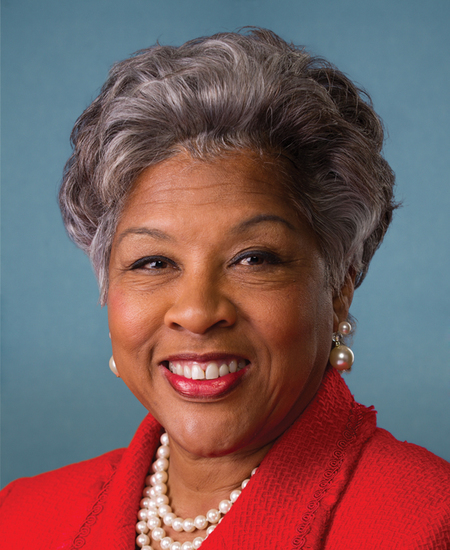
Rep. Joyce Beatty
Sponsored bills
Arctic Refuge Protection Act This bill repeals the Arctic National Wildlife Refuge oil and gas program. The bill designates approximately 1,559,538 acres of land within Alaska in the Arctic National Wildlife Refuge as a component of the National Wilderness Preservation System.
Coronavirus Containment Corps Act This bill requires the Centers for Disease Control and Prevention (CDC) to develop, within 21 days, a nationwide contact tracing strategy for COVID-19 (i.e., coronavirus disease 2019) that addresses issues including workforce needs. To implement that strategy, the bill establishes grant programs in the CDC and the Indian Health Service (IHS). It also expands programs in the Department of Labor. The CDC must award grants to state and local health departments to, among other purposes, hire and train individuals for contact tracing positions and related roles. The IHS must award similar grants to tribes and tribal organizations. Additionally, Labor must award grants for states and other jurisdictions to support recruitment and employment of dislocated workers and other individuals in public health roles. Grants and contracts that include contact tracing in their scope of work must comply with prevailing wage requirements that apply to federal service contracts. Employees who work under such grants or contracts must receive similar compensation to that prevailing in the locality where work is performed. The CDC and Labor must report certain information on specified timelines, and the Government Accountability Office must evaluate the activities of grantees.
This resolution expresses support for the designation of Rare Disease Day.
Original Black History Month Resolution of 2021 This resolution recognizes the importance of commemorating Black History Month to acknowledge the achievements of African Americans throughout history.
Black History is American History Act This bill requires entities (e.g., institutions of higher education, libraries, and museums), in order to be eligible for certain grants administered by the Department of Education (ED), to include Black history in their teaching of American history. It also requires Black history to be included in tests administered by the National Assessment of Educational Progress (NAEP). Specifically, the bill mandates the inclusion of Black history as a required component of American history for such entities to be eligible for American History and Civics Academies' competitive grants. These grants support the establishment of (1) Presidential Academies for Teachers of American History and Civics, which offer workshops to teachers of American history and civics to strengthen their knowledge and prepare them to teach in these subjects; and (2) Congressional Academies for Students of American History and Civics, which support high school students in developing an understanding of these subjects. (Currently, Black history is not a required component of American history for either academy.) In addition, ED must give priority to grant applicants that align their activities with programs and resources of the Smithsonian Institution's National Museum of African American History and Culture. The bill also requires the inclusion of Black history in tests administered by the NAEP, which measures student academic achievement in various subjects.
Susan Harwood Training Grant Program Authorization Act This bill provides statutory authority for the Susan Harwood Training Grant Program, which awards grants to employer associations, labor unions, and other organizations to provide education and training to employees and employers on workplace safety and health. This training must include information on employee rights and employer responsibilities under the Occupational Safety and Health Act.
Coronavirus Medicaid Response Act This bill increases the Medicaid federal matching rate, also known as the Federal Medical Assistance Percentage (FMAP), for states and U.S. territories that experience economic downturns (i.e., high unemployment) beginning on or after January 1, 2020, in accordance with specified requirements and limitations. The bill's increase is in addition to previously enacted FMAP increases relating to COVID-19 (i.e., coronavirus disease 2019) but may not result in an FMAP greater than 95%.
Children's Health Insurance Program Pandemic Enhancement and Relief Act or the CHIPPER Act This bill extends through FY2022 the 11.5% increase to the enhanced federal matching rate, also known as the enhanced Federal Medical Assistance Percentage (FMAP), that is otherwise applicable under the Children's Health Insurance Program (CHIP), subject to specified conditions. For example, in order to receive the increased FMAP in FY2021 and FY2022, a state must cover, without cost-sharing, testing and treatment for COVID-19 (i.e., coronavirus disease 2019), including vaccines, specialized equipment, and therapies.
This resolution honors the life and legacy of former Representative John Robert Lewis and commends his achievements in the struggle for civil rights.