

Equal Access to Contraception for Veterans Act This bill prohibits the Department of Veterans Affairs from requiring payment from a veteran for any contraceptive item that is required to be covered by health insurance plans without a cost-sharing requirement.
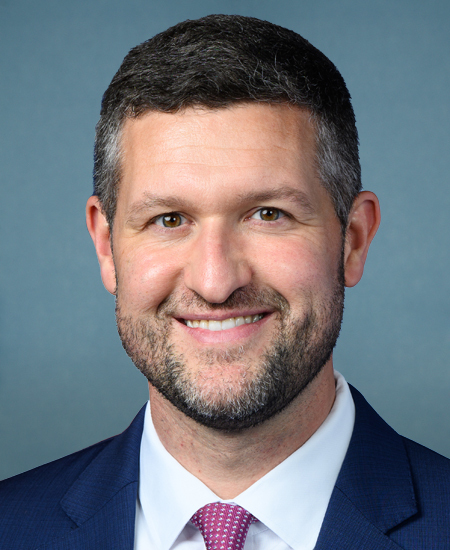
Rep. Patrick Ryan
Sponsored bills
Maddy summaryHR 927, the Supreme Court Ethics Act, establishes new ethics rules and oversight for Supreme Court justices. It requires the Judicial Conference to create a binding code of conduct within one year and mandates the appointment of an Ethics Investigations Counsel to receive public complaints, investigate potential violations, and issue annual public reports. The bill also requires justices to publicly disclose their reasons for recusing themselves or denying recusal motions in cases. These provisions directly affect Supreme Court justices by creating a formal process for handling ethics concerns and increasing transparency around their conduct.
Maddy summaryHR 926 would require the Supreme Court to establish a code of conduct for justices within 180 days of enactment, along with procedures for handling ethics complaints against them. The bill mandates minimum disclosure standards for gifts, income, and reimbursements received by justices and their law clerks, and requires justices to recuse themselves when they or their family received gifts from parties in a case. It would also require parties and amici curiae to disclose gifts given to justices and lobbying contacts related to justices' nominations, and establish a judicial investigation panel to review complaints against justices. The legislation aims to increase transparency in Supreme Court ethics processes and provide clearer recusal standards for justices.
Maddy summaryThis bill makes significant changes to US corporate tax rules to prevent tax avoidance through foreign operations. It requires corporations to calculate foreign income tax liabilities country-by-country, limits interest deductions for large international financial reporting groups, and modifies rules for "inverted corporations" (where US companies move tax residence abroad). The bill also creates new rules treating foreign corporations managed primarily in the US as domestic corporations for tax purposes. These changes aim to close tax loopholes related to outsourcing and foreign tax planning.
Maddy summaryHR 932 repeals two key congressional authorizations for military force in Iraq: the 1991 resolution (Public Law 102-1) and the 2002 resolution (Public Law 107-243). This bill removes the legal foundation that has permitted U.S. military operations in Iraq for over two decades. It directly affects the executive branch’s authority to conduct military actions under these specific resolutions, requiring future operations to seek new congressional approval. The repeal is a procedural change that would end the statutory basis for ongoing military engagement in Iraq without altering other laws or policies.
Maddy summaryHCONRES 13 is a concurrent resolution expressing Congress's support for maintaining the current policy that prohibits imposing new fees on local radio stations for playing music. It states that Congress should not impose any performance fee, tax, royalty, or charge on local radio stations for broadcasting sound recordings over the air, or on businesses like bars and restaurants that play music publicly. The resolution argues that such fees would harm local radio stations - critical sources for emergency information and community programming - and jeopardize the economic model that has supported both radio and the music industry for decades. This resolution does not create new law but formally opposes potential legislative changes to the existing fee structure.
Maddy summaryThe Better Care Better Jobs Act (HR 547) aims to improve access to home and community-based services (HCBS) for Medicaid beneficiaries by providing states with planning grants and enhanced federal funding. States that develop approved HCBS infrastructure improvement plans will receive a 10 percentage point increase in federal Medicaid funding for HCBS services, with additional incentives for self-directed care programs. The bill requires states to address barriers to access, expand workforce development, improve payment rates for direct care workers, and track demographic data on service utilization. It also establishes quality measurement requirements and mandates regular reporting on progress toward improving HCBS access and quality.
Maddy summaryHR 715, the Bipartisan Background Checks Act of 2023, requires background checks for all firearm transfers between private individuals, not just those through licensed dealers. It mandates that unlicensed sellers must involve a licensed dealer to conduct a background check before transferring a firearm, with exceptions for family transfers (like spouses or parents/children), law enforcement, temporary safety transfers, and certain hunting or range activities. The bill also requires licensed dealers to provide a notice and certification form in both English and Spanish to buyers. It explicitly states it won't create a national gun registry or override state laws on the same topic. The law would take effect 180 days after enactment.
Veterans Census-Enabled National Treatment Equitable Resource Supplement for Mental Health Act of 2023 or the Vet CENTERS for Mental Health Act of 2023 This bill requires the Department of Veterans Affairs (VA) to ensure that there is a minimum number of Vet Centers located in each state. Vet Centers are community-based counseling centers that provide social and psychological services to eligible veterans, service members, and their families. The minimum number of Vet Centers required in each state is generally based on the state's geographic size or the number of veterans located in the state. The VA must establish additional Vet Centers as necessary to meet the minimum required number for each state. The VA may establish the additional Vet Centers at facilities made available by a state, local government, or recognized Indian tribe. If a state needs more than one additional Vet Center to meet its minimum requirement, the VA must establish at least one additional Vet Center and may establish Vet Center outstations to cover the difference.
Maddy summaryHR 660, "Ethan's Law," requires gun owners in homes where minors (under 18) or individuals prohibited from owning firearms under federal/state law reside to store firearms securely. It makes unsecured storage unlawful if a minor or prohibited person could access the firearm, with fines of $500 per violation and enhanced penalties (up to 5 years in prison) if injury or death occurs. The bill also establishes a federal grant program to help states implement similar secure storage laws and provides funding incentives for states that already have such laws in place.