

Maddy summaryThis bill creates two tax credits to support local media and small businesses. It provides a credit for small businesses (under 50 full-time employees) that advertise in qualifying local newspapers or broadcast stations, covering 80% of first-year ad costs up to $5,000 and 50% of subsequent-year costs up to $2,500. It also establishes a payroll tax credit for employers hiring local news journalists, covering 50% of wages for the first four quarters (capped at $12,500 per journalist) and 30% thereafter, with a maximum of 1,500 journalists per employer. Both credits expire after five years and require strict definitions of "local media" (e.g., publishers with local journalists and community focus) to prevent misuse.
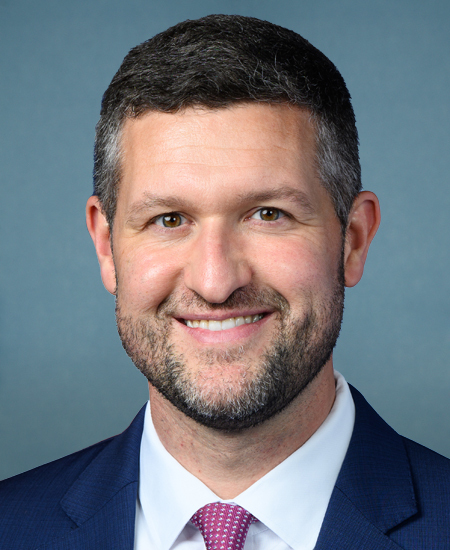
Rep. Patrick Ryan
Sponsored bills
Maddy summaryH.J.Res. 25 would remove the 1979 deadline for states to ratify the Equal Rights Amendment (ERA), which was originally proposed in 1972. This bill directly affects states that ratified the ERA after the deadline (such as Nevada, Illinois, and Virginia in 2017-2018) by making their ratifications legally valid. The key provision states that the ERA is valid as part of the Constitution if ratified by three-fourths of states, regardless of the original deadline. The bill does not create new rights but aims to finalize the constitutional amendment process by eliminating the time limit.
Maddy summaryHR 2768, the PFC Joseph P. Dwyer Peer Support Program Act, establishes a VA grant program to fund peer-to-peer mental health support for veterans. It provides up to $250,000 per grant to eligible nonprofits, veteran service organizations, or state/local Tribal agencies to create programs where veterans serve as peer specialists offering 24/7 nonclinical support. The program requires adherence to VA-developed standards for volunteer training and service delivery, while prohibiting the collection of veterans' personally identifying information. The bill authorizes $25 million over three years to implement this initiative, directly benefiting veterans seeking accessible mental health assistance through peer networks.
Maddy summaryHR 1815 creates a three-year pilot program to test assisted living services as an alternative to VA nursing home care for eligible veterans. It directly affects veterans currently receiving VA nursing home care or needing higher care than VA domiciliary services but not meeting full nursing home criteria. The program selects six VA service networks (prioritizing regions with high nursing home use and rural areas), contracts with approved facilities meeting VA standards, and pays lower rates than nursing home costs. The VA must report annually on participants, costs, barriers, and quality, with a final report recommending whether to expand the program nationwide.
Maddy summaryThis bill, HR 1282 (Major Richard Star Act), expands benefits for certain military retirees by allowing them to receive both veterans' disability compensation and military retirement pay simultaneously. It specifically affects combat-related disabled retirees under Chapter 61 of the military retirement system who have fewer than 20 years of service. The key change removes the automatic reduction of military retirement pay when these retirees also receive disability compensation, as amended in Section 1413a(b)(3) of Title 10. Technical updates to the law’s structure and effective date (starting after enactment) complete the provisions.
Maddy summaryHRES 580 is a symbolic resolution expressing the House's support for designating "Journeyman Lineworkers Recognition Day." It honors lineworkers who work in hazardous conditions (such as at heights near live wires) and respond to disasters like hurricanes and wildfires, while recognizing their contributions and the legacy of Henry Miller, an early electrical worker who died on the job. The resolution has no legal effect - it solely encourages public recognition and reflection on these workers' service.
Maddy summaryThe DISCLOSE Act of 2023 would increase transparency in political spending by requiring organizations making campaign-related disbursements over $10,000 to disclose the names and addresses of their major donors, including the top five funders for political communications. It would close loopholes allowing foreign nationals to secretly fund election activities through corporations or other entities by expanding the definition of prohibited foreign contributions. The bill would mandate "stand by every ad" disclosure requirements for political communications across all media, including audio, video, and internet ads, requiring clear identification of funders. It would also require reporting of disbursements related to Federal judicial nominations, which currently aren't subject to disclosure requirements. These provisions would apply to corporations, labor organizations, and certain nonprofits that engage in political activity.
Maddy summaryHR 4413, the Stamp Out Lyme Disease Act, authorizes the U.S. Postal Service to sell a special semipostal stamp (where the price exceeds regular postage) to fund Lyme disease research. The extra revenue from stamp sales will be sent directly to the National Institute of Allergy and Infectious Diseases (NIAID) for tick-borne illness research, with funds specifically protected from being used to offset NIAID's regular budget. The stamp would be available for at least six years, beginning one year after the bill becomes law, and the proceeds cannot reduce other federal funding for NIAID. This bill creates a new public funding mechanism for research, directly affecting those who purchase the stamp and the NIAID research programs.
Maddy summaryHR 4422 (Global Respect Act) requires the President to publicly identify foreign officials responsible for violence, torture, or arbitrary detention against LGBTQI individuals and block their entry to the U.S., including revoking visas for them and their immediate families. It mandates annual reporting to Congress on the list of sanctioned individuals, the reasons for additions/removals, and efforts to coordinate with other countries on similar sanctions. The bill also updates U.S. human rights reporting requirements to explicitly include data on violence and discrimination against LGBTQI people worldwide. These measures aim to increase accountability for human rights violations against LGBTQI individuals without advocating for specific policy outcomes.
Maddy summaryHR 4340, the Therapeutic Fraud Prevention Act of 2023, prohibits paid providers from offering conversion therapy - defined as any commercial service attempting to change a person's sexual orientation or gender identity - and bans advertising that claims such therapy is effective or harmless. It directly affects therapists, counselors, or organizations offering paid conversion therapy services, including those advertising such services. Key provisions make it unlawful to provide, advertise, or facilitate paid conversion therapy, with enforcement led by the Federal Trade Commission (FTC) under consumer protection laws and allowing states to pursue civil actions. The bill explicitly excludes supportive care for gender transition or identity exploration from its definition of prohibited therapy.