

Maddy summaryHR 915, the Small Business Technological Act of 2025, expands the use of Small Business Administration (SBA) Section 7(a) loans to cover business software, cloud computing services, and AI-powered tools that handle payroll, HR, sales, billing, accounting, and inventory management. It directly affects small businesses seeking loans for operational technology upgrades, allowing them to use SBA funds for these specific tech services without changing existing loan purposes. The bill amends the Small Business Act to explicitly permit these uses under Section 7(a), clarifying that existing loans for similar purposes before the law's enactment remain valid. It does not expand loan use for research, development, or working capital beyond current definitions.
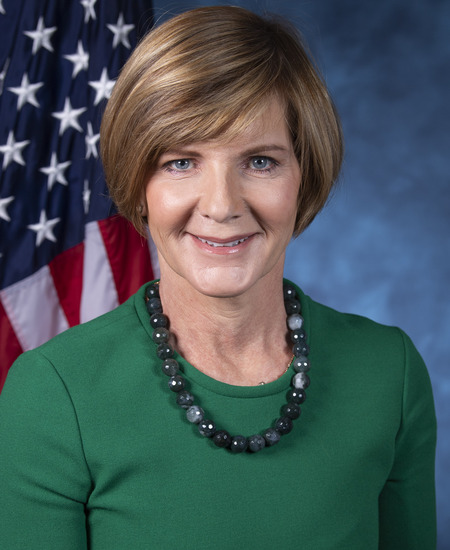
Rep. Susie Lee
Sponsored bills
Maddy summaryThe Jewish American Security Act aims to combat antisemitism by strengthening protections for Jewish students, securing Jewish communities, and increasing transparency regarding online hate speech. For educational institutions receiving federal funds, the bill mandates the creation of specific coordinators to handle discrimination complaints, requires annual training on handling antisemitism, and establishes a new federal clearinghouse to share best practices for campus safety. To support physical security, the legislation expands grant funding for nonprofit organizations and directs the Attorney General to provide resources for law enforcement agencies protecting houses of worship. Additionally, the act requires major online platforms with over 50 million monthly users to submit detailed reports to the Federal Trade Commission on how they detect, remove, and moderate antisemitic content.
Maddy summaryThe Veterans STAND Act requires the Department of Veterans Affairs to provide annual preventative health assessments to veterans with spinal cord injuries or disorders. These assessments cover risks for health complications, chronic pain management, dietary needs, prosthetic equipment, and access to assistive technologies like spinal cord neuromodulation devices. The VA must consult with medical specialists and device manufacturers when creating guidelines and submit yearly reports to Congress on veterans' use of these services and devices. This policy directly affects veterans with spinal cord injuries by ensuring regular, tailored health evaluations to improve long-term management and independence.
Maddy summaryHR 4398, the Veteran Burial Timeliness and Death Certificate Accountability Act, requires Veterans Affairs (VA) physicians or nurse practitioners to certify the death of a veteran who dies of natural causes within 48 hours of learning of the death. This directly affects veterans' families, who previously faced delays of up to eight weeks in burial and access to survivor benefits due to slow death certifications. The bill mandates annual reports to Congress on VA compliance with the 48-hour rule, including statistics on delays and their causes. The key change is establishing a strict timeline for death certification to prevent unnecessary delays in honoring veterans' final arrangements.
Maddy summaryThis bill requires community health centers to include behavioral and mental health services, as well as substance use disorder treatment, among their primary health services. It achieves this by amending the Public Health Service Act to explicitly list these services as required offerings for these centers. The legislation also allocates $700 million annually from 2027 to 2031 to fund these expanded services through the Department of Health and Human Services. The changes directly affect community health centers and the patients who rely on them for primary care.
Maddy summaryHR 5351, the NSF AI Education Act of 2025, creates new funding mechanisms to expand artificial intelligence education. It authorizes scholarships and fellowships covering tuition, fees, and stipends for undergraduate and graduate students in AI-related fields, with priority for programs teaching AI in K-12 schools, advanced manufacturing, and agriculture. The bill also establishes up to eight regional "Centers of AI Excellence" at community colleges and career schools to develop AI curricula, build industry partnerships, and create student job pathways. Additionally, it funds research grants to develop K-12 AI teaching materials and supports professional development for educators and industry professionals to integrate AI into classrooms.
Creating Resources for Every American To Experiment with Artificial Intelligence Act of 2025 or the CREATE AI Act of 2025 This bill establishes a national program to provide U.S. researchers, educators, and students with access to artificial intelligence (AI) data, computational resources, educational tools and services, and testbeds. The program, to be known as the National Artificial Intelligence Research Resource (NAIRR), must be established by the National Science Foundation (NSF) to improve U.S. AI research capacity and spur the strategic development of AI capabilities. NAIRR may accept and use donated resources from the private sector and federal agencies. Those eligible to use NAIRR resources are (1) researchers, educators, and students based in the United States and affiliated with a U.S. institution of higher education, nonprofit, executive agency, or other specified entity; and (2) employees of U.S. executive agencies or federally funded research and development centers with a demonstrable mission need. NSF must select a nongovernmental organization to operate NAIRR (i.e., an operating entity ) through a competitive and transparent process. The operating entity must ensure that a significant percentage of the annual allotment of computational resources is provided to projects primarily focused on AI privacy, ethics, safety, security, risk mitigation, or trustworthiness. The operating entity must also establish minimum security requirements for all individuals interacting with NAIRR. The operating entity may establish a fee schedule for access to NAIRR, which must include a free tier of access and must ensure that the primary purpose of NAIRR is to support research.
Maddy summaryThe Support our Firefighters Act establishes a new paid rest and recuperation leave program for federal wildland firefighters working for the Forest Service and the Department of the Interior. Under this law, these employees would receive paid time off immediately after completing a qualifying fire incident, with specific rules requiring a minimum number of rest days following periods of deployment. The bill also allows for the transfer of up to $5 million in funding from the Department of Agriculture to the Department of the Interior to help sustain salary increases for these workers. Additionally, the legislation updates existing overtime rules to remove specific year limits, ensuring that wildland firefighters can work extended hours without hitting caps in future years.
Maddy summaryThis bill authorizes the presentation of Congressional Gold Medals to the four crew members of the Artemis II mission to recognize their historic achievement in advancing human space exploration. The legislation directs the Speaker of the House and the President pro tempore of the Senate to arrange for the medals, which will feature the faces of the astronauts and be struck by the Secretary of the Treasury. In addition to the gold medals, the bill permits the minting and sale of duplicate bronze versions to help cover production costs, with any proceeds returned to the United States Mint Public Enterprise Fund.
Maddy summaryThis bill redesignates the existing National Parks and Public Land Legacy Restoration Fund as the America's Legacy Restoration Fund to address deferred maintenance on federal lands. It directs revenue from recreation fees and a portion of energy development income into the fund, which must be used primarily for repairing critical infrastructure like roads, trails, and buildings managed by agencies such as the National Park Service and the Forest Service. The legislation establishes strict rules requiring that most funds go toward non-transportation projects, mandates transparency through public dashboards tracking project status, and sets aside a small percentage for matching private donations. Additionally, the bill increases entrance fees for foreign visitors to ensure they contribute to the fund, while prohibiting the use of these specific funds for land acquisition or employee bonuses.