

Maddy summaryThe Caja del Rio Protection Act establishes two new protected areas in New Mexico: the Caja del Rio Special Management Area within the Santa Fe National Forest and the Caja del Rio National Conservation Area managed by the Bureau of Land Management. These areas cover approximately 85,000 acres total and aim to conserve cultural, spiritual, ecological, and historical values while enhancing opportunities for local Indigenous tribes to participate in management. The bill restricts new road construction and limits motorized vehicle use to designated routes, requires the decommissioning of unauthorized roads, and withdraws the land from mining and mineral leasing operations. Additionally, the legislation facilitates a potential land swap where the federal government would transfer certain Bureau of Land Management parcels to the state in exchange for state trust land within the conservation boundary. The act also mandates the development of comprehensive management plans that incorporate Indigenous knowledge and ensure tribal access for traditional cultural and religious practices.
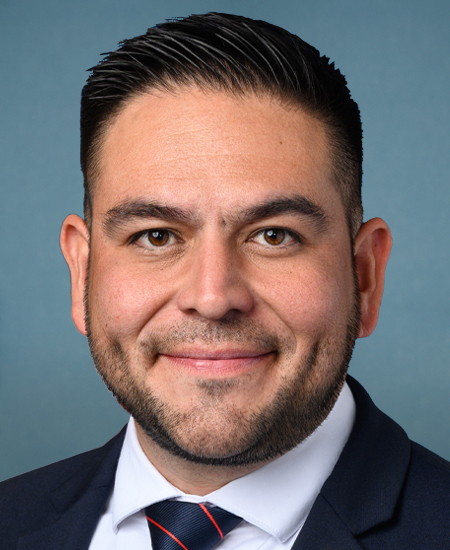
Rep. Gabe Vasquez
Sponsored bills
Farmer to Farmer Education Act of 2026 This bill expands the authority of the Department of Agriculture (USDA) to provide technical assistance for farmer-to-farmer networks. USDA must use annual appropriations provided for Natural Resources Conservation Service conservation operations to implement this program. A farmer-to-farmer network means any affiliation or association of farmers that share information, technical assistance, or any other type of mutually beneficial support. Under the bill, USDA may enter into cooperative agreements with eligible entities to (1) provide assistance to farmer-to-farmer networks to build network capacity, connect farmers with mentors or group learning opportunities, and support goal setting; (2) increase technical assistance for farmers, ranchers, and forest owners who use different farming models, practices, and scales; (3) establish and steward the networks; and (4) establish reporting requirements for these activities. Those eligible for the program include nonprofit entities, farmer-to-farmer networks, tribal entities, local governments, institutions of higher education, and states. USDA must prioritize agreements with entities that seek to meet the specific needs of certain farmers, ranchers, and forest owners who are historically underserved or operating in high-poverty areas. The bill also provides for subawards to plan and conduct events, as well as to identify and develop innovative activities, in order to increase farmer access to farmer-to-farmer assistance.
Maddy summaryThe Public Lands Workforce Stability Act prevents the Department of the Interior and the United States Forest Service from firing employees or cutting jobs between now and September 30, 2030, unless specific conditions are met. Under this law, agencies cannot reduce staff numbers or separate employees for reasons like poor performance or misconduct without first getting approval from the chairs and ranking members of both the House and Senate Appropriations Committees. This restriction applies to all federal funds used for these actions and aims to maintain workforce stability within these agencies for the next several years.
Maddy summaryThe Medicare Advantage Improvement Act of 2026 aims to speed up care decisions and increase transparency for Medicare Advantage enrollees and providers. Starting in 2028, the bill requires insurance plans to respond to most prior authorization requests within 72 hours and to provide real-time decisions for low-risk services, while also banning requirements for re-authorization when a treatment plan is clinically modified. The legislation introduces a new compliance scoring system that will publicly rank plans and reduce payments to those with poor performance, alongside stricter rules ensuring medical necessity standards match those of traditional Medicare.
Maddy summaryThe Protecting American Railroad Workers' Jobs Act of 2026 requires freight trains crossing the southern border into the United States to stop for crew changes and safety inspections. Under this bill, only railroad workers who are U.S. nationals or lawfully authorized aliens with a primary reporting point in the U.S. may operate these trains after the stop. The legislation also prohibits crew members from performing any duties while physically outside the United States. These provisions directly affect railroad carriers operating freight trains across the Mexico border and the workers employed on those trains.
Maddy summaryThis bill modernizes housing assistance programs for Native American tribes and Native Hawaiians by streamlining environmental reviews, extending funding authorization through 2032, and expanding loan guarantee options. Key provisions include consolidating environmental review requirements to reduce paperwork for tribes, allowing 99-year leasehold interests on trust lands for housing, and creating new rental assistance specifically for homeless or at-risk Native American veterans. The legislation also clarifies rent rules, waives certain housing counseling certifications for tribal entities, exempts tribal housing projects from some federal civil rights and Buy America requirements, and establishes a direct loan guarantee process for tribal housing projects.
Maddy summaryHR 5543, the Baltic Security Assessment Act of 2025, requires the U.S. State and Defense Departments to submit a report within 180 days of enactment. The report will assess emerging military, cyber, hybrid, and political threats to Estonia, Latvia, and Lithuania, including the roles of Russia, Belarus, China, Iran, and other actors. It will also evaluate U.S. and NATO military presence in the region, opportunities for defense cooperation, and recommendations to strengthen deterrence, cybersecurity, and democratic resilience in the Baltic countries. This bill directly affects U.S. foreign policy and defense planning regarding the Baltics, but does not create new programs or funding.
Maddy summaryThe DAIRY PRIDE Act aims to amend the Federal Food, Drug, and Cosmetic Act to establish a specific definition for "dairy product." This bill directly affects food manufacturers and consumers by regulating how certain food names can be used. It defines a "dairy product" as food that is, contains as a primary ingredient, or is derived from, the lacteal secretion of hooved mammals. The act prohibits foods that do not meet this definition, or the requirements for an imitation food, from using names for standardized dairy products (like milk, yogurt, and cheese) in interstate commerce. Additionally, it requires the FDA to issue guidance on enforcement of these provisions and report to Congress on actions taken.
Maddy summaryThis bill, HR 8403, amends the Food and Nutrition Act of 2008 to modify the definition of eligible food items for the Supplemental Nutrition Assistance Program (SNAP). It directly affects SNAP recipients by expanding the types of food they can purchase with their benefits. The key provision explicitly adds "hot rotisserie chicken" to the list of items considered SNAP-eligible food. This change would allow individuals using SNAP to buy prepared hot rotisserie chickens from authorized retailers.
Maddy summaryThis bill directs the Secretaries of the Army, Air Force, and Interior to install three commemorative plaques honoring New Mexico's Downwinder communities. The plaques will be placed at White Sands Missile Range, Holloman Air Force Base, and White Sands National Park by the end of the first year after the bill becomes law. They recognize the health impacts - such as cancer and infertility - these communities suffered due to radioactive fallout from the 1945 Trinity nuclear test. The bill is purely commemorative and does not provide compensation, health benefits, or alter existing laws.