

The Pioneering Antimicrobial Subscriptions To End Up surging Resistance Act of 2021 or the PASTEUR Act of 2021 This bill authorizes the Department of Health and Human Services (HHS) to enter into subscription contracts for critical-need antimicrobial drugs, provides $11 billion in appropriations for activities under the bill, and contains other related provisions. A manufacturer of a Food and Drug Administration-approved antimicrobial drug may apply to HHS to have the drug designated as a critical-need antimicrobial, and HHS may enter into a subscription contract for such a critical-need antimicrobial. The bill imposes certain requirements related to such contracts, including a mechanism to lower payments under the contract in certain instances to limit the manufacturer's revenue from the drug. Furthermore, HHS and the Centers for Disease Control and Prevention (CDC) shall award grants to support efforts to encourage the appropriate use of antimicrobial drugs and efforts to combat antimicrobial resistance. The CDC shall also track and assess data relating to antibacterial resistance and human antibiotic use and make such data publicly available. HHS shall also establish a Committee on Critical Need Antimicrobials. The committee shall develop a list of prioritized infections for which new antimicrobial drug development is needed, among other duties. Within six years of the bill's enactment, the Government Accountability Office shall report to Congress a study on the bill's effectiveness in developing priority antimicrobial drugs.
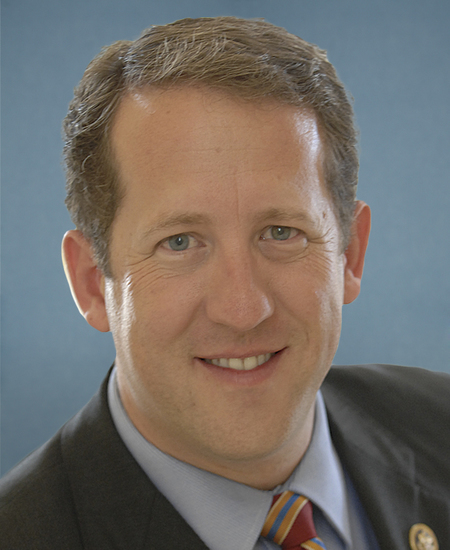
Rep. Adrian Smith
Sponsored bills
Don't Weaponize the IRS Act This bill codifies regulations promulgated by the Trump Administration exempting certain tax-exempt organizations from specified reporting requirements. Specifically the bill increases from $5,000 to $50,000 the gross receipts threshold used to determine the eligibility of tax-exempt organizations for the exemption from certain disclosure and reporting requirements; expands the definition of organization to include tax-exempt charitable organizations and organizations with no significant activities relating to lobbying, political activity, and the operation of a trade or business; exempts from disclosure the names and addresses of contributors to an organization in its annual informational return; and extends exemptions from reporting requirements to political action committees (i.e., 527 organizations).
Alexander Lofgren Veterans in Parks (VIP) Act This bill makes the America the Beautiful-National Parks and Federal Recreational Lands Pass available, without charge, to members of the Armed Forces, veterans, and Gold Star Families. The pass covers the entrance fee and standard amenity recreation fee for all federal recreational lands and waters.
National Statuary Hall Collection Progress Assurance Act This bill establishes a timeline for the Joint Committee on the Library to approve or disapprove requests for replacing statutes (or any related actions that are subject to Joint Committee approval) in the National Statutory Hall of the U.S. Capitol. The Joint Committee oversees operations of the Library of Congress, as well as management of the National Statuary Hall, the U.S. Botanic Garden, and works of fine art in the Capitol. Generally, the bill requires the Joint Committee to approve or disapprove a request to replace a statue not later than 30 days after the Architect of the Capitol forwards the request to the Joint Committee. If the Architect forwards the request before the Joint Committee's first organizational meeting of a Congress, the Joint Committee must approve or disapprove the request not later than 30 days after the Architect forwards the request to the Joint Committee or the date of the meeting, whichever is later.
This resolution denounces socialism and opposes the implementation of socialist policies in the United States.
Value in Health Care Act of 2021 This bill makes a series of changes to certain methodologies and components used in the Medicare Shared Savings Program. The program enables accountable care organizations (ACOs) to receive payments for savings stemming from care coordination and management. Among other changes, the bill requires the Centers for Medicare & Medicaid Services to increase the shared savings rate for participating ACOs, as specified, and to establish a program that assists ACOs with start-up and operational costs of participation. The bill also extends certain incentive payments for health professionals who participate in eligible alternative payment models. The Government Accountability Office must report on health outcomes and racial disparities among beneficiaries who receive care from providers under alternative payment models compared to beneficiaries who receive care from providers under the traditional fee-for-service system.
Jobs and Opportunity with Benefits and Services for Success Act This bill renames the Temporary Assistance for Needy Families (TANF) program as the Jobs and Opportunity with Benefits and Services (JOBS) program, reauthorizes the program through FY2027, and makes changes relating to work requirements for beneficiaries. States providing aid under the program shall create an individual opportunity plan for each beneficiary. States shall impose work requirements on all work-eligible beneficiaries and shall reduce benefits for noncompliance. (Currently, individual plans are optional under TANF, and states have discretion as to whether to reduce benefits for noncompliant individuals.) States providing aid shall meet annual performance targets related to the number of beneficiaries who exit the program and find unsubsidized employment. The Department of Health and Human Services (HHS) shall reduce grants to states that fail to meet such targets. States shall provide data related to beneficiary employment and wages to HHS, which shall be publicly available. The bill modifies certain limitations that restrict the use of funds for case management and other purposes and requires states to spend at least 25% of funds from various grants on core activities. Certain existing laws relating to monitoring and recovering improper benefits payments shall apply to the JOBS program. The bill eliminates programs providing (1) supplemental grants for population increases, (2) bonuses for high performance states, (3) welfare-to-work grants, and (4) contingency funds for state welfare programs.
Focusing State Efforts to Expand Opportunity Act This bill prohibits states from using Temporary Assistance for Needy Families grants to provide assistance or services to families whose monthly incomes exceed twice the poverty line. Under current law, families must be financially needy and have a minor child to qualify for assistance; however, individual states determine the financial eligibility requirements.
Facilitating Innovative Nuclear Diagnostics Act of 2021 This bill establishes separate payment requirements for diagnostic radiopharmaceuticals under the Medicare prospective payment system for hospital outpatient department services. The bill's requirements apply to diagnostic radiopharmaceuticals that have an average daily cost of $500 or more in 2022 and as adjusted based on a specified fee schedule factor in each year thereafter.
Year-Round Fuel Choice Act of 2021 This bill amends the Clean Air Act to address the limitations on Reid vapor pressure (a measure of gasoline's volatility) that are placed on gasoline during the summer ozone season. The bill applies the Reid vapor pressure requirements that are applicable to gasoline blended with 10% ethanol (E10) to gasoline blended with more than 10% ethanol. Thus, the waiver given to E10 gasoline, which allows an increase in the Reid Vapor Pressure volatility, is extended to gasoline blended with more than 10% ethanol.