

Protecting Rural Telehealth Access Act This bill expands coverage of telehealth services under Medicare. Specifically, the bill permanently (1) removes geographic restrictions on originating sites (i.e., the location of the beneficiary), (2) allows the home of the beneficiary to serve as the originating site for all services, (3) allows federally qualified health centers and rural health clinics to serve as the distant site (i.e., the location of the health care practitioner), and (4) expands coverage to include audio-only services for evaluation and management and behavioral health services.
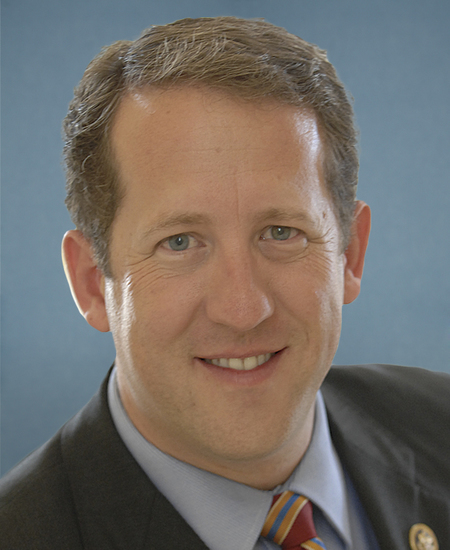
Rep. Adrian Smith
Sponsored bills
Israel Relations Normalization Act of 2021 This bill requires the Department of State to take certain actions promoting the normalization of relations between Israel, Arab states, and other relevant countries and regions. Specifically, the State Department must develop a strategy on expanding and strengthening the Abraham Accords (the term used to refer collectively to agreements between Israel and the United Arab Emirates and between Israel and Bahrain marking the public normalization of relations between the two Arab countries and Israel). The strategy must include a description of how the U.S. government will encourage further normalization of relations with Israel. In addition, the State Department must report on options for U.S. international efforts to promote the strengthening of ties between Israel, Arab states, and other relevant countries and regions. The State Department must also report on the status of the normalization of relations with Israel, including information on (1) laws that punish individuals for people-to-people relations with Israelis (i.e., anti-normalization laws), and (2) evidence of steps taken by Arab governments toward permitting or encouraging normalized relations between their citizens or residents and Israeli citizens.
This bill provides that a female citizen of the United States (or other female person residing in the country) who is between the ages of 18 and 26 may elect to present herself and submit to registration for the draft.
Freedom from Mandates Act This bill nullifies certain executive orders regarding COVID-19 safety and prohibits the Departments of Labor and Health and Human Services (HHS) from taking specified actions with respect to vaccination against COVID-19. Specifically, the bill nullifies Executive Order 14042 (relating to ensuring adequate COVID-19 safety protocols for federal contractors) and Executive Order 14043 (requiring COVID-19 vaccination for federal employees). Labor may not issue any rule requiring employers to mandate vaccination of employees against COVID-19 or requiring testing of employees who are unvaccinated. HHS may not (1) require a health care provider, as a condition of participation in the Medicare or Medicaid program, to mandate vaccination of employees against COVID-19 or require testing of employees who are unvaccinated; or (2) otherwise penalize such a provider for failure to mandate such vaccination or require such testing.
Permanently Preserving America's Investment in Manufacturing Act This bill makes permanent the allowance for depreciation, amortization, or depletion for purposes of determining the income limitation on the tax deduction for business interest.
Commonsense Reporting Act of 2021 This bill addresses the eligibility verification process for the premium assistance tax credit and cost-sharing subsidy under the Patient Protection and Affordable Care Act (PPACA). It requires the Department of the Treasury to develop and implement a reporting system that allows employers to voluntarily report information about their health plans for the current plan year prior to the beginning of open enrollment. The bill also allows electronic transmission of employee and enrollee statements and permits Treasury to accept full names and dates of birth in lieu of dependents' and spouses' Social Security numbers. The bill also allows certain large employers who do not offer their employees minimum health care coverage 90 days to appeal an assessment for not providing such coverage. The Government Accountability Office must evaluate (1) for the period beginning on January 1, 2015, and ending on December 31, 2020, the notification of employers by PPACA exchanges of the eligibility of employees for advance payments of the premium assistance tax credit or cost-sharing subsidies; and (2) for calendar year 2022, the functionality of the prospective reporting system established by this bill, including the accuracy of information collected.
This bill requires the Internal Revenue Service (IRS) to report to Congress on projections of the estimated tax gap (i.e., the difference between tax liabilities owed to the IRS and those liabilities that the IRS actually collects). The IRS may use artificial intelligence and related data analysis tools to calculate a tax gap projection. The bill also requires the Joint Committee on Taxation to issue periodic reports to the congressional tax committees on the tax gap projection. The bill restricts IRS funding to FY2021 levels for audits and enforcement until it publishes an updated tax gap projection. Funding is also restricted for certain purposes, including (1) targeting U.S. citizens who exercise their First Amendment rights, (2) targeting a group for regulatory scrutiny based on its ideological beliefs, and (3) auditing individual taxpayers with an adjusted gross income of less than $400,000. The bill directs the IRS to establish a fellowship program to recruit private sector tax experts to join the IRS to create and participate in the audit task force. The purposes of the tax force include performing audit case selection, educating IRS employees on emerging issues, auditing selected taxpayers, addressing offshore tax evasion, and identifying, mentoring, and training IRS junior employees with respect to audits.
Veterans' Agricultural Apprenticeship Act of 2021 This bill requires the Department of Agriculture to establish a program to make direct loans to farmers and ranchers who will provide mentorship and apprenticeship opportunities for veterans who have not previously operated a farm or ranch. The Government Accountability Office must report on the effectiveness of the program in assisting veterans in becoming farmers and ranchers.
This resolution opposes the enactment of any federal law that voids state laws that prohibit employers from requiring workers to join a union as a condition of employment.
Afghanistan Withdrawal Oversight and Liability Act or the AWOL Act This bill prohibits using federal funds appropriated for FY2021 to provide support to the Taliban. The bill also requires reports and certifications related to Afghanistan. Specifically, no FY2021 funds may be used to (1) make payments or contributions of material support to the Taliban, or (2) provide relief from sanctions against the Taliban or its leaders. The bill requires the President to report to Congress on efforts to evacuate U.S. citizens and lawful permanent residents from Afghanistan. The President must also certify to Congress when all such individuals seeking evacuation from Afghanistan have been evacuated. The Department of State must periodically report to Congress on any agreements between the United States and the Taliban. Within seven days of the United States reaching an agreement with the Taliban, the State Department must provide to Congress all materials relevant to that agreement. The bill also requires the Office of the Inspector General of the State Department to report to Congress about the State Department's compliance with legal requirements in connection to agreements with the Taliban. Specifically, the office must assess compliance with a law that requires the State Department to provide certain information to Congress when the United States enters certain international agreements. The Department of Defense must report to Congress concerning U.S. equipment, property, and classified material that was destroyed, surrendered, or abandoned in Afghanistan during a period starting from February 29, 2020.