

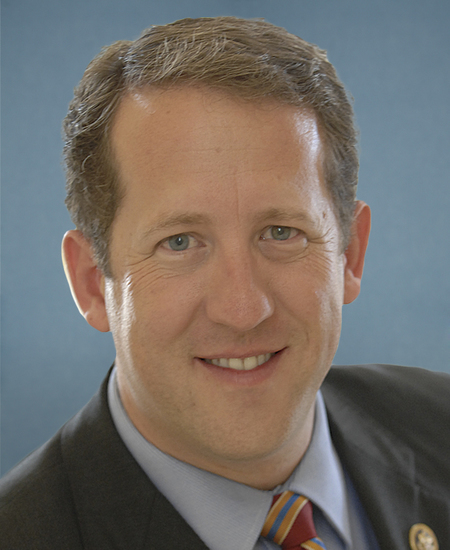
Photo of Adrian Smith
R United States House · District 3 · Nebraska On the 2026 ballot

Rep. Adrian Smith

Compare
Total votes
2,818
all sessions
Attendance
97%
71 missed
Near the chamber average
With party
96%
of cast votes
Higher than 80% of chamber peers
Bipartisan score
2%
crosses aisle rarely
Lower than 80% of chamber peers
Sponsored
871
bills & resolutions
Near the chamber average
Committees
4
assignments
871 bills and resolutions

Sponsored bills

Total
871
Primary
73
Co-sponsor
798
This page
871
matching current filters
Co-sponsor HR 2039
In committee · Oregon House · Co-sponsor
Protecting the Right to Keep and Bear Arms Act of 2025

Maddy summaryHR 2039, the Protecting the Right to Keep and Bear Arms Act of 2025, prevents the President and Health Secretary from using emergency declarations (under the National Emergencies Act or Public Health Service Act) to implement gun control measures. It amends disaster relief law to explicitly prohibit future rules that would ban firearm possession, sales, or accessories during emergencies. The bill directly affects federal agencies and future emergency declarations, blocking them from being used as a tool for gun regulation. It does not change existing gun laws but restricts how emergency powers can be applied to firearms policy.

In committee Mar 11, 2025 1 co-sponsor
Co-sponsor HRES 206
In committee · Oregon House · Co-sponsor
Recognizing the importance of stepped-up basis under section 1014 of the Internal Revenue Code of 1986 in preserving family-owned farms and small businesses.

Maddy summaryThis is a non-binding resolution (HRES 206), not a legislative bill. It expresses the House's support for preserving the "stepped-up basis" tax provision (Section 1014 of the Internal Revenue Code), which allows heirs to reset the tax cost basis of inherited assets like farmland or business equipment to their current market value. The resolution cites that 98% of farms and 19% of businesses are family-owned, noting that eliminating this provision could increase taxes for 66% of midsized farms. It specifically urges opposition to new taxes on family farms and small businesses but does not change any tax law or policy.

In committee Mar 10, 2025 1 co-sponsor
Co-sponsor HR 1990
In committee · Oregon House · Co-sponsor
American Innovation and R&D Competitiveness Act of 2025

Maddy summaryHR 1990, the American Innovation and R&D Competitiveness Act of 2025, amends tax rules for businesses to make research and development (R&D) costs more flexible. It allows companies to deduct R&D expenses immediately as business costs (instead of capitalizing them) or to spread these costs over a minimum 60-month period. The bill clarifies which R&D expenses qualify, excludes land improvements and mineral exploration costs, and ensures companies can claim R&D tax credits without conflict with expense treatment. This directly affects businesses that conduct R&D, changing how they account for these costs on tax returns starting for 2022 taxable years.

In committee Mar 10, 2025 1 co-sponsor
Co-sponsor HR 1940
In committee · Oregon House · Co-sponsor
Tanning Tax Repeal Act of 2025

Maddy summaryHR 1940, the Tanning Tax Repeal Act of 2025, removes a federal excise tax on indoor tanning services. It directly affects tanning salons and businesses providing these services by eliminating the tax they previously paid. The bill repeals Chapter 49 of the Internal Revenue Code, which imposed the tax, and the change takes effect for services provided after the bill becomes law. This is a straightforward tax repeal with no new requirements or funding mechanisms.

In committee Mar 6, 2025 1 co-sponsor
Co-sponsor HR 1905
In committee · Oregon House · Co-sponsor
Protecting American Students Act

Maddy summaryHR 1905, the Protecting American Students Act, modifies how private colleges and universities calculate whether they owe an excise tax on investment income. It specifies that only students meeting specific eligibility requirements under the Higher Education Act (20 U.S.C. 1091(a)(5)) can be counted toward the tax threshold, excluding others from the calculation. The bill also requires these institutions to report both the pre- and post-adjustment student counts on their tax returns. This affects private colleges subject to the investment income tax, changing their tax calculation method and adding reporting obligations starting in 2026. The bill does not directly protect students or alter student aid but adjusts tax compliance for educational institutions.

In committee Mar 6, 2025 1 co-sponsor
Co-sponsor HR 1896
In committee · Oregon House · Co-sponsor
Renewable Fuel for Ocean-Going Vessels Act

Maddy summaryThis bill amends the Clean Air Act to update the definition of fossil fuel, explicitly including "fuel for ocean-going vessels" alongside home heating oil and jet fuel. It directly affects the shipping industry by requiring the Environmental Protection Agency (EPA) to issue regulations within one year of enactment to implement this updated definition. The key mechanism is changing the statutory definition to ensure ocean vessel fuels are covered under existing fossil fuel regulations, potentially influencing future clean fuel standards for ships. The EPA must also submit a report to Congress on implementation within one year of finalizing these regulations.

In committee Mar 6, 2025 1 co-sponsor
Co-sponsor HR 1882
In committee · Oregon House · Co-sponsor
Saving Gig Economy Taxpayers Act

Maddy summaryThis bill modifies tax reporting rules for gig economy platforms (like Uber or DoorDash) by reinstating a pre-American Rescue Plan threshold. It requires third-party payment platforms to report income to the IRS only if a gig worker earns over $20,000 in a year or completes more than 200 transactions. This directly affects low-earning gig workers who would no longer receive tax forms for smaller earnings. The change simplifies reporting for platforms and reduces administrative burden on workers with minimal income from these platforms.

In committee Mar 5, 2025 1 co-sponsor
Co-sponsor HRES 153
Passed · Oregon House · Co-sponsor
Expressing condolences to the families, friends, and loved ones of the victims of the crash of American Eagle Flight 5342 and PAT 25, and for other purposes.

Maddy summaryHRES 153 is a ceremonial resolution expressing condolences to the families and loved ones of the 67 victims who died in two aviation incidents: American Eagle Flight 5342 and U.S. Army flight PAT 25, which crashed near Washington, D.C.'s Reagan National Airport on January 29, 2025. It specifically honors the victims - many connected to Wichita, Kansas (known as the "Air Capital of the World") - and extends sympathies to affected communities including Wichita, Kansas, and the National Capital Region. The resolution also commends first responders who aided in the recovery efforts. As a non-binding expression of sympathy with no policy changes, it does not affect laws or regulations.

Passed Mar 3, 2025 1 co-sponsor
Co-sponsor HR 1772
In committee · Oregon House · Co-sponsor
Designation of English as the Official Language of the United States Act of 2025

Maddy summaryHR 1772 designates English as the official language of the United States federal government, requiring all official government functions (like laws, regulations, and public proceedings) to be conducted in English. It directly affects federal agencies, naturalization processes (mandating English ceremonies and language standards for new citizens), and government communications. Key exceptions include language teaching, disability education, national security needs, census activities, and protections for Native American languages under existing law. The bill does not restrict the use of other languages in private settings or ban bilingual services for essential government functions. It amends U.S. Code to establish these requirements, with implementation set for 180 days after enactment.

In committee Mar 3, 2025 1 co-sponsor
Co-sponsor HR 1775
In committee · Oregon House · Co-sponsor
Second Chances for Rural Hospitals Act

Maddy summaryThis bill expands Medicare's definition of "rural emergency hospital" to allow certain closed rural hospitals to rejoin the program. Specifically, it creates a new eligibility category for facilities that were critical access hospitals or rural hospitals (under Section 1886(d)) in rural counties, ceased operations between January 2014 and December 2020, and submit an application to become rural emergency hospitals. The bill modifies Medicare payment rules to provide specific adjustments for these reactivated facilities, including distance requirements (e.g., hospitals within 35 miles of another hospital won't receive immediate payment increases). The changes take effect January 1, 2027, directly affecting rural hospitals that closed during the specified period and wish to rejoin Medicare.

In committee Mar 3, 2025 1 co-sponsor
Showing 181 to 190 of 871 bills
Previous 1 18 19 20 88 Next