

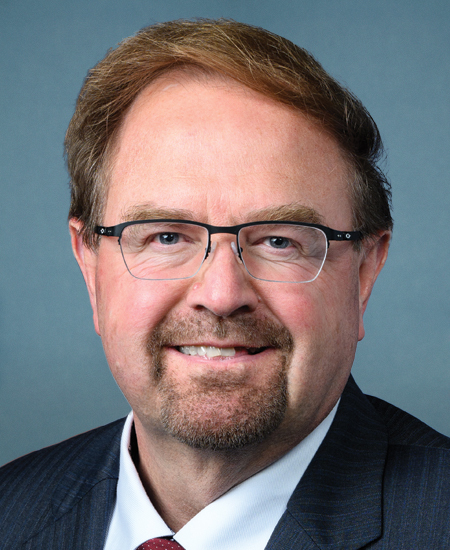
Photo of Chuck Edwards
R United States House · District 11 · North Carolina On the 2026 ballot

Rep. Chuck Edwards

Compare
Total votes
1,860
all sessions
Attendance
98%
35 missed
Near the chamber average
With party
90%
of cast votes
Near the chamber average
Bipartisan score
5%
crosses aisle rarely
Near the chamber average
Sponsored
575
bills & resolutions
Near the chamber average
Committees
4
assignments
575 bills and resolutions

Sponsored bills

Total
575
Primary
42
Co-sponsor
533
This page
575
matching current filters
Co-sponsor HCONRES 24
In committee · Oregon House · Co-sponsor
Calling an Article V Convention for proposing a Fiscal Responsibility Amendment to the United States Constitution and stipulating ratification by a vote of We the People, and for other purposes.

This concurrent resolution calls for a convention for proposing amendments to the U.S. Constitution, with each proposed amendment to be ratified by a vote in three-quarters of the states via state convention delegates.

In committee Mar 14, 2023 1 co-sponsor
Co-sponsor HR 1572
In committee · Oregon House · Co-sponsor
Hello Girls Congressional Gold Medal Act of 2023

Maddy summaryThis bill authorizes a Congressional Gold Medal to honor the "Hello Girls" - female telephone operators who served in the Army Signal Corps during World War I. They provided critical battlefield communications in France (connecting 26 million calls), wore military uniforms, and faced combat risks, but were denied veteran benefits for 60 years due to being classified as civilian contractors. The medal recognizes their pioneering service, devotion, and the decades-long struggle to gain military recognition. The award follows similar recognition for other WWII women veterans and aims to correct the historical injustice they faced.

In committee Mar 14, 2023 1 co-sponsor
Co-sponsor HR 140
Passed · Oregon House · Co-sponsor
Protecting Speech from Government Interference Act

Maddy summaryHR 140, the Protecting Speech from Government Interference Act, prohibits federal employees from using their authority to censor speech, particularly affecting individuals with pending applications (like grants or permits) or under investigation by the agency. It bans employees from advocating censorship of speech, suppressing speech of people involved in agency matters, or engaging in censorship while on duty in government spaces, wearing uniforms, or using government vehicles. Exceptions cover law enforcement actions against child pornography, human trafficking, or national security threats. Violations can result in penalties including removal, fines up to $10,000, or reprimands. The bill defines "censorship" broadly to include removing speech from platforms or adding disclaimers.

Passed Mar 14, 2023 1 co-sponsor
Co-sponsor HR 1210
In committee · Oregon House · Co-sponsor
Stop Fentanyl Border Crossings Act

Maddy summaryHR 1210, the "Stop Fentanyl Border Crossings Act," amends the Public Health Service Act to give the Secretary of Health and Human Services new authority to block border entries. It directly affects countries with substantial fentanyl smuggling, allowing the Secretary to suspend the introduction of people and property from those nations if they determine it poses a serious public health danger. The key provision permits the Secretary to prohibit border crossings for a set period when fentanyl smuggling creates an increased risk of drugs entering the U.S., based on regulations they establish. This is a procedural change to existing public health law, not a new program.

In committee Mar 10, 2023 1 co-sponsor
Co-sponsor HR 1477
In committee · Oregon House · Co-sponsor
Freedom To Invest in Tomorrow's Workforce Act

Maddy summaryThis bill expands the use of 529 college savings accounts to cover career training and credentialing costs. It allows funds to pay for tuition, fees, books, and testing expenses related to recognized postsecondary credential programs (like vocational certifications) that meet specific standards under the Workforce Innovation and Opportunity Act. The change directly affects workers seeking industry-recognized credentials - such as nursing certifications or IT certifications - instead of traditional degrees. It treats these expenses the same as traditional college costs for 529 account withdrawals, making it easier to save for career-focused training. The provision applies to expenses paid after the bill's enactment date.

In committee Mar 8, 2023 1 co-sponsor
Co-sponsor HR 1434
In committee · Oregon House · Co-sponsor
Stop Our Sexual Assault in the Military Act

Maddy summaryHR 1434, the "Stop Our Sexual Assault in the Military Act," requires active-duty members of the U.S. Armed Forces to receive monthly self-defense training focused on preventing sexual assault as part of their regular physical training. This training replaces one day of existing monthly physical training, without increasing the total required training days. The bill directly affects all active-duty military personnel by integrating this specific self-defense component into their standard monthly training schedule. It mandates this change through a new provision (Section 2018) added to Title 10 of the U.S. Code. The law focuses solely on implementing this training requirement, with no other substantive policy changes described.

In committee Mar 8, 2023 1 co-sponsor
Co-sponsor HRES 147
In committee · Oregon House · Co-sponsor
Expressing support for the designation of February 18 through February 25, 2023, as "National FFA Week", recognizing the important role of the National FFA Organization in developing the next generation of globally conscious leaders who will change the world, and celebrating the 90th anniversary of the iconic FFA jacket.

This resolution supports the designation of National FFA Week. It also (1) recognizes the important role of the National FFA Organization (Future Farmers of America) in developing the next generation of leaders who will change the world, and (2) celebrates the 90th anniversary of the iconic FFA jacket.

In committee Mar 2, 2023 1 co-sponsor
Co-sponsor HR 1271
In committee · Oregon House · Co-sponsor
No Retaining Every Gun In a System That Restricts Your Rights Act

No Retaining Every Gun In a System That Restricts Your Rights Act This bill modifies the retention requirements for firearm transaction records of federal firearms licensees (FFLs) that go out of business. Current law generally requires FFLs that go out of business to deliver their firearm transaction records to the Bureau of Alcohol, Tobacco, Firearms and Explosives (ATF). This bill removes the requirement for FFLs that go out of business to deliver their firearm transaction records to the ATF. Further, the bill requires the ATF to destroy all out-of-business records it has collected from FFLs.

In committee Mar 1, 2023 1 co-sponsor
Co-sponsor HR 1296
In committee · Oregon House · Co-sponsor
Restoration of Employment Choice for Adults with Disabilities Act

Maddy summaryThis bill changes rules around subminimum wage employment for adults with disabilities. It lowers the age limit from 24 to 18+ for workers eligible for lower-than-minimum wage jobs, requires the individual's explicit choice to accept such employment, and adds documentation requirements for employers. Specifically, employers must show they tried to connect workers with state support services but were unsuccessful before using subminimum wage. These changes apply to employment starting March 13, 2020, directly affecting adults with disabilities working in qualifying positions. The bill aims to clarify and expand employment options under the Rehabilitation Act.

In committee Mar 1, 2023 1 co-sponsor
Co-sponsor HR 1200
In committee · Oregon House · Co-sponsor
National Right-to-Work Act

Maddy summaryHR 1200, the National Right-to-Work Act, prohibits requiring workers to join a union or pay dues as a condition of employment in both private-sector workplaces (covered by the National Labor Relations Act) and railroad industries (covered by the Railway Labor Act). The bill amends key sections of these laws to eliminate provisions that allowed union security agreements, meaning workers in unionized settings would no longer be forced to pay dues to retain their jobs. This directly affects employees in unionized workplaces across the U.S., particularly those in industries with existing union contracts that included mandatory dues. The law changes the legal framework to ensure union membership and dues payment remain voluntary for all workers.

In committee Feb 27, 2023 1 co-sponsor
Showing 531 to 540 of 575 bills
Previous 1 53 54 55 58 Next