

Maddy summaryHR 7145 defines "essential health systems" as hospitals serving large numbers of Medicaid and low-income patients, specifically targeting non-Federal, nonprofit, or government-run hospitals that meet one of three criteria for at least two of the past three years (e.g., high Medicaid patient percentage, high uncompensated care, or top 16th percentile in state rankings for low-income care). The bill requires MACPAC to annually publish an "essential health system index" ranking qualifying hospitals nationally, by state, and within local areas, using data from Medicare reporting. Hospitals designated as essential health systems receive a five-year designation, renewable if they maintain eligibility. This framework aims to identify facilities providing critical community care for vulnerable populations through standardized metrics.
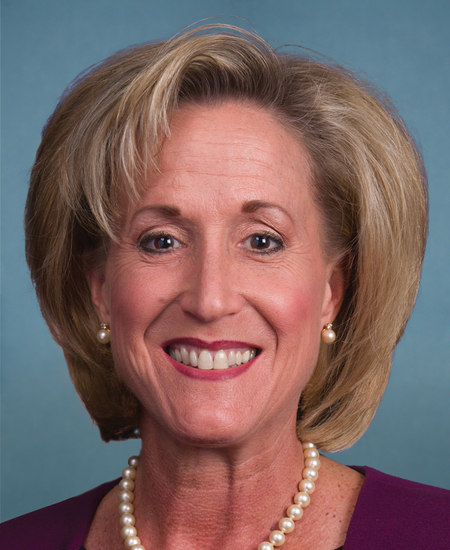
Rep. Ann Wagner
Sponsored bills
Maddy summaryThis bill modifies federal sentencing for young people under 18 who were previously trafficked, abused, or assaulted before committing violent crimes. It allows judges to sentence below mandatory minimums and suspend parts of a sentence to account for the trauma the offender experienced. The law specifically applies to those convicted of violent offenses after the bill's enactment, provided the court finds clear evidence they were victimized under specific federal trafficking or abuse laws within the prior year. It directly affects minors with documented histories of victimization who commit violent acts, giving judges discretion to consider their trauma during sentencing.
Maddy summaryThis bill creates new federal criminal penalties for intentionally coercing minors (under 18) through interstate means (like mail or online platforms) to engage in harmful acts. It specifically prohibits forcing minors to commit self-harm (including suicide attempts), animal cruelty, abusive nonsexual conduct, sexually explicit acts, or obscene speech. Violations carry fines and prison terms of up to 10 years, with harsher penalties (up to 20 years or life) if serious injury or death results. The law directly protects minors from coercion by perpetrators using interstate communication or commerce, with enforcement under existing federal criminal code.
Maddy summaryHR 909, the Crime Victims Fund Stabilization Act of 2025, modifies how funds from the False Claims Act are deposited into the Crime Victims Fund. It specifies that from 2025 through 2029, certain False Claims Act proceeds (specifically those for qui tam plaintiff payments and government damage reimbursements) cannot be deposited into the fund. This change directly affects the composition of the Crime Victims Fund by excluding these specific revenue streams during the specified period. The bill does not create new benefits or alter victim services; it only adjusts fund allocation rules for existing False Claims Act revenues.
Maddy summaryThis resolution commemorates the 30th anniversary of the F/A-18E/F Super Hornet's first flight from St. Louis, Missouri (November 29, 1995), and its 30 years of service to the U.S. Navy and allied forces. It recognizes the aircraft's historical contributions, including its role in military operations, its use in the film *Top Gun: Maverick*, and its display at the National Museum of Transportation in St. Louis. The resolution formally acknowledges the service of Navy pilots, maintenance crews, and the aircraft's role in maintaining naval supremacy. It directs the House Clerk to send a copy to the museum, with no binding policy changes or direct impact on legislation.
Maddy summaryAlyssa's Act of 2025 expands the Federal Clearinghouse on School Safety Evidence-based Practices to collect and analyze school safety data, including information on school shootings and emergency response effectiveness. The bill creates a National School Safety Data Center to track incidents, injuries, and response methods, while requiring emergency response maps for schools to meet specific digital standards for accessibility and real-time updates. It also establishes a program to develop and test panic alarm technology for schools, and mandates annual reports on school safety master plans developed by states and local educational agencies. The legislation requires coordination with the U.S. Secret Service's National Threat Assessment Center to align school safety practices with evidence-based approaches.
Maddy summaryThis bill removes regulatory barriers for certain investment funds. It amends the Investment Company Act of 1940 to allow "closed-end companies" (investment funds that don't issue new shares after launch) to invest all their assets in "private funds" (like venture capital or hedge funds) without SEC restrictions, provided the restriction isn't related to the fund's nature. It also prevents stock exchanges from blocking the listing or trading of these funds' securities. The bill preserves existing fiduciary duties, valuation rules, and liquidity requirements for these funds.
Maddy summaryThe DRIVER Act requires car manufacturers and fleet owners to give vehicle owners free, real-time access to their vehicle's data (like location, driving habits, and sensor information) through standard ports or wireless connections. Owners can control how this data is used or shared with third parties (except for foreign adversaries), delete stored data, and cannot be charged for access or decryption. Manufacturers and fleet owners must provide clear opt-out options before selling owner data and are banned from selling data to specific countries like China, Russia, or Iran. The Federal Trade Commission enforces these rules under existing laws, and states cannot create conflicting laws.
Miracle on Ice Congressional Gold Medal Act This act provides for the award of Congressional Gold Medals to the members of the 1980 U.S. Olympic men's ice hockey team in recognition of the team's achievement at the 1980 Winter Olympic Games.
Maddy summaryThis bill establishes a new interagency Task Force to dismantle foreign scam operations targeting Americans, particularly through "pig butchering" scams in Southeast Asia. The Task Force, chaired by the Secretary of State, will coordinate efforts across multiple agencies to shut down scam centers, impose sanctions on perpetrators, and support victims of trafficking. It requires a detailed strategy within 180 days and annual reports to Congress on progress, including sanctions imposed and funds recovered. The bill authorizes $30 million for these efforts in fiscal years 2026-2027, focusing on countries like Cambodia, Laos, and Burma where scam centers operate with forced labor.