

Maddy summaryHR 1267, the Water Systems PFAS Liability Protection Act, exempts certain water and wastewater treatment facilities from liability under the federal environmental cleanup law (CERCLA) for releases of specific PFAS chemicals. It directly affects public water systems, wastewater treatment plants, municipalities with stormwater permits, and their contractors who handle PFAS while following all applicable laws. The exemption applies only if facilities manage PFAS in compliance with existing federal or state water quality rules, such as through proper biosolids disposal or treated water discharge under permits. However, the bill does not protect facilities that act with gross negligence or willful misconduct in handling PFAS. This law changes liability rules for water systems but does not alter PFAS regulation standards.
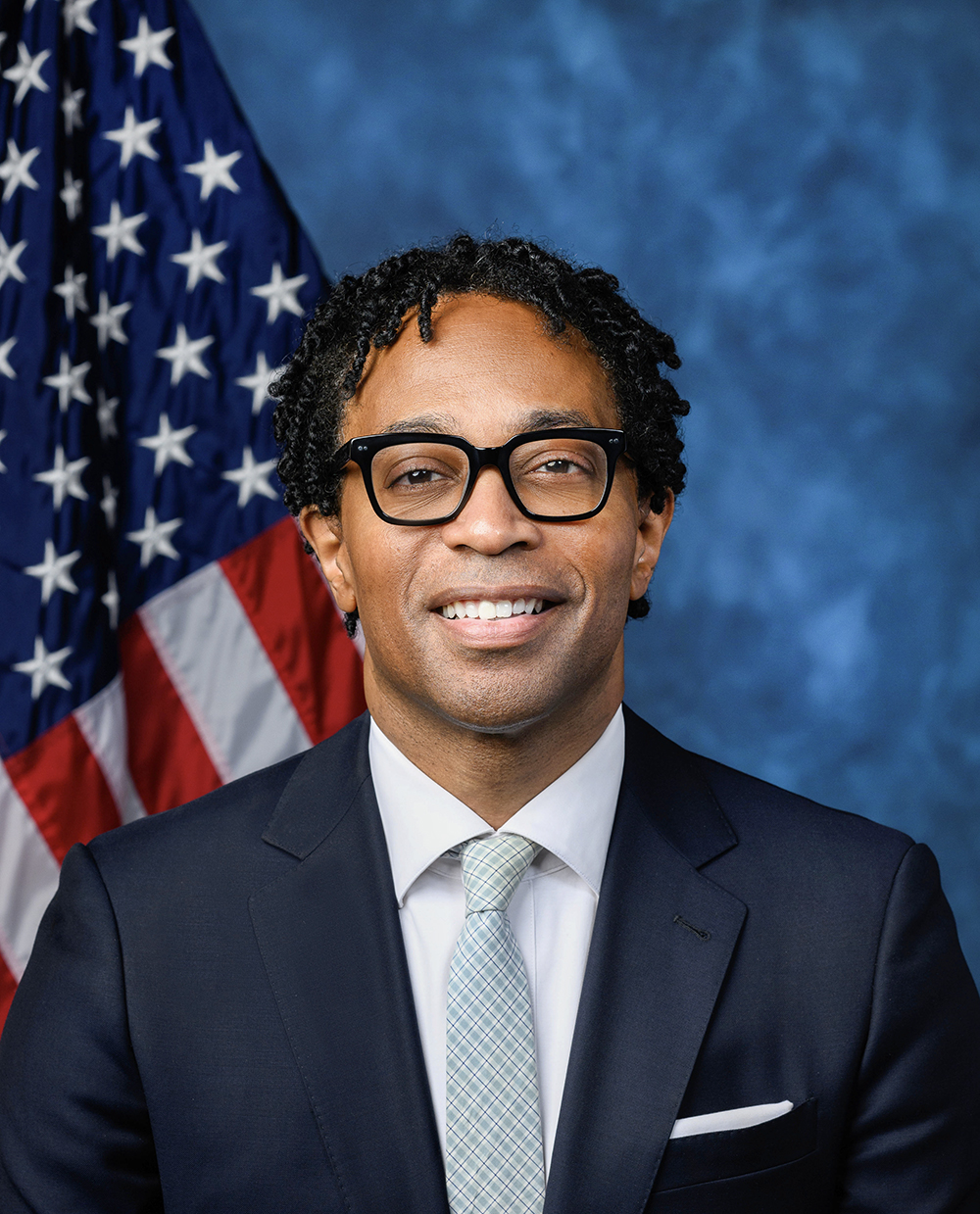
Rep. Wesley Bell
Sponsored bills
Maddy summaryHR 1196 prohibits using federal funds to eliminate the U.S. Agency for International Development (USAID) as an independent agency, as defined by law. It requires the Secretary of State to certify annual compliance with this restriction to the House Foreign Affairs and Senate Foreign Relations committees. The bill directly affects USAID's operational status and U.S. foreign aid programs by preventing congressional or executive actions that would dismantle or merge the agency, maintaining its role in U.S. international development efforts.
Maddy summaryThis bill restricts access to Treasury payment systems (including the Bureau of the Fiscal Service) to only Treasury employees with a "fully successful" performance rating and at least one year of civil service, or contractors/outsiders with security clearances, required privacy/cybersecurity training, ethics agreements, and no conflicts of interest. It treats non-government users accessing these systems as government employees for ethics rules and defines specific actions (like stopping payments) as "personal and substantial participation" in government matters. The Treasury Inspector General must investigate any unauthorized access within 30 days and report to Congress, detailing the breach, security risks, and any halted payments. The bill directly affects Treasury staff, contractors, and any external entities accessing federal payment systems.
Maddy summaryThis bill requires the Comptroller General to study and report on menopause care provided by the Department of Veterans Affairs (VA) to women veterans experiencing perimenopause, menopause, or genitourinary syndrome of menopause. The study will examine current VA protocols for diagnosis, treatment, provider training, veteran access to care, outreach efforts, and quality of care, including veteran feedback. The VA Secretary must then develop a strategic plan within six months of the report's release to improve menopause care access and quality for women veterans under VA healthcare programs.
Maddy summaryThis bill expands 529 college savings account flexibility by allowing funds to cover costs for industry-recognized postsecondary credentials, not just traditional degrees. It defines "qualified expenses" to include tuition/fees for recognized credential programs (like certifications or apprenticeships), required testing fees, and continuing education needed to maintain credentials. To qualify, programs must meet specific criteria, such as appearing on state lists under the Workforce Innovation and Opportunity Act or being listed in VA or Defense directories. The change applies to 529 distributions made after the law's enactment, giving families more options to use these accounts for job-focused training.
Maddy summaryHR 1121, the "No DeepSeek on Government Devices Act," prohibits U.S. federal executive agencies from using the DeepSeek application (or any successor by High Flyer) on government information technology devices. It requires the Office of Management and Budget to develop removal standards within 60 days, directing agencies to remove the application while complying with existing security rules. Exceptions are permitted for national security, law enforcement, and security research activities, but agencies must document risk mitigation plans for any authorized use under these exceptions. The bill directly affects all executive agencies covered under federal information technology policies.
Protecting Sensitive Locations Act This bill prohibits immigration enforcement actions within 1,000 feet of a sensitive location except in exigent circumstances, such as the imminent risk of death, violence, or physical harm to any person. Sensitive locations include health care facilities; schools and school bus stops; places that provide assistance for people such as children, pregnant women, and abuse victims; child care facilities; places that provide disaster or emergency services; places of worship; courthouses and lawyers’ offices; facilities used as polling places; certain labor union facilities; and public assistance offices. The prohibition shall apply to Department of Homeland Security officers and agents, as well as state employees pursuing immigration enforcement actions. If an enforcement action is carried out in violation of this prohibition (1) no information resulting from the action may be entered into the record in a resulting removal proceeding, and (2) the affected individual may move to immediately terminate such a proceeding. U.S. Immigration and Customs Enforcement and U.S. Customs and Border Protection shall annually report to Congress about enforcement actions taken at sensitive locations in the preceding year.
Protect Our Letter Carriers Act of 2025 This bill requires or authorizes certain actions related to the U.S. Postal Service (USPS). The bill requires the Department of Justice to appoint an assistant U.S. attorney in each judicial district to coordinate and supervise the investigation and prosecution of various crimes related to postal services (for example, assault on a postal service employee, breaking into a post office, or obstruction of mails). The bill also requires the U.S. Sentencing Commission to amend sentencing guidelines to provide that the assault or robbery of a postal employee shall be treated the same as the assault of a law enforcement officer. Additionally, the bill authorizes appropriations for the USPS to install high security collection boxes and replace older versions of the universal mailbox key with electronic versions.
Maddy summaryThe Scientific Integrity Act requires federal agencies that fund, conduct, or oversee scientific research to adopt policies preventing political interference in scientific work. These policies must prohibit suppressing, altering, or delaying the communication of scientific findings and ensure hiring and decisions are based on expertise - not politics. Agencies must appoint a Scientific Integrity Officer to enforce the policies, handle complaints, and submit annual reports to Congress and the Office of Science and Technology Policy. The bill directly affects scientists and staff in covered agencies by safeguarding their ability to share research freely and maintain ethical standards in scientific communication.
Maddy summaryHR 1054, the Educators Expense Deduction Modernization Act of 2025, increases the annual tax deduction available to eligible K-12 teachers for out-of-pocket classroom expenses. The bill raises the deduction limit from $250 to $1,000 per year for qualifying educators, applying to taxable years beginning December 31, 2025. It amends Internal Revenue Code sections 62(a)(2)(D) and 62(d)(3) to update the deduction amount and relevant tax year references. This change directly affects elementary and secondary school teachers who itemize deductions and incur eligible classroom costs. The bill makes no other policy changes beyond modernizing the deduction amount and effective date.