

Maddy summaryThis bill would require Medicare to cover early detection screening tests for Alzheimer's disease and related dementias starting January 1, 2028. It defines eligible tests as FDA-cleared genomic blood tests, blood product analyses, or equivalent medical imaging methods (like protein expression or whole genome sequencing) that detect pre-symptomatic or early-stage conditions. Medicare beneficiaries would receive this coverage without cost-sharing for these specific screenings. The bill amends Medicare coverage rules to explicitly include these tests under Section 1861(nnn) of the Social Security Act.
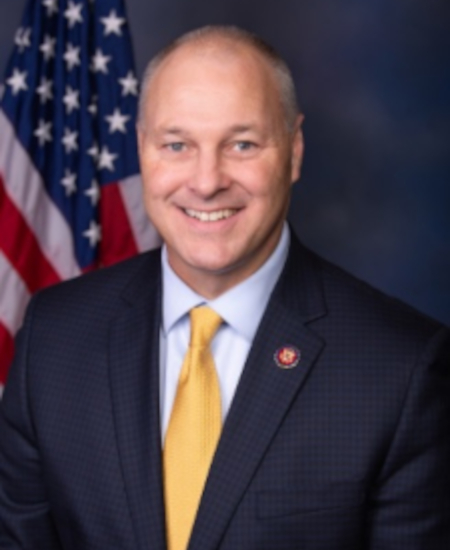
Rep. Pete Stauber
Sponsored bills
Maddy summaryHR 6120, the SROS Act, exempts retirement income from taxable income for qualifying school resource officers. It directly affects retired military members or law enforcement officers who later work as school resource officers, provided they meet background checks and state training requirements. The bill excludes pension, annuity, or retirement plan payments from taxable income during their employment as school resource officers. Additionally, officers with 10+ years of service in this role receive a lifetime exemption for all retirement income after leaving the position. The tax change applies to taxable years beginning after the bill's enactment.
Maddy summaryHR 6045, the COACH Act, requires the Small Business Administration to create and regularly update a multilingual resource guide for small childcare businesses. The guide, published annually and updated every five years, provides practical help on operations, finances, safety, compliance, and quality standards - including eligibility for federal childcare funding. It must be available in English and the 10 most common non-English languages in the U.S., including Mandarin, Cantonese, Japanese, and Korean. The guide will be distributed through women’s business centers, small business development centers, and other support organizations to directly assist childcare providers, especially those with limited administrative resources.
Maddy summaryThis bill requires all new passenger vehicles manufactured for sale in the U.S. to include AM radio as standard equipment (not an optional add-on) by 2027-2028, depending on manufacturer size. It mandates that AM radio receivers must be easily accessible to drivers and allows compliance through digital AM broadcast technology. During a transition period, manufacturers must clearly label vehicles without AM radio but cannot charge extra for this feature. The bill also mandates a GAO study on AM radio's role in emergency alerts and includes a 10-year sunset provision for the rule. It preempts state laws regarding AM radio access in vehicles.
Maddy summaryThis resolution (HRES 869) commemorates the 50th anniversary of the November 10, 1975, sinking of the Great Lakes freighter S.S. Edmund Fitzgerald, which resulted in the loss of all 29 crew members. It honors the memory of the 29 crew members who died in the tragedy and recognizes the enduring contributions of Great Lakes shipping to the U.S. economy and cultural heritage. The resolution also acknowledges efforts by historians, museums, and communities to preserve the ship's legacy and promote maritime education. As a commemorative resolution, it has no binding policy impact and serves solely to mark this historical event.
Maddy summaryHRES 866 is a non-binding House resolution condemning the systematic persecution of Christians in Nigeria by groups like Boko Haram and Fulani militants, and criticizing Nigeria's government for failing to protect Christian communities or acknowledge the violence. It calls on the U.S. government to support President Trump in using diplomatic, economic, and security tools to pressure Nigeria to end impunity for attacks, protect Christians, return displaced persons, and repeal blasphemy laws. The resolution specifically demands action against religiously motivated violence, including the release of those imprisoned for their faith, and urges coordination with international partners for humanitarian aid. It does not create new laws but expresses congressional support for U.S. policy actions targeting Nigeria's religious freedom violations.
Maddy summaryThis bill requires adding the names of 74 crew members of the USS Frank E. Evans (killed in a 1969 incident) to the Vietnam Veterans Memorial Wall within one year of enactment. It directly affects the memorial's inscription and honors the families of those lost. The Secretary of Defense must consult on placement due to space limits and is exempt from standard memorial rules under the Commemorative Works Act.
Maddy summaryHR 5944, the Restoring Inpatient Mental Health Access Act of 2025, removes a longstanding Medicaid coverage barrier for inpatient mental health services. It amends the Social Security Act to allow federal Medicaid funding for care provided in mental health facilities (previously excluded as "institutions for mental diseases") for services furnished on or after January 1, 2027. This change directly affects Medicaid beneficiaries requiring inpatient mental health treatment by enabling federal financial support for those services. The bill does not create new programs but updates existing Medicaid rules to expand coverage for this critical care. The policy change takes effect January 1, 2027, with no retroactive application.
Maddy summaryThis bill ensures that critical firearm-related government operations continue during federal shutdowns. It designates background checks (via the FBI's National Instant Criminal Background Check System), Bureau of Alcohol, Tobacco, Firearms and Explosives enforcement, and firearm export licensing (handled by Commerce and State Departments) as essential services that must remain operational. These functions would be treated as "excepted" under federal law, meaning their employees would continue working even if other government services halt. The bill affects how background checks and firearm export licenses are processed during shutdowns but does not change gun ownership laws or eligibility.
Maddy summaryThe FREE Act (HR 689) requires federal agencies to replace slow, discretionary permitting processes with a streamlined "permitting by rule" system for certain permits. Under this system, applicants would certify compliance with written standards (instead of lengthy agency reviews) and receive a permit automatically after 180 days if the agency doesn’t act. Agencies must first report on their current permitting processes and identify which permits can transition to this model, with deadlines for submissions and implementation. This directly affects federal agencies issuing permits (e.g., environmental or construction permits) and applicants seeking them, aiming to reduce delays and costs while allowing agencies to audit and enforce compliance after permits are granted.