

Maddy summaryHRES 375 is a symbolic resolution designating May 2025 as "Renewable Fuels Month" to recognize renewable fuels' role in reducing carbon emissions, lowering consumer fuel prices, supporting rural economies, and decreasing reliance on foreign energy sources. The resolution expresses the House's support for this designation without creating new laws or funding. It highlights renewable fuels' economic contributions (e.g., jobs, GDP impact) and environmental benefits as context for the recognition, but does not alter existing policies. As a non-binding resolution, it has no direct legal effect on consumers, industries, or government programs.
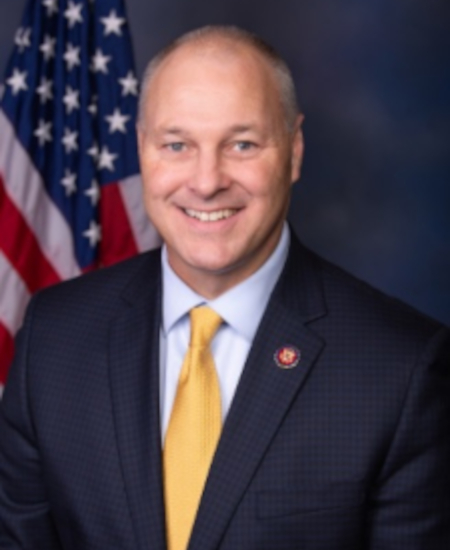
Rep. Pete Stauber
Sponsored bills
Maddy summaryHR 4255, the Enhancing Safety for Animals Act of 2025, would remove the Mexican wolf (Canis lupus baileyi) from the U.S. Endangered Species Act protections. It directly affects ranchers in the Mexican Wolf Experimental Population Area, who report livestock losses and safety concerns, and shifts regulatory authority from the U.S. Fish and Wildlife Service to state and local management. Key provisions include formally delisting the wolf, nullifying two existing federal rules governing the species, and prohibiting future consideration of Mexican wolf populations in Mexico when making ESA decisions. The bill aims to streamline livestock compensation for ranchers by changing evidentiary standards for wolf depredation claims.
Maddy summaryThe AI OVERWATCH Act requires U.S. exporters to obtain a license for sending certain high-performance integrated circuits (defined by specific technical specifications like processing power or bandwidth) to countries designated as "concerns," including China, Russia, Iran, and North Korea. Before approving such licenses, the Commerce Department must submit detailed certifications to Congress, including assurances the export won’t support military/intelligence capabilities of the recipient country and won’t harm U.S. semiconductor availability or AI leadership. The bill also creates an exemption for U.S. companies meeting strict security and ownership standards ("trusted United States persons") to export these chips to non-target countries without a license. Additionally, it mandates a national security strategy assessing how such exports affect U.S. AI competitiveness, particularly regarding China’s semiconductor production and capabilities.
Maddy summaryHR 7156, the SCAM Act, would expand grounds for revoking U.S. citizenship (denaturalization) for naturalized citizens who commit specific offenses within 10 years of becoming citizens. It targets individuals convicted of defrauding federal, state, or local governments (e.g., $10,000+ in public benefit fraud), affiliating with foreign terrorist organizations, or committing aggravated felonies or espionage. If convicted in these categories, the government could automatically revoke citizenship retroactively (as if it never existed) based on evidence that the person lacked good moral character or loyalty to the U.S. at the time of naturalization. This bill directly affects naturalized citizens who commit these offenses within a decade of gaining citizenship, with revocation triggering immediate deportability.
Maddy summaryHR 224, the Disabled Veterans Housing Support Act, modifies how income is calculated for housing assistance programs by requiring that veterans' service-connected disability compensation (from the VA) be excluded when determining eligibility for low/moderate income housing. This directly affects disabled veterans who receive VA disability payments, ensuring these funds do not count against them for housing assistance under HUD programs. The bill amends the Housing and Community Development Act of 1974 to mandate this exclusion in income calculations. Additionally, it requires a report within one year examining how disability compensation is treated across HUD programs and recommending improvements to better serve veterans.
Maddy summaryHR 7109, the Small Business Child Care Investment Act, creates new loan access for eligible nonprofit child care centers. It allows these centers - defined as 501(c)(3) organizations providing care for children birth to school age, meeting licensing, background check, and anti-discrimination requirements - to be treated as small businesses for SBA loans. The bill requires loans over $500,000 to include a payment guarantee and mandates that SBA loans be made through banks or financial institutions (not directly by SBA). It also requires the SBA to report annually to Congress on the number and value of these loans.
Maddy summaryThis resolution (HRES 998) is a symbolic House of Representatives commendation honoring President Trump, U.S. military/intelligence agencies, and Justice Department personnel for the alleged success of "Operation Absolute Resolve" in apprehending Venezuelan leader Nicolás Maduro. It cites Maduro's charges (including narcoterrorism conspiracy) and the Maduro regime's alleged dismantling of Venezuelan democracy, state-sponsored drug trafficking, and human rights abuses. The resolution expresses support for Venezuela's democratic transition but contains no new policy, funding, or legal changes. As a procedural resolution, it does not directly affect any individuals or alter laws.
Maddy summaryHR 7051, the American Dream Act, allows individuals aged 65 or older to exclude taxable gains from selling their home to a first-time homebuyer under specific conditions. The bill applies when the home sells for $500,000 or less, the buyer is a first-time homebuyer purchasing it as their primary residence, and the buyer provides a sworn statement confirming these details. The exclusion is only available for sales occurring after December 31, 2026, and expires after December 31, 2031. This policy directly affects seniors aged 65+ selling their primary residence and first-time homebuyers purchasing it as their main home.
Maddy summaryThis bill would increase the base pay for Federal Bureau of Prisons correctional officers by 35 percent, replacing their current base rate for all pay calculations (including retirement and locality adjustments). It applies to officers whose duties involve inmate custody, control, or direct custodial contact, including certain supervisory staff and lower-grade Bureau of Prisons employees with similar duties. The pay increase is capped at the Executive Schedule level V rate and would expire after five years unless a Department of Justice Inspector General review finds progress in reducing non-custodial staff use for custodial duties and excessive overtime. The review, required 180 days before expiration, would assess impacts on recruitment, retention, and institutional safety.
Maddy summaryThis bill requires state agencies administering the SNAP (food stamp) program to provide recipient-level data to the USDA Secretary upon request. It directly affects state SNAP agencies, which must submit this data within 30 days (or sooner for urgent cases) in secure electronic formats. Key provisions include mandatory data sharing for program oversight and integrity, strict privacy safeguards under the Privacy Act, and potential withholding of federal funds for non-compliance. The bill also clarifies that this does not limit the USDA's existing authority to access state data for program administration.