

Retirement Inflation Protection Act of 2021 This bill allows the adjusted basis of certain assets, including C corporation common stock and tangible property used in a trade or business, to be adjusted for inflation solely for the purpose of determining the gain or loss of individuals who (1) have held such assets for more than 3 years, and (2) have attained the age of 59 1/2 as of the date of the sale or other disposition of the assets. The bill uses the Chained Consumer Price Index for All Urban Consumers (C-CPI-U) for purposes of making the inflation adjustment. The bill sets forth rules for applying the inflation adjustment to short sales, dispositions between related persons, and improvements to property. The Internal Revenue Service may disallow an adjustment if any person transfers cash, debt, or any other property to another person for the principal purpose of securing or increasing an inflation adjustment.
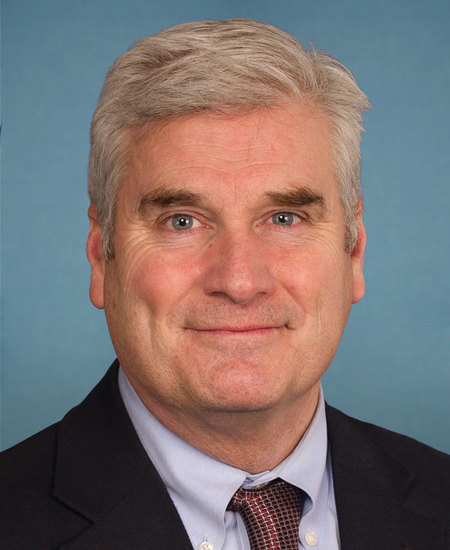
Rep. Tom Emmer
Sponsored bills
No Taxpayer Funding for the Chinese Communist Party Act of 2021 This bill requires the Department of Justice to report to Congress on the extent to which China has benefited from U.S. taxpayer-funded research. The report shall also contain information including (1) a list of U.S. government-funded entities that have hired Chinese nationals; and (2) a list of U.S. government programs in the science, technology, engineering, and math fields that have cooperated or affiliated with research institutions in China or Chinese Communist Party entities.
Chinese Research Funds Accounting Act This bill directs the Government Accountability Office (GAO) to conduct a study on federal funding made available to entities located in China or majority owned or controlled by the Chinese Communist Party for research in the five years prior to enactment of this bill. Not later than 120 days after the enactment of this bill, the GAO shall brief Congress on the data that is available with respect to federal funding made available to such entities for research.
Pre-existing Conditions Protection Act of 2021 This bill reestablishes requirements for private health insurance plans with respect to preexisting conditions, guaranteed enrollment, and discrimination based on health-related factors if they are repealed by another law. In such event, the bill prohibits private health insurance plans from (1) limiting or excluding benefits covering preexisting conditions; (2) denying enrollment to employers or individual applicants, subject to specified limits; (3) establishing rules for eligibility based on an individual's health status; or (4) requiring an individual to a pay higher premium than similarly situated individuals enrolled in the plan based the individual's health status. The bill also prohibits plans from collecting genetic information in connection with issuing health insurance and provides requirements for workplace wellness programs connected to health insurance.
Education Freedom Scholarships and Opportunity Act This bill allows individual and corporate taxpayers a tax credit for cash contributions to tax-exempt scholarship-granting organizations for elementary and secondary education expenses. It imposes a cap of $5 billion on the amount of contributions that qualify for a tax credit. The bill directs the Department of Education, in coordination with the Department of the Treasury, to establish, host, and maintain a web portal that (1) lists all eligible scholarship-granting organizations; (2) enables contributions to such organizations; (3) provides information about the benefits of this bill; and (4) enables a state to submit and update information about its programs and scholarship-granting organizations, including information on student eligibility and allowable educational expenses.
Gym Mitigation and Survival Act of 2021 or the GYMS Act of 2021 This bill establishes a grant program to provide economic support to eligible fitness facilities in response to the COVID-19 (i.e., coronavirus disease 2019) pandemic. Specifically, the bill authorizes the Small Business Administration to make initial and supplemental grants to privately owned fitness facilities that primarily provide health or fitness services and that do not offer golf, hunting, sailing, or riding facilities. The total amount of grant funds for a recipient may not exceed $25 million, and the recipient must use these funds for payroll costs, rent or mortgage obligations, and other ordinary and necessary business expenses.
This resolution recognizes the Department of Minnesota Veterans of Foreign Wars for 100 years of dutiful service to veterans across Minnesota.
This resolution supports the designation of Career and Technical Education Month to celebrate career and technical education across the United States.
Taking Account of Bureaucrats' Spending Act of 2021 or the TABS Act of 2021 This bill eliminates provisions that fund the Consumer Financial Protection Bureau (CFPB) using transfers from the earnings of the Federal Reserve System. The transfers under current law permit the CFPB to be funded outside of the annual appropriations process, and this bill brings the CFPB into the regular process.
Flood Resiliency and Taxpayer Savings Act of 2021 This bill requires federal agencies to take specified actions to evaluate and mitigate the risk of floods to federally funded projects. Specifically, the bill directs federal agencies to evaluate the potential for flooding throughout the planned lifetime or duration of a federally funded project to reduce the risk of financial and property losses and prevent the disruption of critical services during floods. Further, federal agencies must consider certain data and information (e.g., the most recent flood insurance rate map published by the Federal Emergency Management Agency) when evaluating whether a federally funded project is in a floodplain. If the agency determines the data and information are not adequate for understanding the flood risks to the project, then the agency must use an alternative design standard outlined by the bill. Finally, the bill directs the Federal Interagency Floodplain Management Task Force to issue guidelines for federal agencies related to flood risk management.