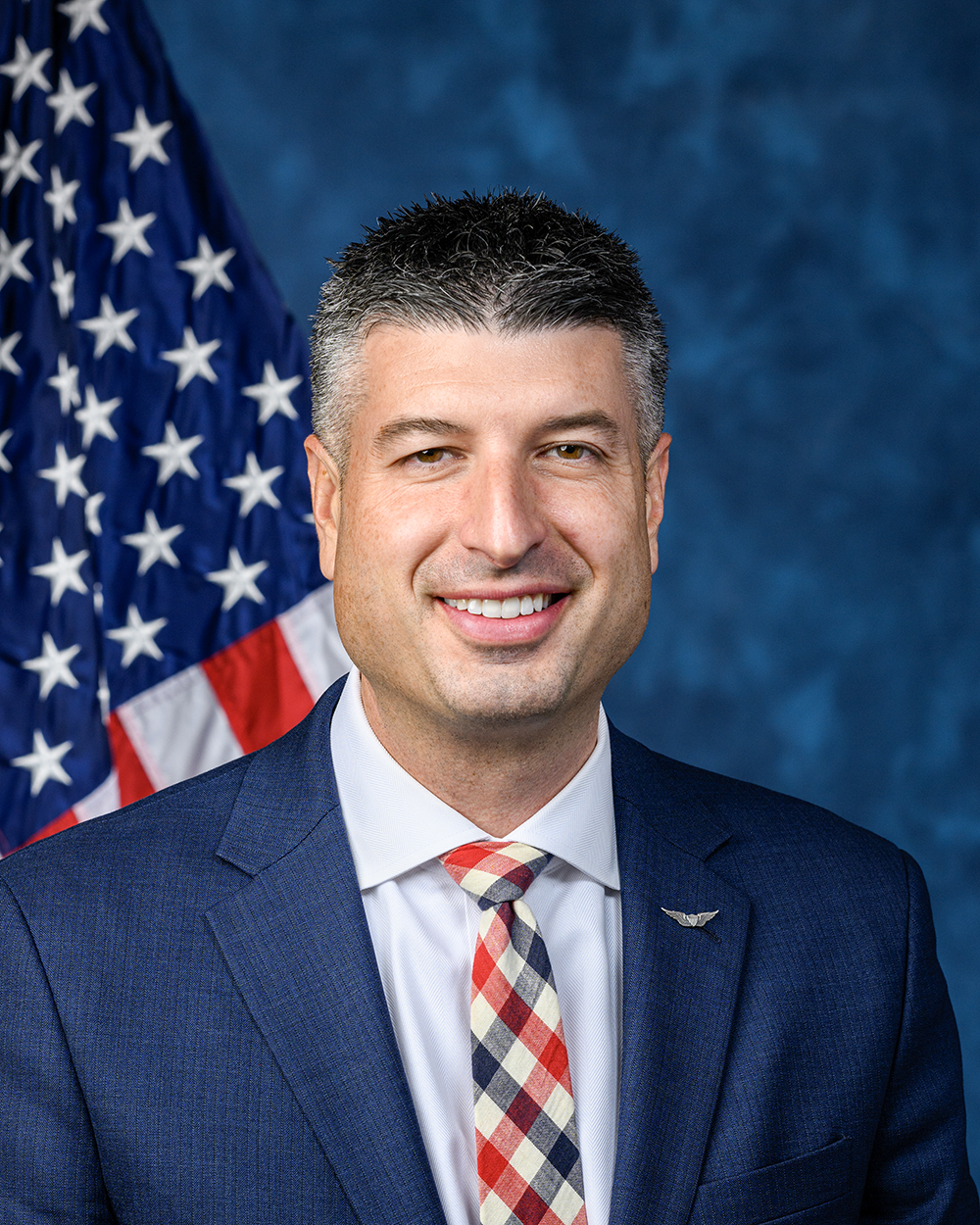
Photo of Tom Barrett
R United States House · District 7 · Michigan On the 2026 ballot

Rep. Tom Barrett

Compare
Total votes
650
all sessions
Attendance
99%
5 missed
Higher than 80% of chamber peers
With party
96%
of cast votes
Near the chamber average
Bipartisan score
2%
crosses aisle rarely
Near the chamber average
Sponsored
258
bills & resolutions
Near the chamber average
Committees
7
assignments
258 bills and resolutions

Sponsored bills

Total
258
Primary
51
Co-sponsor
207
This page
258
matching current filters
Co-sponsor HR 1340
In committee · Oregon House · Co-sponsor
More Homes on the Market Act

More Homes on the Market Act This bill increases the amount of gain from the sale of a principal residence that an individual may exclude from gross income (for federal tax purposes). Under the bill, an individual may exclude from gross income gain from the sale of a principal residence of up to $500,000 (currently $250,000), and taxpayers who are married and file a joint federal income tax return may exclude up to $1 million (currently $500.000). The bill also requires these amounts to be adjusted annually for inflation.

In committee Feb 13, 2025 1 co-sponsor
Co-sponsor HR 1345
In committee · Oregon House · Co-sponsor
Gas Can Freedom Act of 2025

Maddy summaryHR 1345, the Gas Can Freedom Act of 2025, repeals two existing federal safety laws: the Portable Fuel Container Safety Act of 2020 and the Children’s Gasoline Burn Prevention Act. This bill removes requirements that portable gasoline containers must include flame mitigation devices or child-resistant features. As a result, the Consumer Product Safety Commission can no longer enforce these specific safety standards for fuel containers. The bill directly affects manufacturers of portable fuel containers and consumers who purchase them, eliminating these regulatory requirements.

In committee Feb 13, 2025 1 co-sponsor
Co-sponsor HR 1229
In committee · Oregon House · Co-sponsor
United States-Israel Defense Partnership Act of 2025

United States-Israel Defense Partnership Act of 2025 This bill requires or authorizes certain actions to increase defense-related cooperation between the United States and Israel. Specifically, the bill requires the Department of Defense (DOD) to establish a cooperative program, with the concurrence of Israel's Ministry of Defense (MOD), to develop and deploy advanced technologies for countering unmanned systems that threaten the United States and Israel; establish in Israel an office of the Defense Innovation Unit (an organization that focuses on rapidly fielding and scaling commercial technology across the U.S. military); and seek to engage Israel's MOD on the ascension of Israel into the national technology and industrial base (currently defined in law as the persons and organizations engaged in research, development, production, integration, services, or information technology activities conducted within the United States, the United Kingdom, Australia, New Zealand, and Canada). The bill authorizes DOD, upon request of Israel's MOD, to jointly conduct research, development, test, and evaluation (RDT&E) of emerging technologies such as artificial intelligence and robotics to meet defense challenges. Additionally, the bill extends the authority for DOD to (1) carry out RDT&E on a joint basis with Israel to establish anti-tunnel and counter unmanned aerial systems capabilities through 2028, and (2) transfer defense articles intended for use as reserve stocks for Israel through January 1, 2029.

In committee Feb 12, 2025 1 co-sponsor
Co-sponsor HR 1227
In committee · Oregon House · Co-sponsor
Alternatives to PAIN Act

Alternatives to Prevent Addiction In the Nation Act or the Alternatives to PAIN Act This bill reduces cost-sharing and prohibits the imposition of certain utilization requirements under the Medicare prescription drug benefit for certain non-opioid pain management drugs. Specifically, the bill requires such drugs to be covered without a deductible and to be placed on the lowest cost-sharing tier (if any). The bill also prohibits the imposition of prior authorization requirements (i.e., requiring prior approval from a plan) or step therapy requirements (i.e., requiring the use of alternative drugs before a drug is covered under a plan) with respect to such drugs.

In committee Feb 12, 2025 1 co-sponsor
Co-sponsor HR 1232
In committee · Oregon House · Co-sponsor
National Right-to-Work Act

Maddy summaryHR 1232, the National Right-to-Work Act, would make union membership voluntary for workers in most private-sector jobs by removing legal requirements for employees to join a union or pay dues as a condition of employment. It directly affects workers in unionized workplaces covered by the National Labor Relations Act (including most private employers) and railroad workers covered by the Railway Labor Act. The key change eliminates provisions that allowed "union security agreements" (requiring dues or membership), meaning workers could no longer be forced to pay union fees to keep their jobs. This bill does not change other labor rights or create new programs - it only modifies existing laws to allow workers to opt out of union membership and financial obligations.

In committee Feb 12, 2025 1 co-sponsor
Co-sponsor HR 1241
In committee · Oregon House · Co-sponsor
SAFE for America Act of 2025

Security And Fairness Enhancement for America Act of 2025 or SAFE for America Act of 2025 This bill eliminates the diversity visa program. This program provides up to 55,000 visas annually to individuals from countries with low rates of immigration to the United States.

In committee Feb 12, 2025 1 co-sponsor
Co-sponsor HR 1219
In committee · Oregon House · Co-sponsor
Oral Health Products Inclusion Act

Maddy summaryThis bill expands tax-advantaged health accounts to cover specific oral care products. It adds toothbrushes (manual or electric), water flossers, and over-the-counter antiplaque/anticaries drugs (like certain mouthwashes or gels) to the list of qualified medical expenses for Health Savings Accounts (HSAs), Archer MSAs, and health flexible spending accounts (FSAs). The change allows people to use pre-tax dollars from these accounts to pay for these common oral healthcare products, directly affecting individuals managing their dental care costs through such accounts. The bill amends existing tax code provisions to include these items under "qualified medical expenses" without creating new government programs.

In committee Feb 11, 2025 1 co-sponsor
Co-sponsor HR 1137
In committee · Oregon House · Co-sponsor
No Kill Switches in Cars Act

Maddy summaryHR 1137, the "No Kill Switches in Cars Act," repeals Section 24220 of the Infrastructure Investment and Jobs Act (Public Law 117-58), which previously required vehicle manufacturers to implement advanced impaired driving technology. This bill directly affects car manufacturers by removing a mandate to integrate specific safety technology designed to detect driver impairment. The key provision is the repeal itself, eliminating the requirement without creating new obligations or altering existing vehicle safety standards.

In committee Feb 7, 2025 1 co-sponsor
Co-sponsor HR 1131
In committee · Oregon House · Co-sponsor
Family Farm and Small Business Exemption Act

Maddy summaryHR 1131 exempts certain family farms and small businesses from being counted as assets when calculating financial need for federal student aid under the Higher Education Act. Specifically, it amends the law to exclude the net value of a family farm where the family resides and small businesses (with ≤100 employees) owned by the family from need analysis calculations. This change directly affects students from qualifying family farm or small business households when applying for federal financial aid. The exemption applies to need analysis conducted for award years beginning after the bill's enactment date. The bill modifies Section 480(f)(2) of the Higher Education Act of 1965 to implement this policy change.

In committee Feb 7, 2025 1 co-sponsor
Co-sponsor HR 1094
In committee · Oregon House · Co-sponsor
Amateur Radio Emergency Preparedness Act

Maddy summaryHR 1094, the Amateur Radio Emergency Preparedness Act, prevents private restrictions (such as those in homeowners associations) from blocking amateur radio operators from installing and maintaining antennas for emergency communications. The bill directly affects over 770,000 licensed amateur radio operators in the U.S. who face such restrictions on their residential property. Key provisions include overriding unreasonable restrictions, requiring reasonable safety and building code compliance for allowed rules, setting a 45-day approval period for antenna installations (with deemed approval if not acted on), and exempting small antennas (under 1 meter, flagpoles ≤43 feet, or minimal wire antennas) from prior approval. This ensures amateur radio operators can quickly establish emergency communication systems without unnecessary delays or costs during crises.

In committee Feb 6, 2025 1 co-sponsor
Showing 231 to 240 of 258 bills
Previous 1 23 24 25 26 Next