

Maddy summaryThis bill, HR 5789 (the Donald J. Trump Congressional Gold Medal Act), authorizes Congress to award a gold medal to former President Donald J. Trump. It recognizes his "extraordinary peacemaking efforts" as described in the bill's findings, including a fictional 2025 Israel-Hamas peace agreement and other alleged diplomatic achievements. The key provision directs the Treasury Secretary to design and strike the medal, with bronze duplicates available for sale to cover costs. The bill does not create new laws or affect any policies; it is a ceremonial honor for Trump, with no direct impact on constituents or legislation.
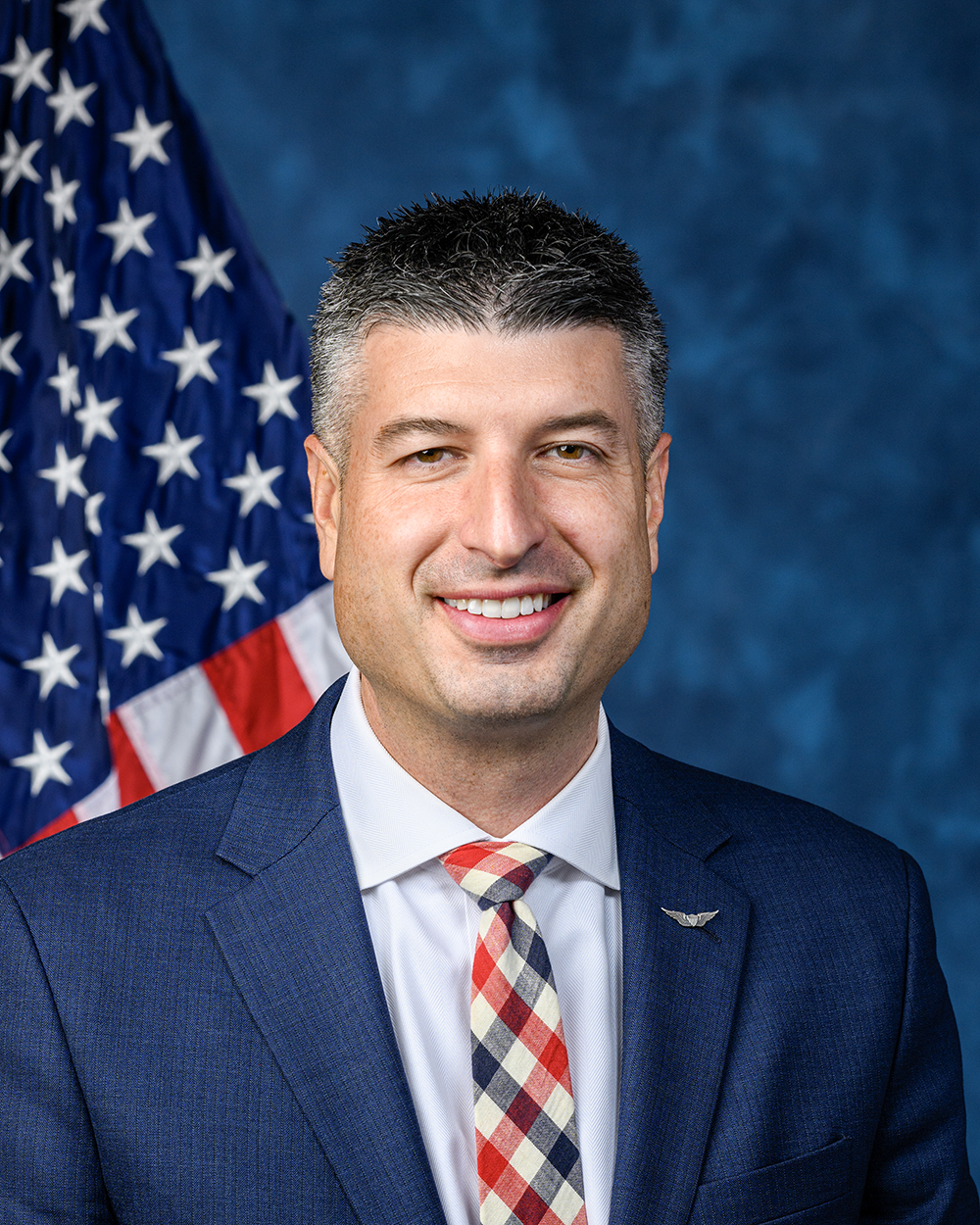
Rep. Tom Barrett
Sponsored bills
Maddy summaryThe PEACE Act of 2025 requires the U.S. Treasury to impose financial restrictions on foreign banks that provide significant services to Russian energy entities, including Gazprom, Rosneft, and Lukoil, or other entities designated under existing sanctions. It mandates Treasury to block U.S. correspondent accounts for such institutions within 180 days of enactment, with civil penalties up to $377,700 per violation or criminal penalties for intentional violations. The law also requires Treasury to determine within 90 days whether the specified Russian energy companies fall under the sanctions scope. The bill terminates automatically if Russia ceases destabilizing actions against Ukraine or after 5 years from enactment.
Maddy summaryThis bill would require all states to recognize valid concealed carry permits issued by other states, allowing permit holders to carry concealed handguns (excluding machine guns) in any state that either issues such permits or doesn't prohibit concealed carry. It directly affects law-abiding gun owners with valid permits from their home state, ensuring they can carry in states with similar permit systems or no prohibitions. Key provisions include treating valid permit documents as proof of legal carry (reducing officer stops), shifting the burden of proof to prosecutors if challenged, and allowing civil lawsuits for violations with attorney's fee awards. The bill does not override state laws restricting firearms on private property or government land, nor does it affect federal gun restrictions like those in section 922(q).
Maddy summaryThis bill requires five federal agencies (Housing and Urban Development, Agriculture, Veterans Affairs, Treasury, and the Federal Housing Finance Agency) to coordinate housing data sharing and jointly propose policy solutions. Within one year of enactment, the agencies must establish a shared agreement and submit a report to Congress addressing mortgage costs, housing construction barriers, local regulations, insurance availability, down payment assistance, and disaster resilience. The report will outline specific proposals to improve housing affordability and market efficiency. This is a procedural bill focused on interagency coordination, not direct policy changes or benefits for homeowners.
Maddy summaryThe SAVES Act (HR 2605) creates a 5-year pilot program where the Department of Veterans Affairs (VA) awards competitive grants to nonprofit organizations to provide service dogs to veterans with specific disabilities. It directly affects veterans with covered conditions like blindness, mobility impairments, PTSD, traumatic brain injury, or other disabilities deemed appropriate for service dog assistance by the VA. Key provisions include: grants capped at $2 million per nonprofit (with $10 million annually authorized), no fees charged to veterans, VA-provided lifetime veterinary insurance for the dogs, and requirements for nonprofits to train veterans and maintain humane animal standards. The program aims to expand access to service dogs as a support tool for veterans managing qualifying disabilities.
Maddy summaryHR 5548, the Fraud Accountability and Recovery Act, blocks U.S. foreign aid to countries that fail to extradite individuals convicted of defrauding the U.S. or assist in recovering stolen federal funds. The bill directly affects foreign governments that do not take legal action to identify, freeze, seize, or repatriate funds fraudulently obtained from U.S. programs. Key provisions require the President to withhold aid under the Foreign Assistance Act if a country neglects these measures, and mandate annual reports listing non-compliant countries along with the value of unrecouped fraud funds. The bill cites examples like a $250 million pandemic food fraud scheme in Minnesota to highlight the scale of losses (estimated $233-$521 billion annually), but focuses on preventing future fraud by denying safe havens abroad. It includes a presidential waiver option for national security reasons, requiring prior congressional notification.
Maddy summaryHR 5552, the "Eliminate Shutdowns Act," would automatically continue federal funding for most government programs during a funding gap. If Congress fails to pass annual appropriations bills by the start of a fiscal year, the bill would automatically provide funding at the previous year's level for 14 days, extending in 14-day increments until a new funding bill is enacted. This applies to all federal programs except those specifically prohibited or covered by other laws, including maintaining current funding for entitlement programs like food assistance under the Food and Nutrition Act. The bill aims to prevent shutdowns by ensuring continuous operations without requiring new congressional action during the funding gap. It would take effect on September 30, 2025.
Maddy summaryHRES 719 is a House resolution honoring Charles "Charlie" James Kirk, the founder of Turning Point USA who was assassinated on September 10, 2025. The resolution condemns his assassination and all political violence, extends condolences to his family, and calls on Americans to reject violence while promoting civil discourse. It specifically recognizes Kirk's legacy as a defender of constitutional principles and his role in inspiring youth through free speech and faith-based civic engagement. As a commemorative resolution, it does not enact policy changes but formally expresses the House's stance on honoring his life and legacy.
Maddy summaryHR 5455, the Aviation Funding Stability Act of 2025, ensures continued operation of the Federal Aviation Administration (FAA) during government funding gaps. If Congress fails to pass regular appropriations or a continuing resolution before the new fiscal year begins, the bill allows the FAA to use existing funds from the Airport and Airway Trust Fund to maintain essential programs and airport infrastructure at the previous year’s funding level. This prevents shutdowns for FAA operations like air traffic control, airport grants, and safety programs for up to 30 days or until regular funding is enacted. The bill directly affects all FAA programs funded through the trust fund, including airport improvements and aviation safety initiatives, without creating new policies or altering funding levels.
Maddy summaryThis bill requires the Department of Veterans Affairs (VA) to create an electronic system allowing veterans and eligible individuals to send and receive official communications about their educational benefits. It directly affects veterans using VA educational assistance programs by offering a digital alternative to paper mail. The key provision mandates that veterans must actively opt in to use this electronic system (rather than it being automatic), and the VA must notify enrolled students about this option. The VA will now be required to provide this electronic communication mechanism as part of managing educational benefit correspondence.