

Maddy summaryThis bill, titled the Protecting Human Rights and Public Health in Foreign Assistance Act, aims to cancel specific regulations issued by the Department of State. It directly affects the federal government by prohibiting any department or agency from enforcing, implementing, or proposing rules related to protecting life, combating discriminatory equity ideology, and combating gender ideology in foreign aid programs. The legislation treats these cancelled rules as if they never existed, effectively nullifying their impact on future foreign assistance policies.
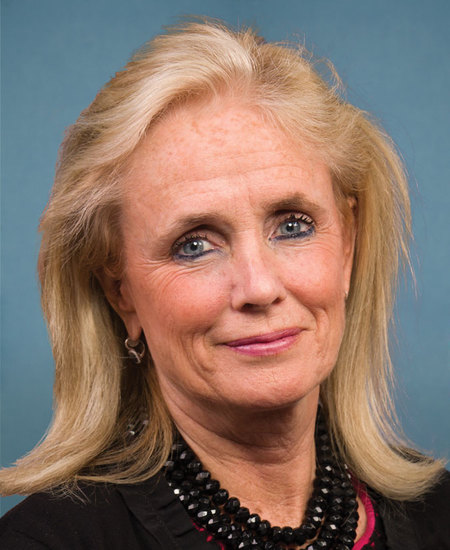
Rep. Debbie Dingell
Sponsored bills
Maddy summaryThis bill directs the Department of Energy to expand research and development efforts focused on creating cleaner, more efficient, and domestically produced vehicle technologies. It establishes multiple new programs to investigate advanced materials, battery systems, electric drivetrains, and alternative fuels like hydrogen and synthetic fuels, with a specific emphasis on reducing greenhouse gas emissions and manufacturing costs. The legislation also mandates the creation of an advisory committee to oversee these initiatives, requires regular reporting on progress, and authorizes funding to establish educational centers for training future engineers in automotive technology.
Maddy summaryThe Long-Term Care Workforce Support Act aims to address the severe shortage and low wages of direct care professionals who support older adults and people with disabilities by increasing Medicaid funding, expanding training grants, and establishing new federal labor protections. To improve compensation and retention, the bill allows states to receive additional Medicaid funds if they implement specific workforce improvements, such as raising wages, providing paid leave, and ensuring stable scheduling, while also creating a national strategy to calculate fair labor costs. The legislation introduces comprehensive worker rights, including a requirement for written employment agreements, fair scheduling with advance notice, paid sick time, and a federal standard to prevent workplace violence. Furthermore, the bill establishes multiple grant programs to fund training, career advancement, and diversity initiatives, alongside a new commission to develop national training standards and a technical assistance center to address inequities within the workforce.
Maddy summaryThe HCBS Access Act requires Medicaid to cover a broad range of home and community-based services for people with disabilities and older adults, aiming to eliminate waiting lists and ensure these individuals can live in their communities rather than institutions. To achieve this, the bill mandates that states create detailed implementation plans, establishes a new advisory panel to recommend additional services, and sets a 100 percent federal funding match for these services to encourage state participation. The legislation also strengthens protections for family caregivers, requires states to remove financial liens on the estates of deceased beneficiaries, and creates a national technical assistance center to support the recruitment and training of direct care workers. Additionally, the bill directs the government to establish a separate occupational category for direct support professionals to better track workforce shortages and improve data collection on this critical labor force.
Maddy summaryThis bill directs the Department of Health and Human Services to study how domestic violence, sexual assault, and related traumas affect maternal health risks, including suicide, overdose, and poor birth outcomes, with a focus on diverse communities. It authorizes $15 million over three years to fund grants for states, healthcare providers, and community organizations to develop culturally relevant programs that support victims of violence during pregnancy and after childbirth. The legislation also requires the department to issue guidance within two years on how healthcare providers should routinely screen for intimate partner violence and implement trauma-informed care plans.
Maddy summaryThis resolution celebrates the 75th anniversary of the International Hearing Society, an organization that promotes the interests of hearing aid specialists and their patients. It recognizes the society's contributions to advancing hearing healthcare and uniting professionals across the United States and internationally.
Maddy summaryThis bill establishes a federal grant program to provide direct, flexible cash assistance to survivors of violence through community-based organizations, aiming to improve their safety and financial stability without requiring them to report crimes to law enforcement. The Attorney General would distribute up to $40 million annually from 2027 to 2031 to nonprofits that serve survivors, with priority given to organizations in communities with high rates of gun violence and incarceration, and those led by survivors or formerly incarcerated individuals. The legislation also requires states to conduct surveys on survivor needs and experiences, while explicitly protecting recipients from having their cash assistance counted as income for other government benefits.
Promoting Access to Local Agriculture Act of 2026 This bill directs the Department of Agriculture (USDA) to establish a streamlined process for farmers and ranchers to provide benefits under certain federal nutrition programs. These programs include the Supplemental Nutrition Assistance Program (SNAP); the Senior Farmers Market Nutrition Program (SFMNP); the Special Supplemental Nutrition Program for Women, Infants, and Children (WIC); and the Gus Schumacher Nutrition Incentive Program (GusNIP). Specifically, USDA must establish a streamlined application process for farmers and ranchers to apply to be vendors under the nutrition programs, including by developing a single application for the programs or an information sharing system. USDA must also develop a streamlined process for these vendors to use standardized technology to process program benefits (such as a single piece of equipment or a mobile application). Further, USDA must ensure that the program benefit processing equipment and systems made available by a state agency are appropriate for the entity. For example, this includes ensuring wireless or mobile processing equipment and technology systems are appropriate for farmers markets and other direct-to-consumer markets.
Maddy summaryThis bill establishes a Climate Change Education Program within the National Oceanic and Atmospheric Administration to increase climate literacy across the United States through formal and nonformal learning opportunities for all ages. The program will award grants to state and local educational agencies, universities, professional associations, and youth organizations to develop climate education curricula, train educators, and support community-based climate action projects. Funding allocations prioritize environmental justice communities and require that grants to local schools provide at least $1 million annually if total funding exceeds $5 million. The bill authorizes $50 million per year from 2027 through 2032 to carry out these educational initiatives and requires the NOAA Administrator to submit annual reports to Congress on program effectiveness.
Maddy summaryThis bill establishes a grant program to help vulnerable mothers and babies in areas with high climate-related health risks, such as extreme heat and air pollution. It directs the Department of Health and Human Services to award up to $105 million over four years to community groups, healthcare providers, and local organizations for initiatives that provide cooling resources, health education, and support services. The program prioritizes areas with high rates of maternal and infant health disparities and requires grantees to address racial and ethnic inequities. Additionally, the bill creates a research consortium at the National Institutes of Health to study climate impacts on birth outcomes and funds training programs for health profession schools to better prepare providers for these risks.