

Maddy summaryThe Connected Vehicle Security Act of 2026 restricts the importation, sale, and manufacture of vehicles and related technology from specific countries, including China, Russia, Iran, and North Korea, to address national security concerns. The law defines prohibited items as connected vehicles, their software, and hardware components and sets different effective dates, with vehicle bans starting in 2027 and hardware restrictions beginning in 2030. A government official can grant exceptions for specific items after reviewing security risks and notifying Congress, while the agency must publish annual reports on enforcement actions and compliance.
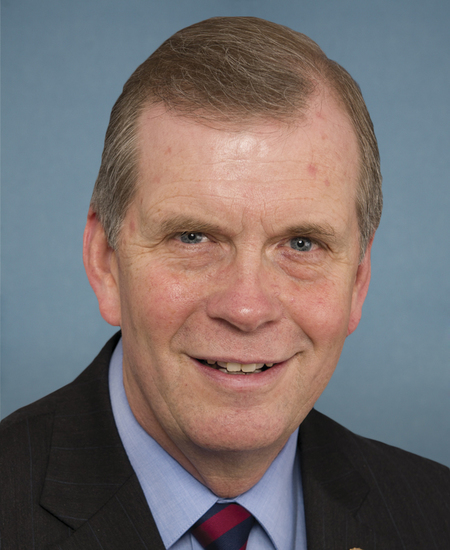
Rep. Tim Walberg
Sponsored bills
Maddy summaryThis resolution expresses support for designating May 2026 as Motorcycle Safety Awareness Month. It recognizes the role of motorcycles in transportation and highlights the importance of rider safety education, proper licensing, and wearing protective gear. The bill also encourages all road users to share the road safely with motorcyclists.
New Source Review Permitting Improvement Act This bill modifies terminology for purposes of the New Source Review (NSR) permitting program of the Environmental Protection Agency (EPA). In order for a change to a stationary source to be a modification (a change to a stationary source that increases the air pollutant emissions or results in new pollutants) for purposes of the NSR permitting program, the maximum hourly emission rate achievable by such source must be higher than the maximum hourly rate achievable by such source during any hour in the 10-year period preceding the change. A change at a stationary source is not considered to be a modification under the bill if it is designed to (1) reduce the amount of any air pollutant emitted; or (2) restore, maintain, or improve the reliability of operations at, or safety of, the source. However, such changes are not excepted if the EPA determines the increase in the maximum achievable hourly emission rate from such change would cause an adverse effect on human health or the environment. Construction , in connection with a major emitting facility (a type of stationary source), does not include a change at such a facility that does not result in a significant emissions increase or a significant net emissions increase. In relation to major emitting facilities in nonattainment areas, the terms modifications and modified do not include changes at such facilities that do not result in a significant emissions increase or a significant net emissions increase.
Maddy summaryThis House Resolution proposes to formally "expunge" the two impeachments of President Donald Trump that passed the House of Representatives on December 18, 2019, and January 13, 2021. If passed, the resolution specifies that these impeachments would be treated "as if such Articles had never passed the full House of Representatives." This action directly affects President Trump by aiming to remove these impeachment proceedings from his official record and would alter the historical legislative record of the House. The resolution's text outlines several reasons for this action, including claims of wrongful accusations, lack of due process, and political bias in the original impeachment proceedings.
Maddy summaryThis bill reauthorizes the Workforce Innovation and Opportunity Act to strengthen workforce development programs for youth, adults, and dislocated workers across the United States. It establishes new performance accountability measures requiring states and local areas to meet specific employment and earnings targets, with funding reductions for entities that fail to perform. The legislation creates new funds for critical industry skills training and industry partnerships, expands eligibility for Job Corps to include more age groups and homeless youth, and mandates the use of evidence-based practices and digital tools in workforce services.
Maddy summaryThe ESA Amendments Act of 2025 makes significant changes to the Endangered Species Act of 1973 to streamline conservation efforts and reduce regulatory burdens. It establishes a national listing work plan with priority classifications for species to better allocate resources, and creates "Candidate Conservation Agreements with Assurances" that provide private landowners with regulatory certainty in exchange for conservation actions. The bill also requires the government to publish the basis for listings online, streamlines permitting processes for projects that comply with conservation measures, and modifies critical habitat designation to better accommodate existing conservation plans on private lands. These changes aim to improve conservation outcomes while reducing delays for landowners, developers, and federal agencies working with listed species.
Maddy summaryThis bill establishes a regional management framework for double-crested cormorants across four U.S. flyways, requiring the Secretary of the Interior to develop plans within 180 days that specify allowed hunting methods, time periods, and authorized entities including state and tribal agencies, lake managers, and pond managers. The framework must ensure cormorant populations remain sustainable while addressing impacts on fisheries, vegetation, other bird species, human safety, water quality, and endangered species. The bill mandates population surveys every five years and requires the management plans to be reviewed and updated every five years based on survey results and current data.
Maddy summaryThis resolution congratulates the University of Michigan Wolverines men's basketball team on winning the 2026 NCAA Division I Men's Basketball Championship. It recognizes the achievements of the student-athletes, coaches, and support staff who contributed to the team's victory, which marks the program's second national title in history. The resolution also invites the team to be honored at the United States Capitol Building and directs the House Clerk to provide copies of the resolution to University leadership for display.
Maddy summaryThis bill, titled the Fair Treatment of Religious Organizations Act of 2026, establishes rules for how religious organizations are treated under federal tax law and financial assistance programs. It directs the IRS to determine whether an organization's purpose is religious without considering its specific beliefs about marriage, sexuality, or gender identity, even if those beliefs conflict with current laws. The legislation also prohibits federal agencies from discriminating against religious employers that receive federal funding if those employers hire staff based on their religious standards. These protections apply to religious corporations, associations, educational institutions, and societies, ensuring they can maintain employment practices aligned with their faith when receiving government support.
Maddy summaryHR 556, the Protecting Access for Hunters and Anglers Act, prevents federal agencies from banning lead ammunition or tackle on public lands and waters managed for hunting or fishing. It directly affects hunters and anglers using federal lands (like national wildlife refuges, public forests, and BLM lands) by blocking nationwide restrictions on lead products. The bill allows limited exceptions only for specific locations where wildlife decline is directly linked to lead use, and the restriction must align with state law or get approval from the state wildlife agency. This changes how federal land managers can regulate lead, requiring state coordination for any local restrictions.