

This resolution requests the President and directs the Department of Homeland Security (DHS) to transmit to the House of Representatives, no later than 14 days after the date of the adoption of this resolution, copies of certain documents and other materials, both classified and unclassified, in the possession of the President or DHS as of the date of adoption of this resolution that refer or relate to certain aspects on border policy, particularly along the southwestern border.
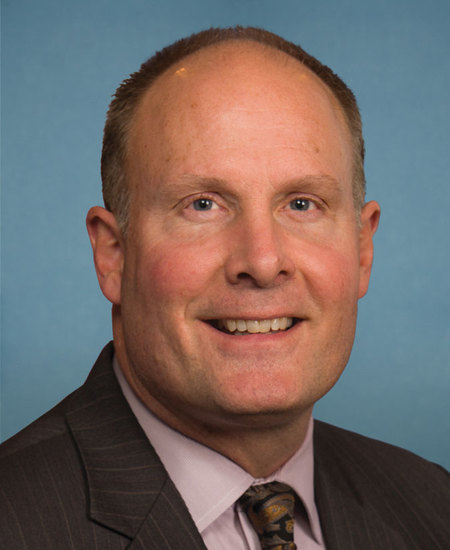
Rep. John R. Moolenaar
Sponsored bills
Ban IRS Biometrics Act This bill prohibits the Department of the Treasury from requiring taxpayers to provide biometric information as a condition of filing any tax return, receiving any service, or accessing taxpayer information. The bill defines biometric information as any information regarding any measurable physical characteristic or personal behavioral trait used to recognize the identity, or verify the claimed identity or location, of an individual, including facial images, fingerprints, and iris scans. Treasury must also develop a plan for the safe and secure destruction and disposal of any biometric information collected or used prior to the enactment of this bill.
Health Care for Burn Pit Veterans Act This bill updates policies and procedures related to Department of Veterans Affairs (VA) health care and benefits for veterans who have been exposed to toxic substances. Specifically, the bill extends the eligibility period for VA hospital care, medical services, and nursing home care for combat veterans who served after September 11, 2001, and were exposed to toxic substances, radiation, or other conditions, including those who did not enroll to receive VA care during the eligibility period. The VA must incorporate into its existing health care screening a screening to help determine potential exposures to toxic substances during military service. Among other requirements, the VA must also provide annual training to health care and benefits personnel with respect to veterans who were exposed to toxic substances; analyze total and respiratory disease mortality in veterans who served in specified locations on specified dates; conduct an epidemiological study on the health trends of veterans who served in the Armed Forces after September 11, 2001; conduct a study to determine trends in the rates of the incidence of cancer in veterans; publish a list of VA resources for veterans who were exposed to toxic substances, families and caregivers of such veterans, and survivors of such veterans who are receiving death benefits; and report on the data quality of the Individual Longitudinal Exposure Record and its usefulness in supporting veterans in receiving VA health care and benefits.
Protecting Family and Small Business Tax Cuts Act of 2022 This bill makes permanent provisions affecting individual and business taxpayers that were enacted in 2017 by the Tax Cuts and Jobs Act and are scheduled to expire at the end of 2025. The bill makes permanent provisions that reduce individual and capital gain tax rates. The bill increases the standard tax deduction for individual taxpayers. It also increases and modifies the child tax credit and raises the contribution base for the tax deduction of charitable contributions. The bill allows additional contributions to ABLE accounts (tax-exempt accounts designed to enable individuals with disabilities to save and pay for disability-related expenses). It exempts from taxation combat zone benefits of members of the Armed Forces serving in the Sinai Peninsula of Egypt and the moving expenses of servicemembers. Additionally, the bill lowers to $750,000 the amount of mortgage debt eligible for an interest expense tax deduction; excludes from the gross income of student borrowers income attributable to the discharge after 2025 of loan debt due to death or disability; makes permanent the limitation on the tax deduction for state and local taxes and denies a deduction for foreign real property taxes; makes permanent the tax deduction of the income of certain pass-through business entities; repeals the tax deduction for personal tax exemptions and the exclusion of employer-provided bicycle commuter fringe benefits; terminates certain miscellaneous itemized tax deductions; doubles the estate and gift tax exemption amount; and makes permanent the increase of the alternative minimum tax exemption amount for individual taxpayers.
Kids in Classes Act This bill prohibits a state educational agency from receiving specified federal education funds unless funds are provided directly to a parent or guardian of an eligible child for certain qualified educational expenses (e.g., educational materials, tutoring, or private school tuition). Eligible child refers to a child who attends a public elementary or secondary school and such school (1) receives specified federal education funds; and (2) does not provide, for more than three days during a school year and for reasons related to a public health emergency or collective bargaining action, in-person instruction for all students who wish to attend.
Stop Arduous Vaccine Enforcement Act of 2022 or the SAVE Act of 2022 This bill prohibits transplant centers from discriminating against an individual on the basis of COVID-19 vaccination status for purposes of determining eligibility or assigning priority for organ transplants.
Crime Doesn't Fly Act of 2022 This bill prohibits the use of warrants for the arrest, removal, or deportation of an alien as proof of identity at an airport security checkpoint unless the alien is being removed from the United States pursuant to immigration laws.
Child Tax Credit for Pregnant Moms Act of 2022 This bill allows a child tax credit for an unborn child who is born alive. It also allows the credit upon certification that a mother's pregnancy resulted in a miscarriage (the involuntary death of an unborn child who was carried in the womb for less than 20 weeks) or that the child was stillborn (the involuntary death of an unborn child who was carried in the womb for 20 weeks or more).
Maddy summaryThis resolution expresses the U.S. House of Representatives' support for designating January 23-29, 2022, as "National School Choice Week." It encourages parents to learn about K-12 education options (including public, charter, private, and online schools) and promotes public awareness of educational choice benefits during that week. The resolution does not create new laws or policies but serves as a symbolic gesture to highlight parental choice in education. It was introduced by multiple representatives and referred to the Education and Labor Committee.
Maddy summaryThis non-binding resolution (HRES 874) calls for designating a National Year of Humiliation, Fasting, and Prayer. It expresses support for a symbolic observance where Americans would collectively pray, fast, and reflect on their "dependence upon the overruling power of God" and "repent of pride and selfishness." The resolution does not create legal requirements or policy changes; it is purely a symbolic gesture based on religious framing of American history and founding principles. It was introduced by Rep. Linda S. Rodgers (R-WA) in the 117th Congress (2021-2022).