

Maximum Pressure Act This bill expands sanctions and economic penalties on Iran. It also restricts the President from unilaterally lifting or waiving the sanctions or penalties and increases congressional oversight of them. Specifically, the bill requires the President to impose visa- and asset-blocking sanctions. Additionally, it modifies existing sanctions, including by (1) providing statutory authority for executive orders imposing sanctions; (2) applying sanctions to additional sectors of Iran's economy; and (3) broadening sanctionable conduct to cover, for example, assisting Iran with the acquisition of ballistic missiles and the complicity of Iranian officials in human rights violations in specified countries. The bill also requires reporting on licenses that authorize activities subject to sanctions. The bill prohibits U.S. representatives at the International Monetary Fund from voting to allow Iran's access to special drawing rights (a currency support tool) and places restrictions on financial transactions with Iran. The restrictions include requiring domestic financial institutions to implement special measures with respect to foreign financial institutions that conduct significant transactions connected to the Instrument in Support of Trade Exchanges (a European mechanism that bypasses U.S. sanctions when carrying out trade with Iran). The Department of State must maintain the Islamic Revolutionary Guard Corps' designation as a terrorist organization and must designate Ansharallah (or Houthis), which operates in Syria, as a foreign terrorist organization. The bill also requires reports on U.S. sanctions concerning Iran, the status of Iran's nuclear weapons program, and other matters.
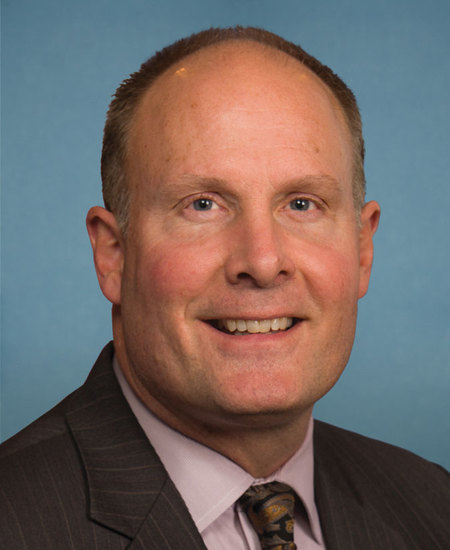
Rep. John R. Moolenaar
Sponsored bills
Sunshine for Regulatory Decrees and Settlements Act of 2021 This bill establishes transparency and public accountability standards for federal agencies with respect to (1) certain civil actions seeking to compel agency action, and (2) related consent decrees and settlement agreements. For example, an agency must publish a complaint filed against it within 15 days. Additionally, settlement proceedings must be conducted through mediation or an alternative dispute resolution program of the court, and those proceedings must include intervening parties. The bill also creates a presumption in favor of a motion to intervene in settlement proceedings. Further, at least 60 days prior to entering a consent decree or settlement agreement, an agency must publish, and accept and respond to public comment on, the proposed agreement or decree. An agency also must provide the court with the administrative record, a summary of the public comments, and access to the record of any public hearings on the proposed decree or agreement. The Department of Justice, or the agency litigating a matter independently, must certify to the court its approval of certain terms included in an agreement or decree, including terms that convert a discretionary authority into a nondiscretionary duty. A court may not approve a consent decree or settlement agreement unless the agency has sufficient time and procedures to comply with federal administrative procedures, other rulemaking statutes, and applicable executive orders. Finally, courts must review a consent decree or settlement if an agency files a motion to modify the decree or agreement on the basis of changed facts or circumstances.
Child Interstate Abortion Notification Act This bill creates new federal crimes related to transporting a minor across state lines for an abortion. Specifically, the bill makes it a crime to knowingly transport a minor across a state line to obtain an abortion without satisfying the requirements of a parental involvement law in the minor's resident state. A parental involvement law requires parental consent or notification, or judicial authorization, for a minor to obtain an abortion. The bill prohibits an individual who has committed incest with a minor from knowingly transporting the minor across a state line to receive an abortion. Finally, the bill makes it a crime for a physician to knowingly perform or induce an abortion on an out-of-state minor without first notifying the minor's parent.
Energy Security Cooperation with Allied Partners in Europe Act of 2021 This bill establishes requirements related to U.S. international energy strategy. Applications to export natural gas to North Atlantic Treaty Organization (NATO) member countries, Japan, and certain other countries shall be granted on an expedited basis without modification or delay. The President shall impose sanctions on a person that provides certain equipment, investment, or services to the Russian government or related entities for constructing or servicing Russian energy export pipelines. The Department of State shall report to Congress on a strategy to enhance the energy security of NATO member countries and increase exports of U.S. energy (and related technologies and services) to such countries.
Natural Immunity Is Real Act This bill requires all federal agencies to acknowledge and consider natural immunity to COVID-19 when promulgating any regulation related to the COVID-19 public health emergency.
Prohibiting IRS Financial Surveillance Act This bill prohibits the Department of the Treasury from requiring a financial institution to report the transfers into and out of a financial account. This prohibition does not apply to laws or regulations in effect on October 1, 2021.
Maddy summaryHR 5553 prohibits the Secretary of Veterans Affairs from providing or paying for surgical treatments related to gender transition. This directly affects transgender veterans who rely on VA healthcare for gender-affirming surgical procedures. The bill blocks VA funding specifically for these surgical treatments, without altering coverage for other healthcare services. It applies to all veterans seeking such care through the VA system.
Choose Home Care Act of 2021 This bill provides for coverage of home-based extended care services under Medicare. Specifically, the bill provides for coverage of services that are furnished to Medicare beneficiaries in their homes by home health agencies, including nursing care, meals and nutritional support, home medical supplies, nonemergency medical transportation, and care coordination. Coverage includes 30 days of post-hospital care and other periods of extended illness, as determined by the Centers for Medicare & Medicaid Services (CMS). Home health agencies that provide such services may receive additional payments in accordance with a specified methodology. The CMS may make payments for covered services furnished before 2022 during any period in which there is a public health emergency.
This resolution expresses support for the designation of National Chemistry Week. The resolution also recognizes the need to promote the fields of science, including chemistry, technology, engineering, and mathematics, and to encourage youth, particularly from underrepresented groups, to pursue careers in these fields.
Protecting Financial Privacy Act of 2021 This bill prohibits a federal agency from creating, implementing, or administering a program that requires financial institutions or individuals to report on the balances of, transactions involving, or transfers into and out of financial accounts. This prohibition does not apply to laws or regulations in effect on September 1, 2021, or to the Bank Secrecy Act (laws that require financial institutions and other entities to report on certain financial transactions to prevent money laundering, the financing of terrorism, and other criminal activity). This prohibition does apply, however, to regulations issued under the Bank Secrecy Act after September 1, 2021.