

Maddy summaryThe Care is an Economic Development Strategy (CEDS) Act amends the Public Works and Economic Development Act of 1965 to require that local economic development plans include strategies for increasing access to affordable, quality care-based services. These services specifically include child care, early childhood education, disability and long-term care, and elder care. The bill directs the Secretary of Commerce to issue implementation guidance within one year of enactment to help grant recipients integrate these requirements into their existing plans. To minimize administrative burden, communities with previously approved development strategies are only required to update their plans for compliance during their next regularly scheduled revision cycle.
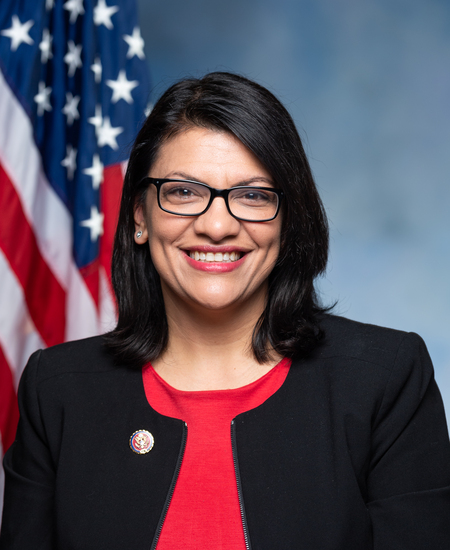
Rep. Rashida Tlaib
Sponsored bills
Maddy summaryThe Local Communities & Bird Habitat Stewardship Act of 2025 establishes the Urban Bird Treaty Program, which provides grants and technical assistance to local groups - including cities, nonprofits, community organizations, and academic institutions - to protect and restore urban bird habitats. Key provisions include funding for habitat restoration (e.g., removing invasive species and planting native plants), reducing urban bird hazards, and engaging communities in monitoring and education. The program, administered by the National Fish and Wildlife Foundation, authorizes $1 million annually from 2026 to 2032 for projects focused on conserving urban bird populations through collaborative local efforts. It directly affects communities seeking to enhance green spaces and support bird conservation in populated areas.
Maddy summaryThe Stable Homes Act directs the Department of Housing and Urban Development to launch a five-year pilot program that provides $300 million annually in grants to local governments for establishing or expanding eviction diversion programs. These programs require landlords to notify tenants of their right to participate in dispute resolution before filing formal eviction proceedings, mandating at least 30 days of good-faith negotiation involving services such as mediation, housing counseling, and rental assistance. The legislation ensures that low-income tenants have access to free legal counsel if their landlord is represented by an attorney, while allowing landlords to bypass the program only in cases involving an imminent threat of physical harm. Local governments receiving these grants must submit annual reports detailing case outcomes, costs, and tenant demographics to Congress through 2030.
Maddy summaryThe Affordable Pricing for Taxpayer-Funded Prescription Drugs Act of 2026 requires federal agencies to include reasonable pricing clauses in all research grants and contracts involving biomedical products. Under this provision, U.S. residents cannot be charged more than the median price found in Canada and six other high-income OECD countries for any drug, device, or therapy developed with federal support. The Secretary of Health and Human Services is authorized to establish additional regulations, such as mechanisms to lower prices when revenues exceed targets or costs per health benefit are too high, while retaining the ability to waive these obligations if doing so serves the public interest. To ensure accountability, manufacturers must report clinical trial costs, government subsidies, and annual revenues by county, with all data made publicly available.
Maddy summaryHR 5334, the SEED Act of 2025, expands the existing educator expense deduction under federal tax law to explicitly include early childhood educators. It revises the Internal Revenue Code to cover expenses for "early childhood educators" and broadens the educational levels affected to include "pre-kindergarten through grade 12." This change allows early childhood educators (such as preschool teachers) to deduct work-related expenses like classroom supplies and professional development costs, which they previously could not claim under the existing deduction for "kindergarten through grade 12" teachers. The amendment applies to expenses incurred in taxable years beginning after December 31, 2024.
Maddy summaryThe Green New Deal for Public Housing Act directs the Department of Housing and Urban Development to provide grants to public housing agencies and tribal entities for the comprehensive rehabilitation, energy upgrades, and modernization of public housing stock. These funds are intended to transform properties into zero-carbon homes by installing renewable energy systems, electrifying appliances, and repairing infrastructure, while also establishing workforce development programs that offer training, apprenticeships, and stipends to residents and local low-income workers. The bill mandates strict labor standards, including prevailing wages and the use of U.S.-made materials, and requires agencies to maintain or increase the total number of public housing units while prioritizing resident participation through elected councils and community engagement processes.
Maddy summaryThe Protect American Values Act prohibits the use of federal funds to implement, administer, or enforce a specific Department of Homeland Security rule regarding the "Public Charge" ground of inadmissibility. This legislation directly affects immigrants and mixed-status families by preventing the government from using public benefits as a factor in determining eligibility for lawful permanent resident status. The bill includes a statement of congressional intent arguing that the targeted rule would restrict access to essential services like food, medical care, and housing, while also negatively impacting state and local economies. By cutting off funding for this specific policy, the act aims to maintain current immigration standards and prevent what Congress describes as an unauthorized reversal of long-standing law.
Maddy summaryThis bill, titled the No TSA Data for ICE Act, prohibits the Transportation Security Administration from sharing passenger data with U.S. Customs and Border Protection or U.S. Immigration and Customs Enforcement. It specifically bars these agencies from using TSA information or data from private brokers to perform immigration enforcement functions. Additionally, the legislation prevents the denial, suspension, or early termination of Trusted Traveler programs like PreCheck and Global Entry if an individual's participation in First Amendment-protected activities is the reason. The law defines the restricted data as personally identifiable information about flight passengers obtained from the TSA or private sector entities.
Maddy summaryThis bill directs the Government Accountability Office to conduct a comprehensive study on how federal workforce reductions impact the services provided to the public. The investigation will examine specific areas such as processing times, call center wait times, service backlogs, and the ability of agencies to respond to congressional inquiries. It aims to analyze the effects of staff cuts on high-volume agencies like those handling Social Security, veterans benefits, and immigration services, while also looking at the long-term costs and operational challenges faced by remaining employees. The resulting report, due within 18 months, will offer findings and recommendations to help Congress better understand and address potential disruptions to essential government services.
Maddy summaryThis resolution expresses support for designating July as Disability Pride Month to honor the contributions of the approximately 70 million American adults and over 3 million children with disabilities. The bill calls on individuals, interest groups, and organizations across the United States to observe the month with celebrations and activities that promote inclusion. Additionally, it urges everyone to actively work against the exclusion and discrimination that people with disabilities often face. While the measure does not create new laws or funding, it serves as an official statement of recognition and encouragement for community engagement during this time.