This resolution recognizes the roles that development and diplomacy play in advancing American interests and national security, and it expresses support for a substantial U.S. international affairs budget.
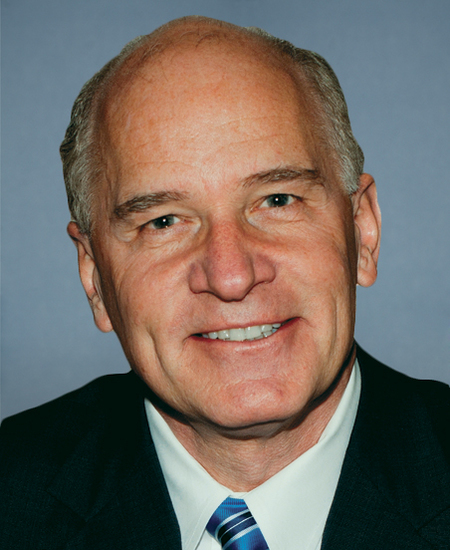
Rep. William R. Keating
Sponsored bills
K2 Veterans Care Act of 2021 This bill establishes a presumption of service-connection for certain diseases becoming manifest in a veteran who served on active duty at Karshi-Khanabad (K2) Air Base in Uzbekistan between January 1, 2001, and December 31, 2005. Specifically, there must be a presumption of service-connection for veterans who manifest illnesses that have a positive association with exposure to jet fuel, volatile organic compounds, high levels of particulate matter, depleted uranium, asbestos, or lead-based paint, as determined by the National Academies of Sciences, Engineering, and Medicine (NASEM). Under a presumption of service-connection, specific conditions diagnosed in certain veterans are presumed to have been caused by the circumstances of their military service. Health care benefits and disability compensation may then be awarded. Veterans who served at K2 Air Base during the specified period are eligible for Department of Veterans Affairs hospital care, medical services, and nursing home care for an illness that has been determined by NASEM to have a positive association with exposure to jet fuel, volatile organic compounds, high levels of particulate matter, depleted uranium, asbestos, or lead-based paint.

This bill provides for the presentation of a Congressional Gold Medal to the Freedom Riders, in recognition of their contribution to civil rights by fighting for equality in interstate travel.
Juneteenth National Independence Day Act This bill establishes Juneteenth Independence Day as a federal holiday.
National Apprenticeship Act of 2021 This bill provides statutory authority for the registered apprenticeship program within the Department of Labor and for related grant programs. The bill provides statutory authority for the Office of Apprenticeship (OA) within Labor. The OA's responsibilities include (1) supporting the development of apprenticeship models; (2) recognizing qualified state apprenticeship agencies, and operating apprenticeship offices in states without a recognized agency; (3) providing technical assistance to state agencies; (4) periodically updating requirements for each occupation in the apprenticeship program and determining whether to approve new occupations for the program; (5) promoting greater diversity in the national apprenticeship system; and (6) awarding grants provided by this bill. The bill also establishes in statute the responsibilities of state apprenticeship agencies and offices, including (1) providing technical assistance to stakeholders, (2) resolving complaints, (3) establishing state performance goals, and (4) including in its written plan a description of how its apprenticeship programs align with the skills needs of the state's employers. The OA shall enter into an agreement with the Department of Education to promote the integration and alignment of apprenticeship programs with secondary, postsecondary, and adult education. The OA shall award grants, contracts, or cooperative agreements to eligible entities to (1) expand national apprenticeship system programs, including by expanding pre-apprenticeship and youth apprenticeship programs; (2) encourage employer participation; and (3) strengthen alignment between the apprenticeship system and education providers. The bill provides statutory authority for criteria for various programs, including (1) quality standards for apprenticeships, (2) requirements for apprenticeship agreements between a program sponsor and an apprentice, and (3) acceptable uses for grant funds awarded by this bill. The bill also provides statutory authority for the National Advisory Committee on Apprenticeships. The committee's duties shall include advising the OA on matters relating to this bill and providing recommendations on topics such as increasing the participation of populations not traditionally involved in the national apprenticeship system. Labor shall engage an independent entity to conduct research on ways to improve the management and effectiveness of national apprenticeship system programs.
This bill requires the Inspector General of the Department of Defense to submit a report containing a list of all steps the Inspector General is taking to combat white supremacy in the Armed Forces. Additionally, the Government Accountability Office must submit a report on the prevalence of white supremacy in the Armed Forces, including recommendations on legislation to combat such an issue.
Food Allergy Safety, Treatment, Education, and Research Act of 2021 or the FASTER Act of 2021 This bill expands the definition of major food allergen for purposes of certain food-labeling requirements to specifically include sesame. In addition, the Department of Health and Human Services must report on certain information related to food allergy research and data collection activities.
Commission on Domestic Terrorism Act of 2021 This bill establishes in the legislative branch the National Commission on Domestic Terrorism. The commission shall investigate relevant facts and circumstances relating to the federal government's failure to respond to and prevent acts of domestic terrorism in the past 20 years, including relating to the attack on the Capitol on January 6, 2021; identify, review, and evaluate the lessons learned from such acts regarding the structure, coordination, and management arrangements of the federal government, and, if appropriate, state and local governments and nongovernmental entities, relative to detecting, preventing, and responding to domestic terrorist attacks; and report to the President and Congress.
Enhancing the Strength and Capacity of America's Primary Evacuation routes Act or the ESCAPE Act This bill directs the Department of Transportation (DOT) to provide assistance for projects that strengthen and protect mass evacuation routes. Specifically, DOT must (1) establish criteria for states, tribal and local governments, and other entities to identify mass evacuation routes; (2) establish a competitive grant program to provide grants for resilience projects that strengthen and protect evacuation routes that are essential for providing and supporting mass evacuations caused by emergency events; and (3) provide grants to resilience projects that ensure the ability of the evacuation route to provide safe passage during a mass evacuation and reduce the risk of damage to evacuation routes as a result of future emergency events.
This resolution expresses the sense of the House of Representatives that the federal government has a duty to develop a holistic agenda to respond to racial injustice, unemployment, the COVID-19 (i.e., coronavirus disease 2019) pandemic, and climate change. The resolution further outlines the goals of this agenda to build a society with greater racial, economic, and gender justice; dignified work; healthy communities; and a stable climate. Additionally, the resolution identifies efforts to support these goals.