

Maddy summaryHR 7871 (MVP Act) updates Medicaid drug rebate rules to allow manufacturers to report multiple "best price points" for drugs sold under outcome-based payment arrangements, requiring these arrangements to be offered to all states. It clarifies how average manufacturer price is calculated for such drugs and exempts certain outcome-linked payments from anti-kickback laws. The bill also mandates a GAO study to assess whether these arrangements improve patient access, lower costs, and reduce disparities in drug coverage. This affects Medicaid programs nationwide, drug manufacturers, and patients receiving covered outpatient drugs under Medicaid.
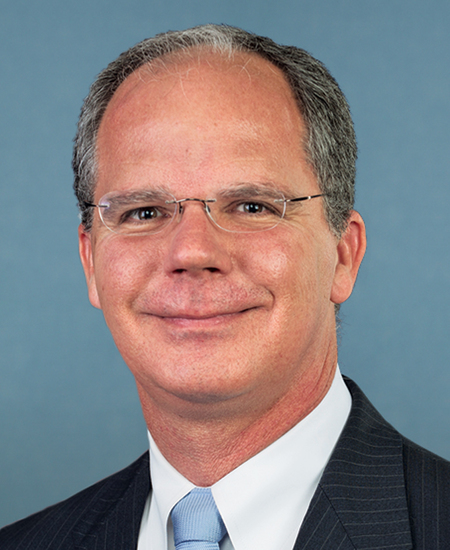
Rep. Brett Guthrie
Sponsored bills
Maddy summaryHRES 1034 modifies House rules for "questions of privilege" resolutions during the 119th Congress. It requires that any privilege resolution offered by the Majority Leader or Minority Leader must have at least one-fifth of all House members as cosponsors when introduced. Additionally, Members must maintain this one-fifth cosponsorship threshold for at least one legislative day after a resolution's introduction before making an oral announcement about it. This procedural change affects how Members can formally raise conduct issues involving other Members, Delegates, or Resident Commissioners.
Maddy summaryHR 7248 (MARINA Act) standardizes fees and lease terms for marinas operating on Corps of Engineers waterways. It caps rent at 1% of marina sales (including food, fuel, and boat services), creates fixed administrative fee tiers ($50,000 for major projects, $5,000 for moderate reviews, $1,000 for routine matters), and sets minimum lease terms at 50 years for initial agreements. The bill also prohibits requiring wages above federal minimum wage and mandates a public fee schedule. It directly affects all marina operators under Corps leases, ensuring consistent pricing and reducing arbitrary fees across all districts.
Maddy summaryThe Student Financial Clarity Act of 2025 requires colleges and the Department of Education to provide more transparent financial information about college costs and aid to prospective students. It establishes standardized definitions for terms like "net price required for completion" and mandates that the College Scorecard website include detailed, disaggregated data on costs, financial aid, time to completion, and student earnings by program of study and student characteristics such as income, race, and enrollment status. The bill also creates a Universal Net Price Calculator to help students estimate their costs based on their specific circumstances and requires colleges to make their own net price calculators available on their websites. This information aims to help students and families make more informed decisions about college affordability and financial aid. The changes will take effect for the 2027-2028 academic year.
Maddy summaryHR 7114, the "No Bounties on Badges Act," would amend federal law to allow the Attorney General to offer rewards for information leading to the arrest or conviction of individuals who harm, kill, or conspire to harm or kill U.S. federal law enforcement officers. The bill creates a new provision authorizing monetary rewards for tips that result in arrests, convictions, or prevention of attacks against officers, including in foreign countries. This policy change directly affects federal law enforcement officers by expanding reward mechanisms for information about threats against them, and it grants the Attorney General new authority under Title 18. The bill does not prohibit bounties but instead establishes a formal reward program for information related to violence against officers.
Maddy summaryHR 2516, the Accreditation for College Excellence Act of 2025, prohibits accreditation agencies from requiring colleges to support specific political views, ideologies, or partisan positions. It explicitly prevents agencies from assessing institutions based on their commitment to any ideology or requiring adherence to statements of faith for religious institutions. The bill also limits federal criteria for accreditation to only what is necessary, ensuring colleges comply with their accreditor’s standards - not additional unrelated requirements. This directly affects all colleges seeking federal funding through accredited programs by clarifying permissible accreditation standards.
Maddy summaryHR 909, the Crime Victims Fund Stabilization Act of 2025, modifies how funds from the False Claims Act are deposited into the Crime Victims Fund. It specifies that from 2025 through 2029, certain False Claims Act proceeds (specifically those for qui tam plaintiff payments and government damage reimbursements) cannot be deposited into the fund. This change directly affects the composition of the Crime Victims Fund by excluding these specific revenue streams during the specified period. The bill does not create new benefits or alter victim services; it only adjusts fund allocation rules for existing False Claims Act revenues.
Maddy summaryHR 2405, the White Oak Resilience Act, establishes a voluntary coalition to coordinate federal, state, tribal, and private efforts for restoring white oak forests across the U.S. It creates pilot projects on public lands (including national forests and Department of the Interior sites), a non-regulatory grant program for landowners, and a strategy to address tree nursery shortages. The bill directly affects private landowners, tribes, state agencies, and federal land managers by providing technical assistance, funding for restoration, and research on white oak resilience. The program includes a 7-year sunset clause and emphasizes science-based restoration without mandating new regulations.
Miracle on Ice Congressional Gold Medal Act This act provides for the award of Congressional Gold Medals to the members of the 1980 U.S. Olympic men's ice hockey team in recognition of the team's achievement at the 1980 Winter Olympic Games.
Maddy summaryHRES 921 is a symbolic resolution recognizing the 30th anniversary of the Dayton Peace Accords, signed on December 14, 1995, which ended the Bosnian War. It commemorates the agreement that halted violence, established Bosnia and Herzegovina’s sovereignty, and created a framework for peacebuilding. The resolution acknowledges Dayton, Ohio’s role in hosting the negotiations and honors the Bosnian-American diaspora, while reaffirming U.S. support for Bosnia’s democratic development and EU/NATO integration efforts. It contains no new policy requirements or funding, serving solely as a statement of historical recognition and ongoing diplomatic commitment.