

Resident Physician Shortage Reduction Act of 2021 This bill increases the number of residency positions eligible for graduate medical education payments under Medicare for qualifying hospitals, including hospitals in rural areas and health professional shortage areas. Current law provides for an increase of up to 200 positions per fiscal year beginning in FY2023, with a total increase of 1,000 positions; each hospital may receive up to 25 additional positions. The bill provides for an additional increase of 2,000 positions per fiscal year from FY2023-FY2029; during this period, each hospital may receive up to 75 additional positions in total under the bill and current law. Additionally, one-third of the positions that are made available under the bill must be allocated to hospitals that are already operating above applicable resident limits. The bill also requires the Government Accountability Office to report on strategies to increase the diversity of the health professional workforce, including with respect to representation from rural, low-income, and minority communities.
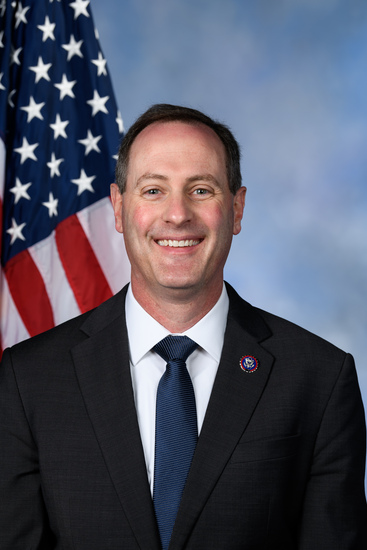
Rep. Tracey Mann
Sponsored bills
Reopening America by Supporting Workers and Businesses Act of 2021 This bill permits states to provide a one-time lump sum payment, through July 1, 2021, to individuals who (1) were eligible for COVID-19 pandemic unemployment compensation during any week after enactment of this bill, and (2) are no longer eligible as a result of becoming thereafter reemployed. Payments of $1,200 shall be paid to individuals who work at least 30 hours and $600 to individuals who work at least 20 hours but less than 30. The payments are available for claimants (1) who are not employed by a government entity, (2) who return to work for at least four consecutive weeks, and (3) whose annual salary does not exceed $75,000. Before receipt of a payment, the individuals' employers must verify their hours and earnings. Additionally, the bill (1) accelerates a scheduled increase in funding for reemployment services and eligibility assessments (RESEA), (2) allows states to use RESEA funds to serve all workers receiving unemployment benefits, and not just those most likely to exhaust their benefits; and (3) allows states to provide reemployment services to individuals receiving pandemic unemployment assistance and pandemic emergency unemployment compensation. Finally, the bill reinstates the requirement that unemployment claimants certify they are able, available, and actively seeking work.
Emmett Till and Mamie Till-Mobley Congressional Gold Medal Act of 2021 This bill provides for the posthumous presentation of a Congressional Gold Medal in commemoration of Emmett Till and Mamie Till-Mobley. After the award the medal shall be given to the National Museum of African American History and Culture.
Expanded Telehealth Access Act This bill permanently allows audiologists, physical therapists, occupational therapists, speech-language pathologists, and other providers designated by the Centers for Medicare & Medicaid Services (CMS) to provide telehealth services under Medicare. Currently, the CMS is authorized to waive requirements for Medicare telehealth services during the public health emergency relating to COVID-19, and it has done so to allow all providers that are otherwise eligible to furnish in-person services under Medicare to also furnish telehealth services.
Safe Step Act This bill requires a group health plan to establish an exception to medication step-therapy protocol in specified cases. A medication step-therapy protocol establishes a specific sequence in which prescription drugs are covered by a group health plan or a health insurance issuer. A request for such an exception to the protocol must be granted if (1) an otherwise required treatment has been ineffective, (2) such treatment is expected to be ineffective and delaying effective treatment would lead to irreversible consequences, (3) such treatment will cause or is likely to cause an adverse reaction to the individual, (4) such treatment is expected to prevent the individual from performing daily activities or occupational responsibilities, (5) the individual is stable based on the prescription drugs already selected, or (6) there are other circumstances as determined by the Employee Benefits Security Administration. The bill requires a group health plan to implement and make readily available a clear process for an individual to request an exception to the protocol, including required information and criteria for granting an exception. The bill further specifies timelines under which plans must respond to such requests.
This bill prohibits the use of federal funds (1) 15 days after its enactment, to support the mission of the National Guard in the District of Columbia in response to the attacks on the U.S. Capitol buildings and grounds on January 6, 2021; or (2) to install permanent fencing around the perimeter of any U.S. Capitol buildings or grounds. On January 7, 2021, in response to the attacks, razor wire fencing was erected to secure the perimeter of the U.S. Capitol; the fencing was initially to remain in place for 30 days and was kept in place through periodic extensions.
VA Billing Accountability Act This bill authorizes the Department of Veterans Affairs (VA) to waive the requirement that a veteran make co-payments for medications, hospital care, nursing home care, and medical services in certain situations. Specifically, a veteran may have such co-payments waived if (1) an error committed by the VA or a non-VA facility delayed co-payment notification to the veteran, and (2) the veteran received such notification later than 180 days (18 months in the case of a non-VA facility) after the date on which the veteran received the care or services. In requiring a veteran to make a co-payment for care or services provided at a VA or a non-VA medical facility, the VA shall notify the veteran not later than 180 days (18 months in the case of a non-VA facility) after the date on which the veteran received the care or services. If the VA does not provide notification by such date, it may not collect the payment, including through a third-party entity, unless the veteran is provided with (1) information about applying for a waiver and establishing a payment plan with the VA, and (2) an opportunity to make a waiver or establish a payment plan. Finally, the bill requires the VA to review and improve its co-payment billing internal controls and notification procedures.
Luke and Alex School Safety Act of 2021 This bill requires the Department of Homeland Security (DHS) to establish a Federal Clearinghouse on School Safety Best Practices for use by state and local educational and law-enforcement agencies, institutions of higher education, health professionals, and the public. The bill requires DHS to collect clearinghouse data analytics, user feedback on the implementation of best practices and recommendations identified by the clearinghouse, and any evaluations conducted on these best practices and recommendations. In addition, DHS must coordinate with the Departments of Education, Health and Human Services, and Justice to assess and identify best practices and recommendations and establish an advisory board to provide feedback and propose additional recommendations. Further, the bill specifies the criteria for best practices and recommendations of the clearinghouse, including evidence that the best practice or recommendation has had a significant effect on improving the health, safety, and welfare of individuals in school settings. Finally, the bill provides for grant program review.
This bill requires the President to provide Congress with certain information at least 30 days before issuing an executive order related to immigration policy. Before issuing an immigration-related executive order, the President shall provide Congress with (1) the executive order text, (2) a list of the federal laws affected, (3) information about how the President is working within the parameters of federal law and the Constitution, (4) information about how the executive order will be accomplished, and (5) a list of all the individuals and entities that the President engaged with before issuing the order.
This bill requires the President to notify Congress and the public before issuing executive orders relating to the constitutional right of law-abiding individuals in the United States to own, carry, and use firearms.