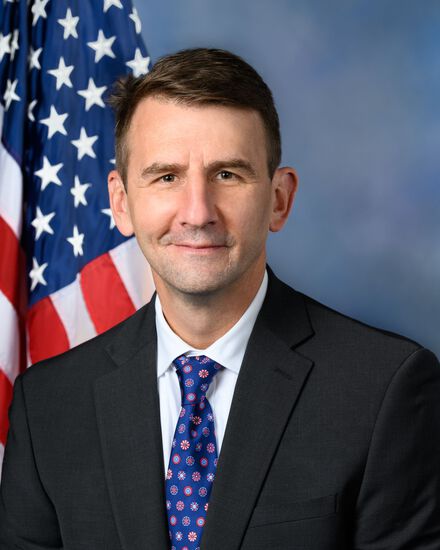
Photo of Frank J. Mrvan
D United States House · District 1 · Indiana On the 2026 ballot

Rep. Frank J. Mrvan

Compare
Total votes
2,818
all sessions
Attendance
99%
40 missed
Near the chamber average
With party
95%
of cast votes
Lower than 82% of chamber peers
Bipartisan score
2%
crosses aisle rarely
Higher than 81% of chamber peers
Sponsored
802
bills & resolutions
Near the chamber average
Committees
3
assignments
802 bills and resolutions

Sponsored bills

Total
802
Primary
18
Co-sponsor
784
This page
802
matching current filters
Co-sponsor HR 695
In committee · Oregon House · Co-sponsor
USPS Fairness Act

USPS Fairness Act This bill repeals the requirement that the U.S. Postal Service annually prepay future retirement health benefits.

In committee Feb 2, 2021 1 co-sponsor
Co-sponsor HR 516
In committee · Oregon House · Co-sponsor
Environmental Justice Mapping and Data Collection Act of 2021

Environmental Justice Mapping and Data Collection Act of 2021 This bill establishes an interagency Environmental Justice Mapping Committee that must create a tool to identify environmental justice communities. Environmental justice communities are communities with significant representation of communities of color, low-income communities, or tribal and indigenous communities that experience, or are at risk of experiencing, higher or more adverse human health or environmental effects, as compared to other communities. The Environmental Protection Agency (EPA) must establish an environmental justice data repository to maintain the data collected by the committee. The EPA must make the repository available to regional, state, local, and tribal governments.

In committee Feb 2, 2021 1 co-sponsor
Co-sponsor HR 432
In committee · Oregon House · Co-sponsor
Mental Health Access Improvement Act of 2021

Mental Health Access Improvement Act of 2021 This bill provides for coverage of marriage and family therapist services and mental health counselor services under Medicare. It also excludes such services from the skilled nursing facility prospective payment system, and authorizes marriage and family therapists and mental health counselors to develop discharge plans for post-hospital services.

In committee Feb 2, 2021 1 co-sponsor
Co-sponsor HR 366
In committee · Oregon House · Co-sponsor
Protecting Access to Post-COVID–19 Telehealth Act of 2021

Protecting Access to Post-COVID-19 Telehealth Act of 2021 This bill makes permanent several telehealth flexibilities that were initially authorized during the public health emergency relating to COVID-19 (i.e., coronavirus disease 2019), particularly with respect to Medicare coverage of telehealth services. For example, the bill permanently allows federally qualified health centers and rural health clinics to serve as the distant site (i.e., the location of the health care practitioner) for telehealth services under Medicare. Payment must be made in the same manner as for non-telehealth services, rather than in accordance with a separate methodology determined by the Centers for Medicare & Medicaid Services (CMS). The bill also permanently allows beneficiaries to receive Medicare telehealth services at any site, regardless of type or location, and grants the CMS general authority to waive any other requirements during any emergency period.

In committee Feb 2, 2021 1 co-sponsor
Co-sponsor HR 676
In committee · Oregon House · Co-sponsor
Learning Recovery Act of 2021

Learning Recovery Act of 2021 This bill establishes a program through which the Department of Education must award grants to state educational agencies and, through them, allocations to local educational agencies (LEAs) to provide students with additional learning time and related services. It also directs the Institute of Education Sciences (IES) to study and report on learning recovery. Specifically, LEAs must use funds to implement attendance-intervention strategies that reengage students and their families, support salaries and benefits for teachers and staff, and carry out school extension programs. School extension program refers to an evidence-based program (e.g., summer-school, extended-day, or extended-school-year program) at an elementary or secondary school that provides students with additional learning time. Further, LEAs may use funds for certain activities such as providing students with mental health services, reestablishing after-school programs, and supporting existing activities to combat learning loss due to the COVID-19 (i.e., coronavirus disease 2019) pandemic. The IES must, within 30 days, begin to study interventions and strategies to address learning recovery for all students, including students with disabilities, minority children, English learners, and low-income students. Further, the IES must disseminate findings to educational agencies.


In committee Feb 1, 2021 1 co-sponsor
Co-sponsor HR 542
In committee · Oregon House · Co-sponsor
Save Education Jobs Act

Save Education Jobs Act This bill establishes through FY2030 the Education Jobs Fund, from which the Department of Education (ED) must award grants to state educational agencies and, through them, subgrants to local educational agencies (LEAs) to retain and create education jobs. ED must also provide grants to outlying areas and the Bureau of Indian Education. Specifically, LEAs must use subgrants for compensation and benefits to retain existing employees, rehire former employees, and hire new employees. Further, subgrants may be used for certain activities such as training and professional development, providing salary increases to cover extended days or school years to make up for lost instructional time due to COVID-19 (i.e., coronavirus disease 2019), and developing teacher leadership roles in high-need schools. The bill prohibits the use of subgrants for certain activities, such as funding voucher programs, tax-credit scholarships, or education savings accounts.

In committee Jan 28, 2021 1 co-sponsor
Co-sponsor HR 603
In committee · Oregon House · Co-sponsor
Raise the Wage Act of 2021

Raise the Wage Act of 2021 This bill increases the federal minimum wage for regular employees over a 5-year period, for tipped employees, and for newly hired employees who are less than 20 years old. The bill sets forth a schedule of annual increases in the federal minimum wage for individuals with disabilities. The Department of Labor shall no longer issue special certificates for the payment of subminimum wages to such individuals after the final wage increase under this bill for such individuals takes effect. Labor shall provide, upon request, technical assistance and information to employers to (1) help them transition their practices to comply with wage increases and other requirements under this bill for individuals with disabilities, and (2) ensure continuing employment opportunities for such individuals. The bill eliminates the separate minimum wage requirements for tipped, newly hired, and disabled employees. After a specified period, these employees shall be paid the same minimum wage as regular employees. Labor must publish any increase in the minimum wage in the Federal Register and on its website 60 days before it takes effect.

In committee Jan 28, 2021 1 co-sponsor
Co-sponsor HR 475
In committee · Oregon House · Co-sponsor
Health Care Fairness for Military Families Act of 2021

Health Care Fairness for Military Families Act of 2021 This bill modifies the extension of dependent coverage under TRICARE by allowing a dependent under the age of 26 to be covered without an additional premium. Additionally, the bill authorizes such coverage of dependents without a premium regardless of whether they are eligible to enroll in an employer sponsored plan.

In committee Jan 25, 2021 1 co-sponsor
Co-sponsor HR 392
In committee · Oregon House · Co-sponsor
FAIR Act

Federal Adjustment of Income Rates Act or the FAIR Act This bill modifies pay rates for federal employees in 2022. Specifically, the bill increases rates under the statutory pay systems and for prevailing rate employees by 2.2%, and increases locality pay by 1%.

In committee Jan 21, 2021 1 co-sponsor
Co-sponsor HR 336
In committee · Oregon House · Co-sponsor
TRUST in Congress Act

Transparent Representation Upholding Service and Trust in Congress Act or the TRUST in Congress Act This bill requires a Member of Congress, as well as any spouse or dependent child of a Member, to place specified investments into a qualified blind trust (i.e., an arrangement in which certain financial holdings are placed in someone else's control to avoid a possible conflict of interest) until 180 days after the end of their tenure as a Member of Congress.

In committee Jan 15, 2021 1 co-sponsor
Showing 791 to 800 of 802 bills