TRICARE Reserve Select Improvement Act This bill expands TRICARE Reserve Select eligibility to include members of the Selected Reserve who are enrolled or eligible to enroll in the Federal Employees Health Benefits Program.
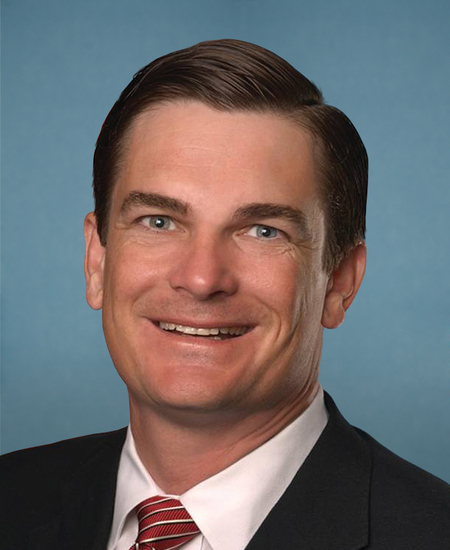
Rep. Austin Scott
Sponsored bills
Death Tax Repeal Act This bill repeals the estate and generation-skipping transfer taxes. It also makes conforming amendments related to the gift tax.
Agricultural Intelligence Measures Act or the AIM Act This bill establishes the Office of Intelligence in the Department of Agriculture (USDA) under the National Intelligence Program. The office must leverage the capabilities of the intelligence community and the intelligence-related research of the National Laboratories to ensure that USDA is fully informed of threats by foreign actors to U.S. agriculture; focus on understanding foreign efforts to steal U.S. agriculture knowledge and technology, and develop or implement biological warfare attacks, cyber or clandestine operations, or other means of sabotaging and disrupting U.S. agriculture; prepare, conduct, and facilitate intelligence briefings for USDA; operate as the liaison between USDA and the intelligence community, with the authority to request intelligence collection and analysis on matters related to U.S. agriculture; collaborate with the intelligence community to downgrade intelligence assessments for broader dissemination within USDA; and facilitate the sharing of information on foreign activities related to agriculture with the intelligence community.
District of Columbia-Maryland Reunion Act This bill cedes the District of Columbia to Maryland after Maryland's acceptance of the retrocession. Furthermore, the bill declares that the National Capital Service Area in the District shall not be ceded and relinquished to Maryland and shall continue to serve as the permanent seat of the federal government. The bill maintains the exclusive legislative authority and control of Congress over the area. Finally, excluding the District Building, the area shall include the principal federal monuments, the White House, the U.S. Capitol, the U.S. Supreme Court Building, the federal executive, legislative, and judicial office buildings located adjacent to the Mall and the U.S. Capitol, and the Frances Perkins Building, including any portion of it north of D Street NW.

This joint resolution proposes an amendment to the Constitution to require that the Supreme Court consist of nine Justices.
This bill raises the borrowing limit of the Commodity Credit Corporation from $30 billion to $68 billion.
Protecting American Energy Production Act This bill prohibits the President from declaring a moratorium on the use of hydraulic fracturing unless Congress authorizes the moratorium. The bill also expresses the sense of Congress that states should maintain primacy for the regulation of hydraulic fracturing for oil and natural gas production on state and private lands.
Birthright Citizenship Act of 2021 This bill limits birthright citizenship by redefining what it means to be subject to the jurisdiction of the United States. Currently, a person born in the United States and subject to U.S. jurisdiction is entitled to citizenship. Under the bill, a person is subject to U.S. jurisdiction if he or she is born to a parent who is (1) a U.S. citizen or national, (2) a lawful permanent resident residing in the United States, or (3) an alien performing active service in the Armed Forces. The bill does not affect the citizenship or nationality status of any person born before the bill's enactment date.
Hearing Protection Act This bill removes silencers from the definition of firearms for purposes of the National Firearms Act. It also treats persons acquiring or possessing a firearm silencer as meeting any registration and licensing requirements of such Act. The Department of Justice must destroy certain records relating to the registration, transfer, or making of a silencer. The bill also revises the definitions of firearm silencer and firearm muffler under the federal criminal code and includes such items in the 10% excise tax category.
Concealed Carry Reciprocity Act This bill establishes a federal statutory framework to regulate the carry or possession of concealed firearms across state lines. Specifically, an individual who is eligible to carry a concealed firearm in one state may carry or possess a concealed handgun (other than a machine gun or destructive device) in another state that allows its residents to carry concealed firearms. It sets forth requirements for the lawful concealed carry across state lines. The bill preempts most state and local laws related to concealed carry and establishes a private right of action for a person adversely affected by interference with a concealed-carry right established by this bill.