

Maddy summaryHR 5483, the Chloe Cole Act, prohibits health care professionals, hospitals, or clinics from providing certain gender-affirming treatments to minors under 18 that aim to alter their body to align with a gender identity different from their sex assigned at birth. This includes puberty blockers, sex hormones, and specific surgeries, unless the treatment falls under narrow exceptions like medically necessary care for disorders of sexual development, injuries, or detransition. The bill creates a private right for affected minors or their guardians to sue providers for damages in federal court, with strict liability for violations. It applies when interstate commerce is involved (e.g., payments, travel, communications) and sets a 25-year statute of limitations from the minor’s 18th birthday.
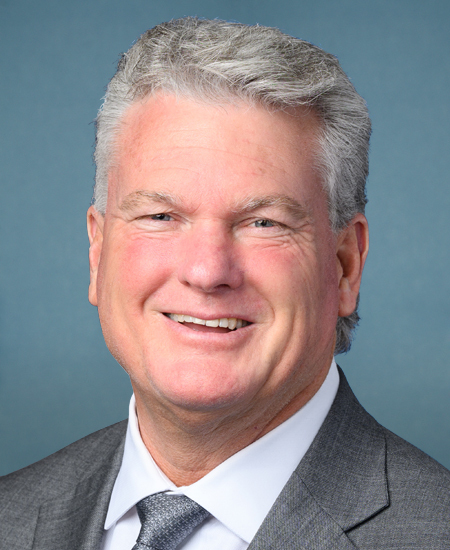
Rep. Mike Collins
Sponsored bills
Maddy summaryHRES 727 is a symbolic resolution designating October 14, 2025, as a "National Day of Remembrance for Charlie Kirk." It does not create new law but formally honors Charlie Kirk, founder of Turning Point USA and a prominent advocate for free speech and civic education, who died by assassination on September 10, 2025. The resolution encourages educational institutions and citizens to observe the day with activities promoting civic engagement, liberty, and democracy. It directly affects no specific group through policy changes, as it is a commemorative gesture without binding requirements.
Maddy summaryHRES 695 is a commemorative resolution honoring Charlie Kirk, a conservative speaker and Turning Point USA leader, following his assassination on September 10, 2025, in Orem, Utah. The resolution condemns the attack, offers condolences to his family, and recognizes first responders. It reaffirms the First Amendment right to peaceful assembly and emphasizes that violence cannot silence democratic participation. This non-binding resolution does not create new laws or policies but serves as a symbolic tribute to Kirk's memory and the principles of democratic engagement.
Maddy summaryHR 5258, the Lawsuit Abuse Reduction Act of 2025, amends federal civil procedure rules to strengthen sanctions against attorneys who file frivolous or abusive lawsuits. The bill requires courts to automatically impose sanctions - including compensating the harmed party for reasonable legal expenses and fees - when attorneys violate rules governing pleadings. It directly affects attorneys and their clients by increasing accountability for baseless filings in federal court. Key provisions mandate that courts must order payment for actual costs incurred due to the misconduct, with additional sanctions like dismissing a case permitted if needed. The bill does not restrict new legal claims or defenses under existing laws.
Maddy summaryThe FIREARM Act (HR 3770) changes how federal firearm licensees (like dealers) handle violations of firearms laws. It requires the Attorney General to give licensees 30 business days to correct minor, self-reported violations - such as clerical errors - with assistance and training, instead of automatically revoking licenses. The bill also adds a 15-day window for licensees to challenge revocations in federal court, where courts must review the case anew and only uphold revocations if the licensee willfully violated the law. Additionally, it applies retroactively to licensees whose licenses were revoked under a 2021 enforcement policy, allowing them to reapply if they meet compliance requirements.
Maddy summaryThe Train Crew Choice Act (HR 5135) voids a federal safety rule issued by the Federal Railroad Administration on April 9, 2024, which required minimum crew sizes on trains for safety. This rule, titled "Train Crew Size Safety Requirements," would have mandated specific numbers of crew members (e.g., two-person crews) for certain train operations. By nullifying the rule, the bill removes a federal mandate that railroads must follow, directly affecting railroad companies and the Federal Railroad Administration. The change eliminates the requirement for railroads to maintain minimum crew levels under this specific regulation.
Maddy summaryHR 5156, the COUNT Act, requires federal agencies to share specific immigration and demographic data with the Department of Commerce to improve national citizenship statistics. It mandates agencies like DHS, SSA, and HHS to provide access to records including immigration files, passport applications, and Medicaid data, while directing the Census Bureau to add a citizenship question to the 2030 census and American Community Survey. The bill also directs the Commerce Department to seek state administrative records for citizenship data and requires annual reports to Congress on state cooperation. This directly affects federal and state agencies by altering data-sharing protocols for immigration and citizenship tracking.
Maddy summaryThis bill prohibits Members of Congress, their spouses, and dependent children from owning or trading certain investments, including stocks, commodities, and derivatives (referred to as "covered investments"). It requires affected individuals to divest these investments within 90-180 days, with specific exemptions for Treasury bonds, diversified mutual funds, small business interests, and family trusts meeting strict conditions. Violations incur penalties of 10% of the investment's value plus disgorgement of profits, paid directly to the U.S. Treasury. The law applies to all covered individuals during federal service, with exceptions for investments acquired through inheritance or occupational trading (e.g., a spouse’s finance job).
Maddy summaryHR 5108 prohibits U.S. states from receiving federal Edward Byrne Memorial Justice Assistance Grant Program funds if they issue driver licenses to individuals without proof of U.S. citizenship or lawful presence, or if they restrict government entities from sharing immigration enforcement data with Homeland Security. States violating these rules must return unspent federal grant funds within 30 days and remain ineligible for future grants until they pass laws requiring driver license eligibility proof and permitting immigration data sharing. The bill directly affects states that currently issue licenses to undocumented immigrants or block information sharing with federal immigration authorities. It imposes concrete financial penalties rather than altering driver licensing rules themselves.
Maddy summaryHR 4068, the "Streamlining NEPA for Coal Act," requires the Secretary of the Interior to identify existing and potential exemptions from full environmental reviews under the National Environmental Policy Act (NEPA) that could accelerate coal production and export projects. Within 30 days of enactment, the Secretary must report these exemptions to relevant congressional committees. Federal agencies could then adopt these exemptions to skip detailed environmental assessments for coal-related projects. This bill directly affects coal producers and exporters by potentially reducing approval timelines for their operations.