

Maddy summaryThe Rail Motive Power Source Integration Act of 2026 directs the Federal Railroad Administration to launch a pilot program exploring how trains can switch between different power sources like batteries, electricity, hydrogen, and diesel. The bill requires the agency to research these technologies, design rail cars that allow for easy power source changes, and test these designs through demonstration projects. Additionally, the Administrator must study locations where trains currently need to change power sources due to limitations and report the findings to Congress within one year of the law's enactment.
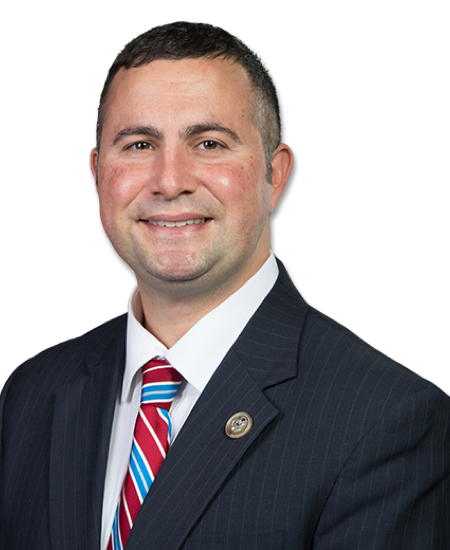
Rep. Darren Soto
Sponsored bills
Maddy summaryThis resolution expresses support for designating June 5, 2026, as National Gun Violence Awareness Day and June 2026 as National Gun Violence Awareness Month. The bill calls on the public to wear orange on the designated day to honor victims and promote awareness of gun safety. It highlights statistics on gun-related deaths and injuries to underscore the need for community discussions on making neighborhoods safer.
Maddy summaryThe Protect Our Homes Act creates a new loan program to help homeowners associations and similar residential communities repair common areas damaged by natural disasters or implement measures to prevent future damage. This initiative allows these organizations to borrow money from banks to cover costs for fixing water, wind, or fire damage to shared spaces like roofs and hallways, as well as to upgrade properties in areas recently affected by disasters. Loans are capped at $500,000 for most borrowers and up to $2 million for major employers in disaster zones, with interest rates tied to federal debt averages and terms lasting up to thirty years. The program also waives collateral requirements for smaller loans of $14,000 or less and permits borrowers to defer payments if they face financial hardship.
Maddy summaryHR 3831, the Florida Safe Seas Act of 2025, amends an existing federal law to specifically include Florida in a prohibition against feeding sharks within the exclusive economic zone off the Florida coast. The bill modifies Section 317 of the Magnuson-Stevens Fishery Conservation and Management Act to replace "the State" with "the States" and add "and Florida" after Hawaii, ensuring Florida is explicitly covered under the current rule. This is a technical correction to clarify that Florida's waters are included in the existing federal ban on shark feeding, which already applied to Hawaii. The bill does not create new restrictions but formally extends the existing prohibition to Florida's exclusive economic zone. It directly affects activities involving shark feeding by vessels operating in Florida's offshore waters under federal jurisdiction.
Maddy summaryThis bill appropriates $3.5 billion to help Florida farmers and growers recover from the severe freeze that occurred in March 2026. The funds are distributed as block grants specifically to cover losses in crops, trees, bushes, and vines caused by the cold weather, including compensation for multi-year crops. Assistance is restricted to counties officially designated as disaster areas by the Secretary of Agriculture on March 4, 2026, and requires a request from a state agriculture department to release the money. The Secretary of Agriculture must also submit quarterly reports to Congress detailing how the funds are being used until the budget is exhausted.
Maddy summaryHR 7086 creates a federal grant program to help states improve charter schools' access to facilities. It provides competitive grants to state education agencies that submit detailed plans showing how they will increase charter schools' access to funding, public buildings, and adequate facilities - particularly in low-income and rural communities. States receiving grants must use federal funds (capped at 60% of costs) to support facility acquisition, leasing, renovation, or financing mechanisms, while ensuring these funds supplement - rather than replace - existing state resources. The bill directly affects charter schools and state education agencies, focusing on closing facility access gaps between charter schools and traditional public schools.
Maddy summaryThe Community Flood Resilience Act allows states and communities to use up to 15 percent of their federal flood mitigation grants for five years to pay for private, community-based flood insurance. This type of insurance automatically provides payouts when specific flood metrics are met, offering faster financial relief without requiring detailed damage assessments. The bill also requires the Federal Emergency Management Agency to promote these policies and mandates that communities educate residents about the differences between this new coverage and traditional flood insurance. Additionally, the law requires regular reports to Congress on how these programs affect insurance enrollment and the speed of claim payments.
Maddy summaryThe Celiac Safety Act of 2026 officially classifies gluten-containing grains as a major food allergen under federal law, directly impacting the food industry and individuals with celiac disease or gluten intolerance. This change requires manufacturers to label products containing wheat, rye, barley, or their crossbred hybrids with the same prominence as other major allergens like milk. The new labeling requirements will not take effect until 18 months after the law is enacted, giving businesses time to adjust their packaging and production processes.
Maddy summaryThis bill, titled the Constance C. McDaniel Medically Necessary Infant Formula and Donor Milk Act, directs the Department of Health and Human Services to create a three-year pilot program that provides financial assistance to eligible parents for purchasing infant formula or donor milk. To receive aid, parents must have a child under one year old who cannot breastfeed due to specific medical conditions, such as maternal illness, adoption, or infant digestive issues, and must not already qualify for the Special Supplemental Nutrition Program for Women, Infants, and Children. The program offers flexible funding methods like vouchers or reimbursements and requires the government to evaluate its effectiveness annually while reporting results to Congress. The initiative is authorized for a total of $60 million over four fiscal years and will end three years after the law is enacted.
Maddy summaryThis bill would add pharmacist services to Medicare Part B coverage for beneficiaries, specifically covering pharmacist-led testing and treatment for illnesses like flu, COVID-19, or strep throat during public health emergencies. It defines covered services as those performed under state law, often requiring collaboration with a physician, and sets payment at 80% of the lesser of the actual charge or 85% of physician payment rates. Pharmacists would be prohibited from balance billing for these services, ensuring Medicare beneficiaries pay only their standard copayment. The changes would take effect January 1, 2026.