

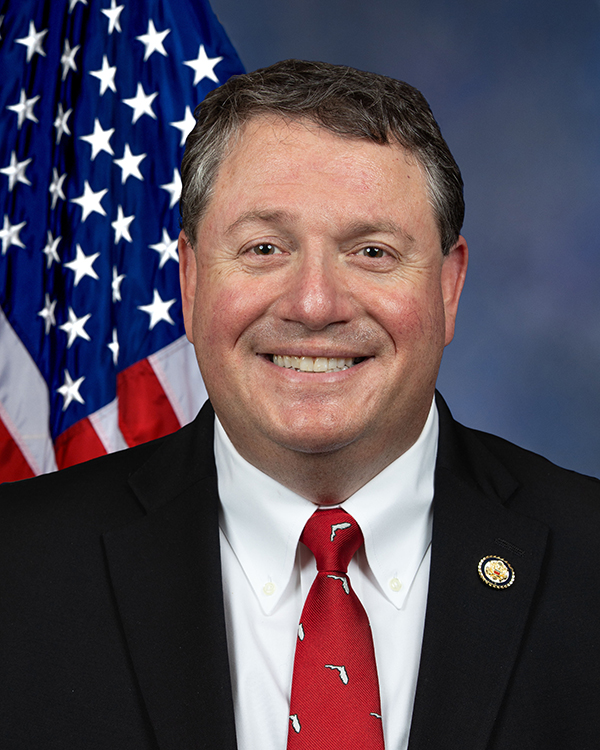
Photo of Randy Fine
R United States House · District 6 · Florida On the 2026 ballot

Rep. Randy Fine

Compare
Total votes
564
all sessions
Attendance
83%
113 missed
Lower than 93% of chamber peers
With party
92%
of cast votes
Lower than 90% of chamber peers
Bipartisan score
4%
crosses aisle rarely
Higher than 89% of chamber peers
Sponsored
246
bills & resolutions
Near the chamber average
Committees
7
assignments
246 bills and resolutions

Sponsored bills

Total
246
Primary
30
Co-sponsor
216
This page
246
matching current filters
Co-sponsor HR 8300
In committee · Oregon House · Co-sponsor
Swalwell Act

Maddy summaryThe Swalwell Act aims to reform how workplace misconduct claims involving Members of Congress and senior staff are handled. It prohibits the use of federal or campaign funds to pay settlements or awards for such claims, making the individuals personally liable for the full amount. The bill mandates the creation of a public database disclosing details of these settlements and awards, including historical data, while protecting victims' identities. Additionally, it requires prompt referral of any allegations of criminal conduct by Members or senior staff to the Department of Justice, regardless of settlement agreements.

In committee Apr 15, 2026 1 co-sponsor
Co-sponsor HR 7613
Passed · Oregon House · Co-sponsor
ALERT Act

Maddy summaryThe ALERT Act (HR 7613) requires the Federal Aviation Administration to improve aviation safety through several key measures. It mandates the evaluation and potential implementation of enhanced collision avoidance systems (ACAS-Xa) for commercial aircraft and ACAS-Xr for rotorcraft, with specific deadlines for rulemaking and installation. The bill establishes committees to develop recommendations for safety technology requirements, requires safety risk assessments for air traffic controllers, and addresses operational procedures at high-traffic airports like Ronald Reagan Washington National. These provisions affect air carriers, air traffic controllers, rotorcraft operators, and Department of Defense aircraft operations. The act aims to enhance situational awareness and reduce midair collision risks through technology upgrades and improved safety protocols.

Passed Apr 15, 2026 1 co-sponsor
Co-sponsor HR 8236
In committee · Oregon House · Co-sponsor
Designating Hamas Affiliates in America Act of 2026

Maddy summaryThis bill directs the U.S. Treasury Department to designate the Council on American-Islamic Relations (CAIR) as a Specially Designated Global Terrorist, which would block all U.S. assets belonging to CAIR and its affiliates and prohibit Americans from engaging in any financial transactions with the organization. The legislation also requires the Treasury Secretary to suspend CAIR's tax-exempt status under federal law. These actions are based on provisions in Executive Order 13224 that allow the government to restrict support for designated terrorist organizations. The bill includes a requirement for federal agencies to submit a detailed report to Congress within 30 days explaining the legal criteria used to justify the designation.

In committee Apr 9, 2026 1 co-sponsor
Co-sponsor HRES 1128
Passed · Oregon House · Co-sponsor
Expressing the support of the House of Representatives for the Department of Homeland Security.

This resolution recognizes the importance of fully funding the Department of Homeland Security (DHS). The resolution also (1) cautions that Americans are at greater risk each day DHS is subject to a lapse in appropriations, and (2) expresses gratitude to DHS employees for their commitment to protect the United States.

Passed Mar 26, 2026 1 co-sponsor
Co-sponsor HR 7669
In committee · Oregon House · Co-sponsor
Rejecting the Erasure of Afghan Women and Girls Act

Maddy summaryHR 7669, the "Rejecting the Erasure of Afghan Women and Girls Act," requires the U.S. Secretary of State to submit a report within 180 days of enactment. The report must detail Taliban-imposed restrictions on Afghan women and girls since August 2021 and determine whether these restrictions constitute crimes against humanity, torture under the Convention against Torture, or gross human rights violations under U.S. law. This bill directly addresses the situation of Afghan women and girls under Taliban rule by mandating a formal U.S. government assessment of those restrictions. The legislation focuses on establishing a factual basis for potential policy responses through this required report.

In committee Mar 26, 2026 1 co-sponsor
Co-sponsor HR 7616
In committee · Oregon House · Co-sponsor
Transatlantic Academic Security and Risk Mitigation Act

Maddy summaryThis bill requires the State Department to create a strategy within 180 days of enactment to address risks posed by certain Chinese entities to U.S. interests through European academic institutions. The strategy must identify, evaluate, and mitigate relationships between covered European institutions (universities/research centers in Europe) and specific Chinese entities of concern - such as those linked to military-civil fusion, defense industries, Confucius Institutes, or activities involving Uyghur detention. It mandates a country-by-country assessment of these entities’ scale and activities, evaluation of security threats to the U.S. and allies, and recommendations for diplomatic engagement. The plan must be submitted unclassified to congressional foreign affairs committees, with a classified annex permitted.

In committee Mar 26, 2026 1 co-sponsor
Co-sponsor HR 7058
In committee · Oregon House · Co-sponsor
Foreign Adversary AI Risk Assessment and Diplomacy Act

Maddy summaryThis bill requires the U.S. State Department to produce annual reports assessing national security risks posed by foreign adversaries using generative AI for malicious purposes. Within 180 days of enactment (and annually for three years), the Secretary of State must submit unclassified reports to Congress detailing specific incidents - such as disinformation campaigns, weapons development support, cyber attacks, or surveillance enhancements - and emerging trends. The reports must include recommendations to counter these threats and will be posted publicly online. This directly affects the State Department’s reporting obligations and informs congressional oversight on international AI security risks.

In committee Mar 26, 2026 1 co-sponsor
Co-sponsor HR 3447
In committee · Oregon House · Co-sponsor
Chip Security Act

Maddy summaryHR 3447, the Chip Security Act, requires manufacturers to equip specific advanced integrated circuits (classified under export control numbers like 3A090) with security mechanisms before exporting them. These mechanisms must verify location and prevent unauthorized access, diversion, or tampering. The law mandates this for covered chips within 180 days of enactment, with a follow-up assessment within one year to develop additional security requirements. It directly affects U.S. chip exporters and importers of these high-tech products, aiming to strengthen export control compliance and national security.

In committee Mar 26, 2026 1 co-sponsor
Co-sponsor HR 7464
In committee · Oregon House · Co-sponsor
TEMP Act

Maddy summaryHR 7464, the TEMP Act, requires the Federal Crop Insurance Corporation to research and develop index-based insurance for specific crops (like tomatoes, citrus, and strawberries) against frost or cold weather damage. This research must evaluate risk management tools and aim to create policies covering either production or revenue loss from such events. The Corporation must report its findings and recommendations to Congress within one year of the bill's enactment. The bill directly affects farmers growing these frost-vulnerable crops by initiating a process to potentially expand their insurance options.

In committee Mar 20, 2026 1 co-sponsor
Co-sponsor HR 8026
In committee · Oregon House · Co-sponsor
CLEAR Act

Maddy summaryThe CLEAR Act amends federal law to establish new criminal penalties for obstructing Federal law enforcement officers operating in or on their vehicles. This legislation directly affects individuals who forcibly assault, resist, or interfere with officers from the Department of Homeland Security or Department of Justice while they are performing official duties in a law enforcement vehicle. The bill introduces enhanced penalties of up to 20 years in prison or a fine for such obstruction, expanding existing protections for officers engaged in vehicle operations. These provisions apply specifically to interactions involving Federal law enforcement vehicles and do not alter penalties for other types of obstruction.

In committee Mar 19, 2026 1 co-sponsor
Showing 61 to 70 of 246 bills
Previous 1 6 7 8 25 Next