Abortion is Health Care Everywhere Act of 2021 This bill authorizes the use of certain foreign assistance funds to provide comprehensive reproductive health care services in developing countries, including abortion services, training, and equipment.
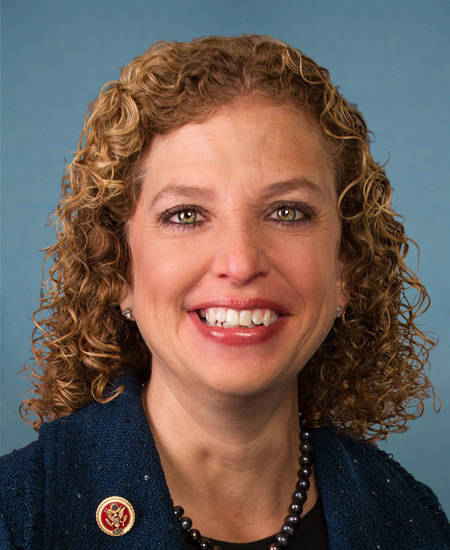
Rep. Debbie Wasserman Schultz
Sponsored bills
George Floyd Justice in Policing Act of 2021 This bill addresses a wide range of policies and issues regarding policing practices and law enforcement accountability. It increases accountability for law enforcement misconduct, restricts the use of certain policing practices, enhances transparency and data collection, and establishes best practices and training requirements. The bill enhances existing enforcement mechanisms to remedy violations by law enforcement. Among other things, it does the following: lowers the criminal intent standard—from willful to knowing or reckless—to convict a law enforcement officer for misconduct in a federal prosecution, limits qualified immunity as a defense to liability in a private civil action against a law enforcement officer, and grants administrative subpoena power to the Department of Justice (DOJ) in pattern-or-practice investigations. It establishes a framework to prevent and remedy racial profiling by law enforcement at the federal, state, and local levels. It also limits the unnecessary use of force and restricts the use of no-knock warrants, chokeholds, and carotid holds. The bill creates a national registry—the National Police Misconduct Registry—to compile data on complaints and records of police misconduct. It also establishes new reporting requirements, including on the use of force, officer misconduct, and routine policing practices (e.g., stops and searches). Finally, it directs DOJ to create uniform accreditation standards for law enforcement agencies and requires law enforcement officers to complete training on racial profiling, implicit bias, and the duty to intervene when another officer uses excessive force.
Social Determinants for Moms Act This bill directs various federal departments to address social determinants of maternal health. These are nonclinical factors, such as economic or social factors, that impact maternal health outcomes. First, the Department of Health and Human Services (HHS) must convene a task force to coordinate federal efforts on social determinants of maternal health. HHS must also award grants to support access to free child care during prenatal and postpartum appointments; and address social determinants of, and eliminate racial and ethnic disparities in, maternal health. Second, the Department of Housing and Urban Development must award grants to community-based organizations and government entities to assist pregnant and postpartum individuals with affordable housing. Grantees may use funds to, for example, provide individuals with direct financial assistance. Third, the Department of Transportation must report on transportation barriers that prevent pregnant and postpartum individuals from accessing health care and other services. Fourth, the bill extends to 24 months the postpartum eligibility period for the Special Supplemental Nutrition Program for Women, Infants, and Children (WIC). Currently, WIC eligibility lasts for six months postpartum or one year for those breastfeeding. The Department of Agriculture (USDA) must evaluate the impact of this extension. USDA must also establish a grant program to deliver healthy foods and supplies to pregnant and postpartum individuals in food deserts. Last, the Environmental Protection Agency must enter into an agreement with the National Academies of Sciences, Engineering, and Medicine to study the impact of environmental conditions and contaminants on maternal and infant health outcomes.

This resolution supports the goals of a feminist foreign policy (i.e., a foreign policy that requires analysis of and challenges to power structures and inequalities that are based on systems of discrimination), and it supports the adoption of policies that promote gender equity and women's participation in public life.
Postal Employee Appeal Rights Amendments Act This bill extends federal employee protections against adverse personnel actions, including the right to appeal such actions to the Merit Systems Protection Board, to additional categories of employees at the U.S. Postal Service (USPS). Specifically, it extends such protections to any officer or employee of the USPS who is not represented by a bargaining representative and is in a supervisory, professional, technical, clerical, administrative, or managerial position covered by the Executive and Administrative Schedule.
Postal Vehicle Modernization Act This bill establishes requirements for U.S. Postal Service (USPS) vehicle purchases and charging stations. The bill's provisions only apply if specified funding is appropriated. Specifically, the bill requires the USPS to ensure that at least 75% of the total number of next generation delivery vehicles purchased using such funds are electric or zero-emission vehicles. The bill provides for a phase-out of medium- and heavy-duty vehicles that are not electric or zero-emission vehicles. The USPS must provide by January 1, 2026, at each postal facility accessible to the public, at least one electric vehicle charging station for use by the public or USPS officers and employees.
This resolution thanks and honors the journalists and news staff who risked themselves to chronicle the insurrection at the U.S. Capitol on January 6, 2021, and it condemns the harassment and violent attacks on the media during the insurrection.
Nutrition Counseling Aiding Recovery for Eating Disorders Act of 2021 or the Nutrition CARE Act of 2021 This bill provides for Medicare coverage of medical nutrition therapy services for individuals with eating disorders. Such services must be furnished by a registered dietitian or nutrition professional pursuant to a referral from a physician, psychologist, or other authorized mental health professional.
Federal Death Penalty Prohibition Act This bill prohibits the imposition of a death penalty sentence for a violation of federal law. A person sentenced to death before enactment of this bill must be resentenced.
Venezuela TPS Act of 2021 This bill permits nationals of Venezuela to qualify for temporary protected status, which prevents their removal from the United States and allows them to obtain employment and travel authorization. Such status shall be available to qualifying nationals of Venezuela for 18 months starting from this bill's enactment.