I am Vanessa Guillén Act of 2021 This bill addresses the policies and procedures of the Department of Defense (DOD) for cases or allegations of sex-related offenses.
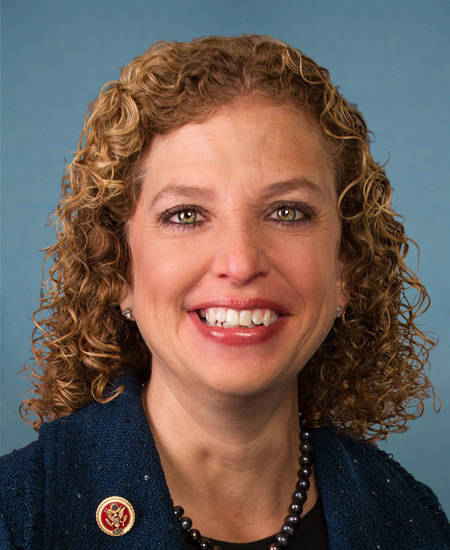
Rep. Debbie Wasserman Schultz
Sponsored bills
This bill increases the applicable threshold amount for heads of household in 2021 to $150,000 for purposes of the income phaseout in the child tax credit (thus making it equal to the threshold amount for married individuals filing joint tax returns).
Health Equity and Access under the Law for Immigrant Women and Families Act of 2021 or the HEAL Immigrant Women and Families Act of 20 21 This bill extends Medicaid and Children's Health Insurance Program coverage to individuals lawfully present in the United States who otherwise meet eligibility requirements. Individuals granted federally authorized presence also are required to maintain minimum essential health insurance coverage and are eligible for health insurance exchanges, reduced cost sharing, premium subsidies, and premium tax credits.
Postal Service Improvement Act This bill requires mail-in ballots for federal elections to meet certain design and tracking requirements and revises authority to provide parental leave to postal employees. Specifically, each mail-in ballot must be carried or delivered in an envelope that contains a USPS barcode that enables tracking of each individual ballot, satisfies USPS requirements for ballot envelope design and for machinable (i.e., able to be processed using USPS equipment) letters, and includes the official election mail logo. The federal government must reimburse each state (including the District of Columbia and any U.S. territory or possession) for the cost of using the barcode service. The bill also provides paid parental leave to officers and employees of the USPS and the Postal Regulatory Commission.
Florida Coastal Protection Act This bill prohibits the Bureau of Ocean Energy Management from offering any tract for oil and gas leasing or preleasing in the following areas: the Eastern Gulf of Mexico Planning Area that is within 125 miles of the coastline of Florida, the South Atlantic Planning Area that is south of 30 degrees 43 minutes North Latitude, or the Straits of Florida Planning Area.
Helping Emergency Responders Overcome Act or the HERO Act This bill establishes a series of programs relating to the behavioral health of law enforcement officers, first responders, 9-1-1 operators, and other public safety officers and health care providers. The programs include a public safety officer suicide-reporting system at the Centers for Disease Control and Prevention, a grant program for peer-support behavioral health and wellness programs within fire departments and emergency medical services agencies, and a grant program for behavioral health and wellness programs for health care providers.
Pursuing Equity in Mental Health Act This bill establishes and expands programs to address racial and ethnic disparities in mental health. Specifically, the Department of Health and Human Services (HHS) must award grants to establish interprofessional behavioral health care teams in areas with a high proportion of racial and ethnic minority groups. In addition, HHS may award grants to incorporate best practices and competencies to address mental health disparities in curricula for training social workers, psychologists, and other behavioral health professionals. HHS must also promote behavioral and mental health and reduce stigma associated with mental health conditions and substance use disorder through outreach to racial and ethnic minority groups. HHS must consult with appropriate advocacy groups and behavioral health organizations to develop a strategy for this outreach. The bill also (1) reauthorizes the minority fellowship program to support the education of mental health professionals who provide services to racial and ethnic minorities, and (2) requires studies on mental health disparities and the effects of social media use on adolescents.
Protecting Moms Who Served Act This bill requires the Department of Veterans Affairs (VA) to implement the maternity care coordination program. The VA must provide community maternity care providers (i.e., non-VA maternity care providers) with training and support with respect to the unique needs of pregnant and postpartum veterans, particularly regarding mental and behavioral health conditions in relation to the service of the veterans in the Armed Forces. Additionally, the Government Accountability Office must report on maternal mortality and severe maternal morbidity among pregnant and postpartum veterans, with a focus on racial and ethnic disparities in maternal health outcomes for veterans.
Suicide Training and Awareness Nationally Delivered for Universal Prevention Act of 20 21 or the STANDUP Act of 2021 This bill requires state, tribal, and local educational agencies that receive grant funding for priority mental-health needs, including through the Project AWARE State Education Agency Grant Program, to establish and implement evidence-based suicide awareness and prevention training policies. In addition, the Substance Abuse and Mental Health Services Administration, in coordination with the Department of Education and Bureau of Indian Education, must provide educational agencies with best practices for these trainings.

Healthy Maternity and Obstetric Medicine Act or the Healthy MOM Act This bill expands health insurance coverage availability for pregnant individuals. It requires health insurers, health insurance exchanges, and group health plans to offer a special enrollment period to pregnant individuals. The special enrollment period offered by an insurer or exchange must begin when the pregnancy is reported to the insurer or exchange. The special enrollment period offered by a group health plan must begin when the pregnancy is reported to the plan or is confirmed by a health care provider. The bill also makes pregnancy a qualifying life event for the purpose of enrolling in a federal employee health benefit plan. Additionally, a group health plan or health insurer that covers dependents must provide coverage for maternity care to all covered individuals. Any individual who is eligible for Medicaid and is, or becomes, pregnant maintains such eligibility for one year after the end of the pregnancy. The bill revises the range in which a state must establish a maximum level of family income for pregnant women and infants to be eligible for Medicaid. The upper limit of the range is eliminated and the lower limit is set to the level in place on January 1, 2014.